


Quick Summary:
- Zipcar is a membership-based car-sharing service, unlocked via app.
- In New York, you reserve by time, then pick up nearby.
- Rates typically bundle fuel, insurance, and a set mileage allowance.
- Compare Zipcar with car hire when you need longer trips.
Zipcar is a car-sharing service designed for short, self-service use. Instead of visiting a rental counter, you join as a member, reserve a vehicle in the app, and unlock it at a designated parking spot. In New York, Zipcar’s model can be convenient for quick errands, occasional drives, and city trips where you only need a car for a few hours.
This guide explains what Zipcar is, how it works in New York, what you pay for, and what to watch out for. It also covers when traditional car hire can be a better fit, particularly if you need a full day or multiple days, want airport pickup, or plan longer-distance driving.
What is Zipcar?
Zipcar is a membership-based car-sharing network. Members can access cars parked around the city and in some residential garages, university campuses, and commercial locations. The key idea is convenience: you can reserve a nearby car for a specific time window, walk to it, unlock it with the app or member card, drive, then return it to the same location before your reservation ends.
Zipcar differs from traditional car rental in three main ways. First, it is built around short reservations and local pickup points, not staffed branches. Second, pricing is usually time-based, by the hour or day, rather than a multi-day rental structure. Third, the process is self-service, including vehicle access, inspection, and return.
How Zipcar works in New York, step by step
1) Join and get approved
To use Zipcar in New York, you typically create an account, choose a membership option, and provide a valid driving licence and payment details. Approval can involve identity checks and licence verification. Once approved, you can reserve vehicles through the app.
2) Find a car near you
In a dense city like New York, availability varies by neighbourhood, time, and demand. The app shows cars by location, vehicle type, and time slots. Each vehicle is tied to a specific “home” spot, which matters because you generally must return it to the same location.
3) Reserve by the hour or day
You select a start time and end time. Be realistic about traffic, loading, and parking time, because late returns can trigger fees and can disrupt the next member’s booking. If you finish early, you may be able to end your reservation, depending on Zipcar’s rules and the specific booking.
4) Walk to the car and unlock it
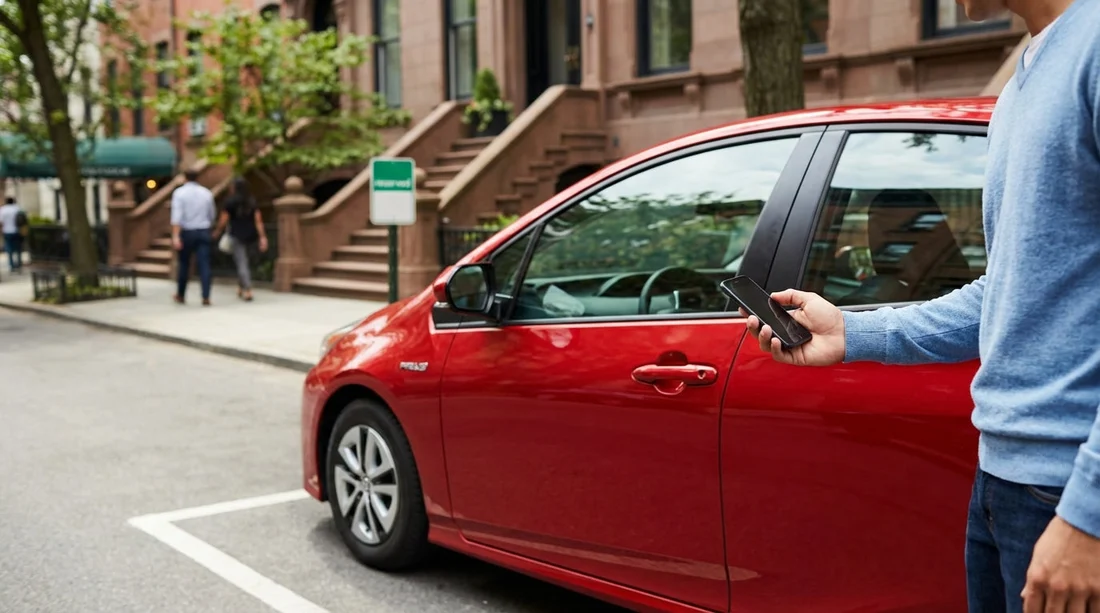
At the start time, you go to the designated spot. You unlock the vehicle using the app or access method provided. The keys are usually inside the car. Before you drive off, check the car for damage and cleanliness, and report issues promptly so you are not held responsible later.
5) Drive within the rules
Zipcar bookings generally include a mileage allowance, and some trips may incur additional per-mile charges beyond that allowance. Many users in New York book Zipcar for local trips, shopping runs, or visiting areas outside Manhattan where transit is slower.
6) Refill fuel if needed
Zipcar commonly provides a fuel card in the car. If the fuel level drops below a stated threshold, you are expected to refuel following Zipcar’s instructions. This is different from most car hire models where you might choose a “full-to-full” policy or prepay fuel, depending on the provider and location.
7) Return on time to the same spot
You return to the same parking bay, lock the car, and end the trip. In New York, where kerbside parking is competitive, the value of a guaranteed spot can be significant. At the same time, it means you cannot simply leave the car somewhere else because you found parking closer to your destination.
Where Zipcar is useful in New York
Zipcar tends to work well for short, planned errands. For example, a few hours to collect bulky items, visit a friend in another borough, or do a supermarket run. It can also make sense for occasional day trips, provided you are comfortable with the time-based model and can return the car on schedule.
In New York, the biggest advantage is often access. You do not need to travel to a rental office, and you can often find a car within walking distance. That convenience can offset the higher per-hour cost compared with longer traditional rentals.
Pricing basics: what you pay for, and what can add cost
Zipcar pricing in New York is usually built around time. You will see hourly and daily rates, plus membership costs. Rates fluctuate by vehicle type and demand. Many reservations include fuel and insurance in the rate, plus a mileage allowance.
Common cost factors to understand before you rely on Zipcar for a specific trip include:
Membership fees
Membership is a core part of Zipcar’s model. If you only need a car once a year, membership can feel like friction, whereas frequent use may justify it.
Mileage allowance
Some bookings include a fixed amount of mileage. If your plan involves driving far outside the city, check the mileage rules because extra miles can add up quickly.
Late returns
Time discipline matters. New York traffic, toll queues, bridge approaches, and parking delays can make “just a bit late” more likely than you expect.
Tolls, parking, and tickets
These are typically on you, not included. For New York driving, plan for toll routes and be careful with parking restrictions, street cleaning schedules, and loading zones.
Insurance, eligibility, and driving requirements
Zipcar generally includes an insurance option within the rate, but coverage details and excess amounts can vary by market and by policy. As with any vehicle use arrangement, read the terms so you understand what is covered, what is excluded, and what you would pay in the event of damage.
Eligibility can include minimum age requirements, a valid licence, and a driving history check. If multiple people will drive, confirm whether additional drivers are allowed and how they must be added. Do not assume a friend can drive simply because they are insured elsewhere.
Vehicle types and what to expect from the fleet
In New York, the Zipcar fleet often includes compact cars suited to city streets, plus some larger options depending on availability. Because cars are shared, condition can vary. You should do a quick, routine check: exterior panels, wheels, interior cleanliness, fuel level, and dashboard warning lights. Report anything unusual before you move the car.
If you need a specific vehicle type for a longer journey, such as more luggage space or a people carrier, traditional car hire may give you more certainty because you can select categories designed for travel, not just local errands.
Common pitfalls in New York and how to avoid them
Assuming parking will be easy
Zipcar’s home spot makes returning straightforward, but parking at your destination is still a New York reality. If your trip includes busy areas, build time for finding legal parking, and avoid double-parking risks.
Underestimating traffic and bridge approaches
Even short distances can take longer than expected. If your reservation ends at a fixed time, add buffer time so you do not pay late fees or rush.
Not checking the car before leaving
Take a minute to inspect and document issues. Shared fleets rely on user reporting to keep records accurate.
Planning a multi-day trip without comparing options
Zipcar can work for a day, but multi-day travel may become expensive or inconvenient if you need flexibility on return times or want a guaranteed vehicle class.
Zipcar vs traditional car hire in New York
Zipcar and car hire solve different problems. Zipcar is designed around fast access and short, local reservations. Traditional car hire is often better when you need a car for longer, want predictable pickup and return processes, or prefer airport locations for onward travel.
Consider traditional car hire when:
You need multiple days
A weekend or week-long trip often aligns better with a daily rental structure than an hourly model.
You want airport convenience
Many travellers prefer picking up a car at an airport for a road trip, then returning at the end. If you are comparing airport car hire options outside New York, you can review Hola Car Rentals pages like car hire at Chicago O’Hare or car hire at Denver Airport to understand how airport-based rentals are typically structured.
You need a specific vehicle type
If you are travelling with family or lots of bags, a larger category can matter. For example, people carriers are a common need on longer trips, and it can help to see how dedicated categories are presented on pages such as minivan rental in San Antonio or minivan rental in San Jose.
You prefer staffed support
Traditional rentals often come with counter support for questions, upgrades, and problem resolution. Zipcar is more self-serve, which some people love and others find limiting.
In practice, many New Yorkers use Zipcar for local needs and switch to traditional car hire for longer journeys where flexibility, vehicle selection, and predictable long-distance pricing matter more.
Practical tips for using Zipcar in New York
Choose locations you can reliably reach
Pick a Zipcar spot that you can get to on time, even if the subway is delayed. A car that is “close” on the map may not be fast to reach in real life.
Build in return buffer time
Plan to arrive back early enough to refuel if needed and to handle unexpected congestion. Returning five to ten minutes early can reduce stress substantially.
Plan for tolls
Crossings and expressways can add cost. Review your route and budget for tolls, especially for trips out of Manhattan.
Photograph existing damage
If the car has scuffs or dents, document and report them before you drive off. It is a simple habit that can prevent disputes later.
Think about your trip length realistically
If you are planning a long day with multiple stops, compare Zipcar’s time-based cost with a full-day rental. Sometimes the traditional approach is calmer, especially when you do not want to watch the clock.
FAQ
Is Zipcar available throughout New York City?
Zipcar has many pickup locations across New York City, but coverage and vehicle availability vary by neighbourhood and time of day. Always check the app for nearby cars and reservation windows.
Do I have to return the Zipcar to the same place in New York?
In most cases, yes. Zipcar vehicles are usually assigned to a specific home spot, and your reservation expects you to bring the car back to that location by the end time.
Does Zipcar include fuel and insurance in New York?
Zipcar rates commonly include fuel and an insurance option, plus a mileage allowance, but details can vary. Review the terms shown in the app for your exact booking and vehicle.
Is Zipcar cheaper than car hire for a day trip from New York?
It depends on the hours booked, mileage, and how strict your return time is. For longer days and higher mileage, traditional car hire pricing can be more predictable.
What should I check before driving a Zipcar in New York?
Inspect for visible damage, confirm the fuel level, and look for dashboard warnings. Report issues immediately so you are not held responsible for pre-existing problems.




























































































