


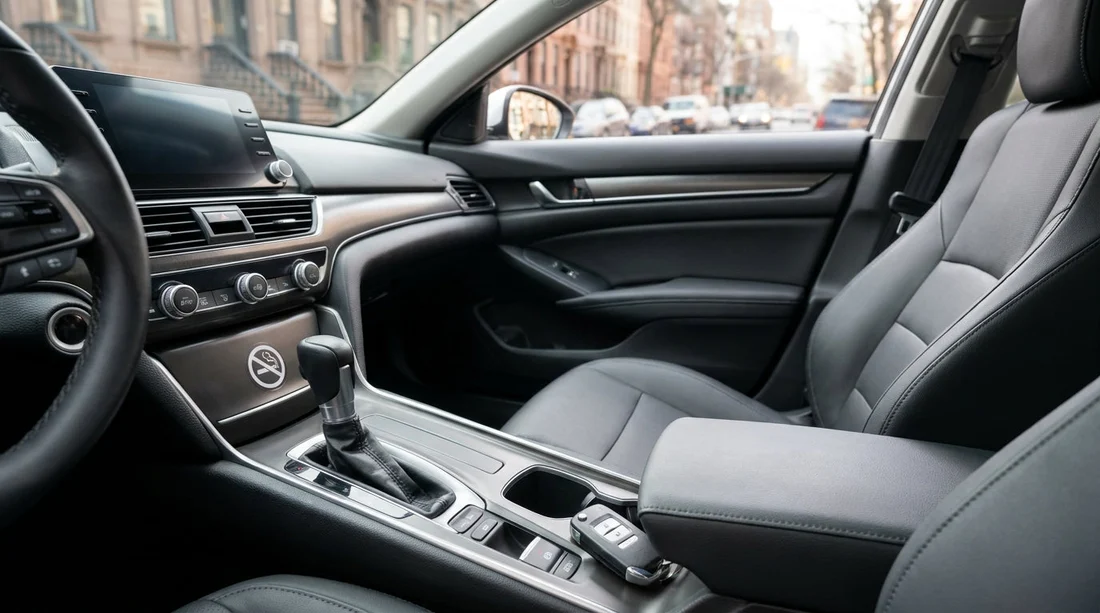
Quick Summary:
- Assume New York car hire vehicles are strictly non-smoking and non-vaping.
- Cleaning fees apply when odour, ash, burns, or residue are found.
- Confirm the clause, fee range, and evidence process before signing.
- Photograph the interior at collection and return, especially seats and vents.
Smoking and vaping rules are one of the most common surprises for visitors collecting a car hire in New York, particularly around major pick-up points. Most rental fleets operate a strict no-smoking policy that covers cigarettes, cigars, pipes, cannabis, and vaping devices. Even if local laws can vary for use in certain places, rental contracts are private agreements, and they usually prohibit smoking or vaping inside the vehicle regardless of state rules.
The main reason is practical. Smoke and vapour odours can linger in fabrics, headliners, and ventilation systems, and some customers have allergies or sensitivities. Fleets also need to protect resale value. That is why the key question is not only “Is smoking allowed?” but also “How do they decide a cleaning fee is due, and what should you check before signing?”.
If you are picking up near JFK, it helps to review location details and typical processes in advance, for example via car hire New York JFK. Policies differ by supplier, but the practical steps below help you avoid disputes across most companies.
How cleaning fees are triggered and why they can be high
Cleaning fees are typically triggered when the vehicle needs out-of-routine work to return it to rentable condition. This is not the same as normal light cleaning between rentals. A smoking or vaping breach can lead to additional processes such as ozone treatment, shampooing upholstery, replacing cabin filters, or extended airing time that takes the vehicle out of service.
Common triggers include:
Odour that an employee considers consistent with smoke or vapour residue. Some companies have checklists or supervisors confirm the finding.
Visible evidence such as ash, cigarette butts, rolling paper, or vape liquid residue.
Burns or heat damage on seats, trim, carpets, door cards, or headliners. Even tiny burns can be treated as damage rather than cleaning.
Staining from spilled e-liquid, tobacco, or related materials. Sticky residue can require deep cleaning.
Complaints from the next customer. Sometimes the fee is assessed after the car is returned and re-rented, especially if odour is discovered later.
Fee amounts vary by supplier, vehicle type, and severity. What matters most is that the fee is usually an agreed contractual charge, not a negotiable “tip” for cleaning. In some cases, if there is physical damage such as burns, you could see separate damage charges in addition to a cleaning fee.
What to confirm at pick-up before you sign
Before you sign the agreement, treat smoking and vaping as a contract detail you can clarify in two minutes. Ask staff to point out the relevant section on the rental agreement or the terms linked from it. You are looking for four specifics.
1) The exact rule. Confirm that it includes vaping, not just “smoking”. Ask whether cannabis is explicitly included, because wording may be broad, and you want no ambiguity.
2) The fee basis and range. Some suppliers state a fixed fee, others say “up to” a maximum. Ask what typically applies for odour alone versus visible ash or burns.
3) How they assess evidence. Ask whether they take photos, whether two staff members must confirm, and whether there is a checklist. If the location has an inspection form, ask if you can see it at return.
4) When fees may be charged. Confirm whether charges can be applied after you have left the airport or location, and how disputes are handled. This is especially relevant if you drop off outside staffed hours or use a key drop.
If you are collecting around Newark, you may find supplier-specific processes differ slightly depending on the desk and return lanes. The pages for car hire airport New Jersey EWR and Hertz car rental New Jersey EWR are useful references for planning your pick-up flow and timing, which can reduce rushed signings.
Inspection habits that protect you from unfair charges
Most smoking-related charges are legitimate, but misunderstandings happen, particularly when a car already carries a faint odour or when a return is inspected later. These habits help protect you.
Do a quick smell check immediately. When you first open the door, take a moment before the air freshener smell hits. If you notice a stale smoke odour, mention it at the counter straight away. Ask to switch vehicles or have it noted in writing on your agreement or check-out sheet.
Take clear collection photos. Focus on the driver’s seat, rear seats, headliner above the driver, cupholders, door pockets, and the area around the 12V sockets. Also photograph the boot. You are not trying to create a photo album, you just want time-stamped proof of condition.
Return with a quick wipe and vacuum if needed. You do not need professional detailing, but removing crumbs and debris reduces the chance an inspector starts looking for “cause” elsewhere. Also, avoid using strong fragrances or odour sprays to cover smells, as this can raise suspicion.
If you are using Newark for return or pick-up with another supplier, you may want to compare desk and return lane arrangements, for instance Avis car rental Newark EWR often has a different flow from neighbouring desks. The practical point is to allow time for a staffed inspection rather than rushing into a key drop.
How to handle a disputed smoking or vaping charge
If you receive a cleaning fee you believe is incorrect, respond promptly and keep it factual.
Request the evidence, such as inspection notes, time-stamped photos, and a description of what was found. Ask whether the assessment was made at return or later.
Provide your own documentation, including pick-up and return photos and any written notes from the desk about pre-existing odour.
Separate cleaning from damage. If burns are alleged, treat it as a damage dispute. If it is odour only, focus on inspection timing and pre-existing condition.
Check the agreement wording. Some agreements allow a fixed fee if the provider determines smoking occurred. Understanding that wording helps you frame your dispute around evidence and process rather than preference.
While outcomes vary, customers with clear pick-up documentation and a close-out receipt are in a stronger position than those relying on memory alone.
FAQ
Is smoking allowed in any rental car in New York?
Almost all New York car hire vehicles are non-smoking, and many also ban vaping. Treat it as prohibited unless your agreement explicitly says otherwise.
Can I vape with the windows down and avoid a cleaning fee?
No. Open windows do not prevent residue and odour from settling in the upholstery and vents, and the contract usually bans vaping inside the vehicle.
What usually triggers a smoking or vaping cleaning fee?
Typical triggers include smoke or vapour odour, ash or butts, visible residue, or burns and staining. Some fees are also applied after a later inspection or customer complaint.
What should I check before signing the car hire agreement?
Confirm the no-smoking and no-vaping clause, the fee amount or maximum, what evidence is required, and whether charges can be added after return.
What if the car already smells of smoke at pick-up?
Report it immediately and ask to change vehicles or have the odour noted in writing. Take time-stamped photos at collection to support any later dispute.




























































































