


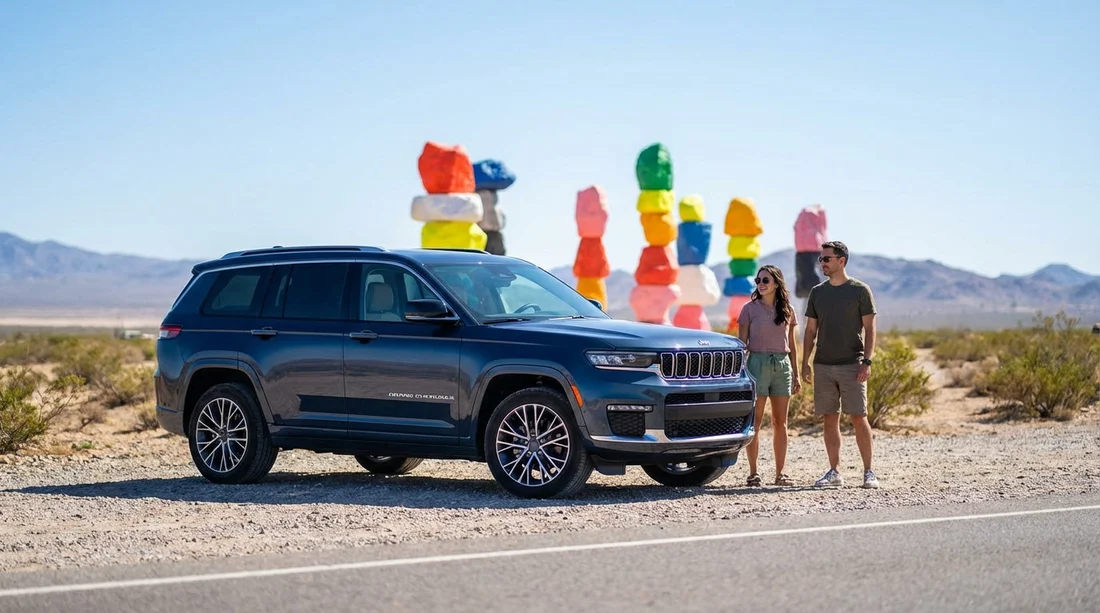
Quick Summary:
- Use the signed Seven Magic Mountains parking lot, avoid stopping on I-15.
- Arrive before 9am or after 4pm to dodge peak crowds.
- Stay right on I-15, watch for crosswinds, debris, and sudden braking.
- Return via I-15 north, or detour to Jean for fuel breaks.
Seven Magic Mountains is one of the easiest day trips from Las Vegas, but it sits beside a fast, busy stretch of I-15. The biggest risks are simple ones, stopping where you should not, rushing a lane change near the exit, or walking too close to the carriageway. With a little planning, your Las Vegas car hire day out can be straightforward, safe, and stress-free.
This guide explains exactly where to pull in, how to approach the parking area, when to visit to avoid queues, and the practical habits that reduce common I-15 hazards. For context, most visitors start from the Strip or from the airport, and you can compare pick-up options on Las Vegas car rental or Las Vegas airport car rental before you set off.
Know the route before you start
Seven Magic Mountains is south of Las Vegas, close to the town of Jean, and reached via I-15 South. The drive is typically 25 to 40 minutes from the Strip, depending on traffic. The approach is simple, but because it is motorway driving, small mistakes can become risky quickly.
Before leaving, set your sat-nav to “Seven Magic Mountains” and confirm it shows an exit from I-15 South and a short access road to a dedicated parking lot. If your navigation tries to route you to the side of the motorway or a service road without a clear parking lot, ignore that suggestion and continue until you see the signed access for the attraction. The correct stop is a proper car park, not a shoulder, not a dirt pull-off, and not a gap in the fencing.
Vehicle choice matters less than behaviour here, but if you are travelling as a group, a larger vehicle can keep everyone together and reduce roadside confusion. If you are considering a people carrier, see minivan rental in Las Vegas for typical options.
Step-by-step: driving from Las Vegas to the safe parking area
Step 1, leave with time in hand. Give yourself a buffer so you are not tempted to speed or cut across lanes. If you are starting from a hotel on the Strip, allow extra time for traffic lights and entrances.
Step 2, merge onto I-15 South early and calmly. Motorway on-ramps around Las Vegas can be busy, with frequent lane changes. Build space, indicate early, and avoid accelerating into a closing gap just to “make” a lane.
Step 3, stay in the right lanes as you approach the exit. Many I-15 hazards around tourist stops come from last-minute swerves across lanes. If you know you will be exiting, keep right well in advance, maintain a steady speed, and leave a longer following distance than you normally would in town.
Step 4, take the exit and follow signs to the parking lot. Once off I-15, slow down promptly to match the ramp and access road. Expect other drivers to do sudden braking, especially if they are reading signs for the first time.
Step 5, enter the lot and park fully off the access road. The correct parking area is designed for visitors. Choose a standard bay and avoid stopping on the approach road, even “just for a minute”, as it blocks turning space for others and can force pedestrians into the vehicle path.
Where you can stop safely, and what to avoid
The only truly safe stop is the dedicated parking lot for Seven Magic Mountains. It keeps you off the motorway shoulder and off loose desert ground close to traffic. From the car park, the walk to the installation is short and clearly used by other visitors.
Do not stop on I-15 shoulders. Even if you see other cars pulled over, stopping on a high-speed shoulder is dangerous, may be illegal, and increases the risk of being hit by an inattentive driver or by debris.
Avoid informal dirt pull-ins near the access. Some areas look like convenient “extra parking” but can hide soft sand, deep ruts, or sharp rocks. These can strand vehicles, damage tyres, and create dust clouds that reduce visibility for cars entering and leaving.
Do not drop passengers on the access road. Keep everyone in the vehicle until you are properly parked. Doors opening into the flow of cars and pedestrians stepping into traffic are common near popular photo stops.
Parking and walking: staying safe on site
Once parked, the remaining risks are mostly about heat, footing, and keeping away from the road corridor. Treat it like a short desert walk, even if the distance is small.
Check conditions before you leave the car. In warm months, heat builds quickly, and the sun is intense. Bring water, wear sunscreen, and consider a hat. Keep an eye on anyone who may struggle with heat, including children and older travellers.
Walk as a group and stay on the most-used path. The ground is uneven and can be rocky. Staying on the commonly used route reduces the chance of stepping on loose stones or into thorny scrub.
Keep your back to the car park when framing photos. People get absorbed in shots and drift. Make a habit of scanning around you, especially if you are near the edges of the visitor area.
Secure valuables and lock up. It is a public car park. Leave nothing visible, close the boot before you arrive, and lock the vehicle.
Best times to visit to avoid crowds and risky traffic
Crowds matter because they affect both parking and driver patience. When the lot is full, some motorists start circling, stopping awkwardly, or reversing unexpectedly.
Best time for space and easier parking, early morning. Aim to arrive before 9am. You will usually find quicker access to bays, fewer pedestrians wandering between moving cars, and cooler temperatures for walking and photos.
Best time for softer light, late afternoon. Arriving after about 4pm often reduces midday tour traffic. Light is more flattering for photography, but keep an eye on the sun dropping, as the desert gets darker quickly.
Times to avoid if you want an easier drive. Midday at weekends can bring larger groups and more stop-start manoeuvring in the lot. Also be cautious around major Las Vegas event days, when traffic patterns can feel more aggressive.
How to avoid common I-15 hazards on this trip
I-15 south of Las Vegas is generally well maintained, but it is fast, open, and exposed. Hazards tend to be behavioural, sudden braking, unsafe merges, and distraction.
Crosswinds and buffeting. Open desert can mean gusty side winds, especially for taller vehicles. Keep both hands on the wheel, reduce speed slightly if you feel buffeting, and increase your following distance.
Sudden braking near exits. Tourist drivers may slow unexpectedly when they realise they are close to the turn-off. Expect this, stay alert, and avoid tailgating. If you notice a cluster of brake lights ahead, ease off early rather than braking hard late.
Debris and tyre fragments. Motorways can collect bits of tyre tread and small debris. Keep scanning far ahead, do not fixate on the vehicle in front, and avoid abrupt swerves. If you must change position to avoid debris, signal and move smoothly when safe.
Distracted drivers. Many people are navigating, talking, or looking for landmarks. Keep your own phone out of reach, set navigation before you roll, and let a passenger handle any changes. If you are solo, pull into a proper stopping place before adjusting anything.
Speed differentials. Faster traffic often uses the left lanes. Staying in the right lanes, particularly near your exit, reduces the need to weave. Only overtake when you can complete it calmly and return to the right without squeezing others.
If you are comparing suppliers for your Las Vegas car hire, you may see different policies on tolls, roadside assistance, and fuel. It can help to review a Nevada-specific overview such as car hire in Nevada, then decide what cover and vehicle type suits your day trips.
Return route tips, including safe breaks
Returning is usually a simple reversal, merge back onto I-15 North and follow signs to Las Vegas. The hazards are similar, plus the risk of fatigue or glare.
Give yourself a calm exit from the car park. Take a moment to organise your passengers, set navigation, and check mirrors before pulling out. Watch for pedestrians crossing behind parked cars.
Merge onto I-15 North with a long gap. On-ramps can be short. Build speed smoothly, indicate early, and only merge when you have a clear buffer behind and ahead. If you miss a gap, continue on the ramp and wait, do not force your way in.
Plan a proper break if needed. If anyone is thirsty, hot, or tired, take a legitimate stop rather than trying to push through. Jean is nearby and can be a sensible place to reset before the final run into Las Vegas.
Watch for sun glare. Late afternoon can put the sun low in front of you, depending on your direction of travel. Keep sunglasses handy and clean your windscreen inside and out, as haze makes glare worse.
Keep fuel sensible, especially in summer. Even short desert drives feel longer if you are low on fuel and running air conditioning. Top up earlier rather than later, particularly if you plan additional stops after Seven Magic Mountains.
For travellers who like to compare well-known brands under one roof, you can also look at options like Dollar car rental in Las Vegas alongside other partners, focusing on clear terms, included mileage, and how roadside support is handled.
Checklist before you set off from Las Vegas
1, navigation set. Confirm the route goes to the dedicated parking area, not a roadside point.
2, water packed. Bring more than you think you need, even in cooler months.
3, vehicle ready. Tyre pressures and windscreen cleanliness make motorway driving easier.
4, timing chosen. Early morning or later afternoon reduces crowds and parking stress.
5, safety mindset. No shoulder stops, no last-minute lane dives, and keep distance on I-15.
FAQ
Is there a safe place to park for Seven Magic Mountains? Yes. Use the dedicated visitor parking lot accessed from I-15 via the signed exit and short access road. Avoid stopping on the motorway shoulder or informal dirt pull-ins.
How long does it take to drive there from Las Vegas? Most drives from the Strip take roughly 25 to 40 minutes each way, depending on traffic and where you start. Allow extra time for merging and for parking during busy periods.
What are the biggest I-15 hazards near the attraction? The most common issues are sudden braking near the exit, last-minute lane changes, crosswinds in open desert sections, and occasional road debris. Staying right early and leaving space reduces risk.
When should I visit to avoid peak crowds? Arrive before 9am for easier parking and cooler temperatures, or after about 4pm for lighter crowds and better photo light. Midday weekends tend to be busiest.
Can I visit with a larger hire vehicle? Yes. The car park is generally suitable for standard cars and larger family vehicles, but take extra care with crosswinds on I-15 and when manoeuvring around pedestrians in the lot.




























































































