


Quick Summary:
- Ask for the rental’s insurance card or proof letter before leaving.
- Keep the rental agreement handy, it links you to coverage.
- Use official digital proof only if the insurer or rental provides it.
- If the glovebox is empty, call the rental roadside or desk immediately.
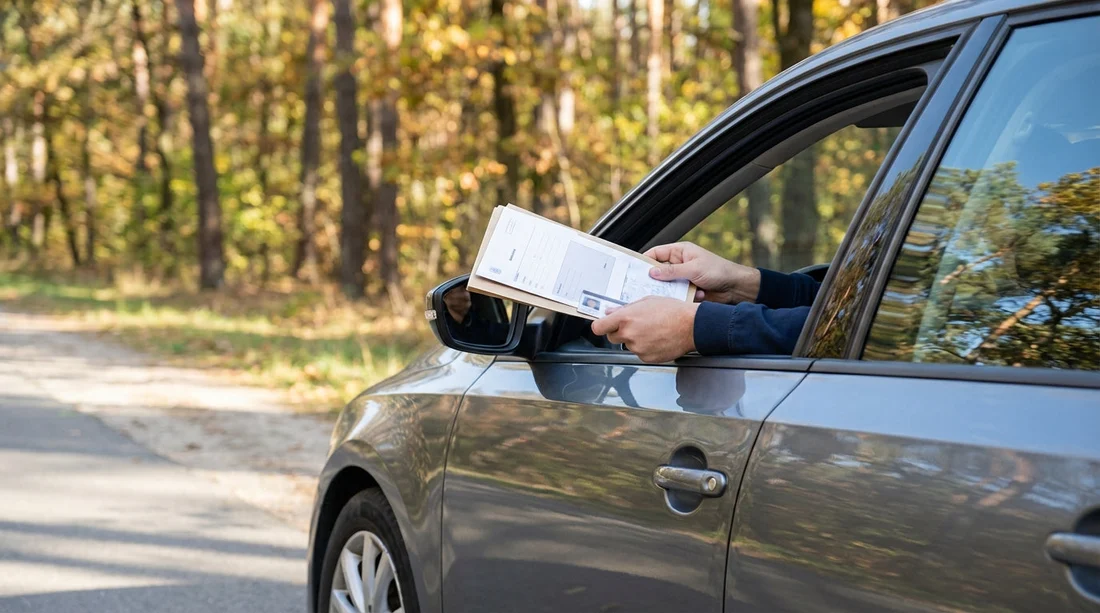
Being pulled over is stressful enough, doing it in a car hire vehicle can add confusion about what you are expected to show. In Pennsylvania, an officer may ask for your driving licence, registration, and proof of insurance. In a rental, the “registration” and the insurance evidence are usually tied to the rental company rather than you personally, but you still need to present acceptable proof.
This guide explains what documents car hire companies typically provide, what digital proof may be acceptable, and practical steps to take if the glovebox is empty when you are stopped in Pennsylvania.
What Pennsylvania police typically ask for in a traffic stop
In a routine stop, Pennsylvania officers commonly request three things: your licence, the vehicle registration, and proof of financial responsibility (insurance). You provide your own licence. For a car hire vehicle, the other two items are usually supplied by the rental company, often stored in the glovebox.
It helps to know that a rental vehicle’s registration is normally in the company’s name, and the insurance proof may refer to the rental company’s coverage, a self-insured status, or a policy that applies to the fleet. Your job is to show something credible that connects the car, the rental company, and your authorised use of the vehicle.
What counts as proof of insurance in a hire car
In Pennsylvania, acceptable proof is generally an insurance identification card or other official evidence showing that the vehicle is insured, or that a legally valid alternative applies. In the context of car hire, the following are the most common forms you may be able to show at the roadside.
1) The rental company’s insurance card or proof-of-insurance document
Many rental companies provide an insurance ID card, a “proof of financial responsibility” card, or a letter stating the vehicle is covered under the company’s policy or self-insurance. This is often kept with the registration documents in the glovebox pack.
If the paperwork is present, hand over the document that clearly identifies the rental company and indicates coverage. Some cards list the vehicle, some list the fleet, and some reference a policy number with the insurer. The key is that it looks official and matches the company on your rental agreement.
2) The rental agreement (important supporting document)
Your rental agreement is not always a substitute for an insurance card, but it is crucial supporting evidence. It shows you are an authorised driver and that the vehicle is legitimately in your possession. It also often states what protection products were selected (for example, liability coverage where offered, or a loss damage waiver) and may reference the rental company’s underlying insurance arrangements.
Keep the agreement somewhere easy to reach, such as in the document wallet, not buried in luggage. If you booked a vehicle for Philadelphia Airport pick-up, it is worth organising the paperwork before you join traffic. For trip planning around arrivals, Hola Car Rentals information pages such as Philadelphia Airport car hire and car hire in Philadelphia can help you understand what to expect at the counter.
3) Your own insurance card (only if it extends to rentals)
If you have a personal auto policy, it may extend liability coverage to a rental vehicle in the United States. If that applies to you, your own insurance ID card and policy details can help. However, officers may still want to see documentation tied to the vehicle itself, so do not rely on your personal card alone if the rental provides its own proof.
Be careful with assumptions. Some policies exclude certain vehicle types, business use, non-owner vehicles, or international visitors. If you are unsure whether your own cover applies, treat the rental company’s documentation as your primary proof at the roadside.
4) A digital insurance card or electronic proof
Many US insurers provide digital insurance cards in their apps, and some rental companies can email documentation or make it accessible in an account portal. In practice, officers often accept electronic proof shown on your phone if it is clearly an official document from the insurer or rental company, not a screenshot that could be edited.
Still, there are common issues: low battery, no signal, or an email you cannot find quickly. For that reason, if your car hire provider offers an insurance card in paper form, keep it in the vehicle even if you also have it digitally.
Also consider the practical side of handing an unlocked phone to an officer. If asked to show electronic proof, you can usually hold the phone and display the document yourself. If the officer needs details, scroll as requested, and avoid opening unrelated content.
What documents rentals typically provide in Pennsylvania
Most major rental companies operating in Pennsylvania provide a standard in-car document pack that includes:
Registration information, typically a card or paper showing the vehicle is registered.
Insurance proof, such as a fleet insurance card, self-insurance notice, or insurer-issued ID card.
Accident and claim instructions, telling you who to call and what to collect if there is an incident.
Roadside assistance details, which can be critical if you are stopped and cannot locate documents.
The exact format varies by company. If you are hiring through a well-known brand at Philadelphia, you might see slightly different packs, for example when picking up via Alamo car rental Philadelphia or Avis car hire Philadelphia. Regardless of brand, you should leave the lot knowing where the documents are kept and what they look like.
Before you drive off: a quick “document check” that prevents hassle
A simple 60-second check at collection can save a lot of time later. Before you pull away:
Open the glovebox and confirm the document pack is there.
Look for an insurance card or proof letter, and make sure it appears current.
Confirm the registration document is present.
Place your rental agreement somewhere you can reach without rummaging.
If anything is missing, ask the desk or the exit booth attendant for replacement documents. It is much easier to solve at the branch than on the roadside.
If the glovebox is empty when you’re stopped: what to do
Sometimes documents go missing because a prior renter removed them, the pack was never replaced after a service visit, or the vehicle was swapped last minute. If an officer asks for proof of insurance and you cannot find it, do the following:
1) Stay calm and explain you are in a rental. Tell the officer it is a car hire vehicle and the documents are missing from the glovebox. Show your rental agreement and confirm the rental company name and location.
2) Search sensibly, only if it is safe. If the officer allows you to look, check the glovebox, centre console, door pockets, and the sun visor document sleeve (if present). Do not make sudden movements.
3) Ask to contact the rental company for proof. Call the number on your rental agreement or roadside assistance sheet. If you can reach the branch, they may email or text an insurance card, a policy letter, or instructions for law enforcement verification.
4) Request an incident or stop reference from the officer. If you receive a notice requiring later proof, ask what you need to provide and by when. Procedures can vary depending on the situation.
5) Fix the issue as soon as practical. After the stop, contact the rental company again and request a replacement document pack, or swap the vehicle if they cannot supply proper proof. Keep the replacement paperwork in the vehicle for the remainder of your trip.
Is “damage waiver” the same as insurance proof?
No. A loss damage waiver (sometimes called LDW or CDW) is typically a contractual product that changes who pays for damage to the rental vehicle. It is not the same as liability insurance, and it is not the proof an officer is asking for when they request insurance information.
Your rental agreement may show you accepted a waiver or other protections, but you should still present the rental company’s insurance card or proof-of-financial-responsibility document where available.
What if you are an additional driver
If you are listed as an additional driver on the agreement, keep a copy or photo of the page that shows authorised drivers, if provided. At the roadside, being able to demonstrate you are authorised can reduce confusion, especially if the named renter is not present.
If you are not listed and you are stopped, the issue becomes more than paperwork. You may be treated as an unauthorised driver under the contract, which can create insurance and liability complications. If there is any doubt, resolve driver authorisation with the rental company before driving.
Digital proof: best practices that actually work roadside
Digital documents can be helpful, but only if they are easy to retrieve quickly. If your rental company emails proof of insurance:
Save the email offline if your phone allows it.
Download any attached PDF so you can open it without mobile data.
Take note of the rental company’s roadside assistance number in case your phone dies.
Keep a paper copy if one can be printed at the branch.
Remember that a digital proof document should look official and complete. A partial screenshot without identifying details may not satisfy an officer.
Common questions officers may ask, and how to answer
“Whose car is this?” Explain it is a rental, name the company, and show the agreement.
“Where is the insurance card?” Hand over the glovebox insurance document if present. If missing, explain and offer the agreement while contacting the rental company for proof.
“Are you the authorised driver?” Point to your name on the rental agreement and provide your driving licence.
“Do you have your own insurance?” Only answer factually. If your personal policy extends to rentals, you can show your card, but keep focus on the rental’s documentation.
Preventing problems on longer Pennsylvania drives
Pennsylvania trips often involve toll roads, rural stretches, and cross-border driving into New Jersey or Delaware. Keep your documents consistent and accessible throughout. If you change vehicles mid-trip, redo the document check and confirm the replacement car has its own registration and insurance proof pack.
If you plan to travel with a larger vehicle, such as a people carrier, document packs can sometimes be stored in different compartments. It is still your responsibility to know where they are. Organising this at pick-up avoids last-minute searching on the shoulder of a road.
FAQ
What is the best proof of insurance to show in a Pennsylvania rental car? The rental company’s insurance card or proof-of-financial-responsibility document is best, supported by your rental agreement showing you are an authorised driver.
Will Pennsylvania police accept proof of insurance on my phone? Often yes, if it is an official digital card or PDF from an insurer or the rental company. It is wise to keep paper documents in the vehicle as backup.
Is the rental agreement itself enough as insurance proof? Not always. It helps confirm authorised use and may reference coverage, but an insurance card or proof letter is typically the clearest evidence for an officer.
What should I do if there is no insurance paperwork in the glovebox? Show your rental agreement, explain the documents are missing, and call the rental company to email or provide proof. Arrange a replacement document pack promptly.
Does a loss damage waiver count as insurance? No. A waiver relates to damage to the rental vehicle under the contract, and is not the same as liability insurance proof requested during a traffic stop.




























































































