


Quick Summary:
- Carry chains for California mountain routes during winter storms and cold snaps.
- Know CHP chain-control levels, R1, R2, and R3, before departure.
- Confirm your rental allows chains and has safe tyre clearance.
- Check forecasts, use chain-up areas, and practise fitting beforehand safely.
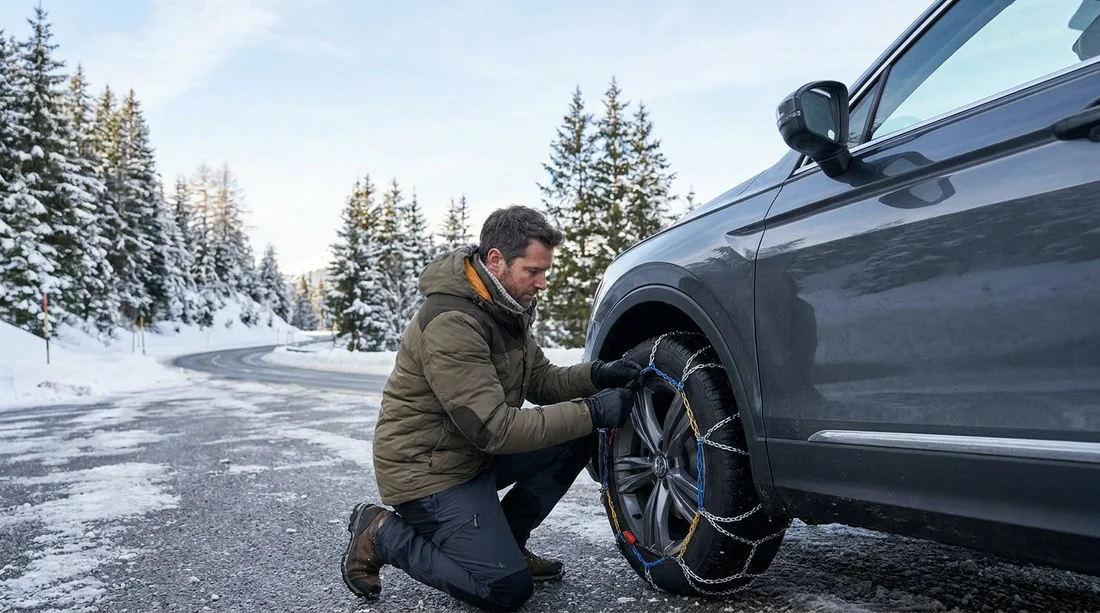
When you are planning a winter trip into California’s mountains, snow chains are not just a nice-to-have. On many Sierra Nevada routes, especially around Lake Tahoe and Yosemite approaches, they can become a legal requirement at short notice. Chain-control is enforced by the California Highway Patrol (CHP) and Caltrans, and it applies to all vehicles, including those on car hire agreements.
The key is to separate two questions: whether the road rules require you to have chains available, and whether your rental agreement allows you to fit them to that specific vehicle. If either answer is “no”, your mountain plan may need adjusting.
How California chain-control works
California uses chain-control levels to manage traction on snowy or icy roads. Signs will normally indicate when controls begin, and officers may turn vehicles around if they are not compliant. The three levels you will see most often are R1, R2, and R3.
R1: Chains required on all vehicles except passenger vehicles with snow tyres. In practice, most travellers on car hire will not have winter-rated snow tyres, so assume you may need to fit chains if R1 is active.
R2: Chains required on all vehicles except 4WD or AWD with snow tyres on all four wheels. Many visitors assume an SUV automatically exempts them, but it does not. Without snow tyres, an AWD rental may still be required to carry chains, and you may still be asked to fit them depending on local enforcement and conditions.
R3: Chains required on all vehicles, no exceptions. This level is less common and often triggers temporary closures. If R3 is posted, be prepared for delays, and consider postponing travel because conditions are severe.
Do rental cars in California allow snow chains?
This is where it gets tricky. Many rental suppliers in California restrict the use of metal snow chains on certain vehicles because incorrect fitting can damage tyres, wheel arches, brake lines, or traction components. Some suppliers allow chains only on specific sizes, some only allow cable-type chains, and some only permit approved alternatives such as textile snow socks. You must check the terms for your exact booking and vehicle class.
At pick-up, confirm three things: whether chains are permitted at all, which type is allowed (traditional chains, cables, or socks), and whether the vehicle has sufficient clearance. Clearance is critical because modern cars often have tight wheel wells, and a chain that is technically the right size can still foul suspension parts.
If you are arranging a car hire in a gateway city such as Sacramento, it can help to plan for mountain travel before you arrive. For example, travellers heading toward Tahoe via I-80 or US-50 often start from Sacramento Airport car hire, where you can ask about winter equipment while collecting the vehicle.
What to confirm at pick-up before driving into the mountains
Use this checklist at the counter and during the walk-around so there are no surprises when chain-control appears.
1) Tyre size and chain compatibility. Look at the tyre sidewall and note the size code, then match it to the chain packaging. If you buy chains after pick-up, do not guess. The wrong size can break or damage the vehicle.
2) Whether the car is FWD, RWD, AWD, or 4WD. This affects where chains go and what exemptions might apply under R2. Most passenger cars are front-wheel drive, meaning chains go on the front tyres. Many rear-wheel-drive cars are a poor choice for steep, snowy routes.
3) Clear written permission and acceptable alternatives. If a supplier does not allow chains, ask whether textile socks or cables are permitted. If none are allowed, you may need to change vehicle category or adjust your destination and timing.
4) Where to fit chains safely. Ask for guidance on safe pull-outs or chain-up areas on your route. In some corridors, chain installers operate in designated areas, but you should not rely on them always being available.
5) Emergency kit expectations. Even a short mountain drive can become a long wait if roads close. Pack warm layers, water, and a phone charger, and keep the fuel tank comfortably above half before climbing.
If you are starting from a coastal hub like Los Angeles and heading toward mountain resorts, build extra time into your plan. LAX is a common starting point for road trips, and you can compare options while arranging car rental in California at LAX that suits winter driving realities.
Chains, cables, or snow socks: what is best for car hire?
Traditional chains provide strong traction but are more likely to cause damage if fitted incorrectly or driven too fast. They can also be noisy and rough on dry patches.
Cable chains are lower profile, often easier to fit, and sometimes preferred for vehicles with limited clearance. Traction can be slightly less aggressive than full chains, but they are commonly accepted where clearance is tight.
Textile snow socks can be quick to install and are gentle on the car. Acceptance varies, and you should only rely on them if you have confirmed that local enforcement and the rental supplier will accept them under the conditions you expect.
Whatever you choose, practise fitting once in a dry, flat place before you need them. Under chain-control, you may be doing it in cold wind with traffic nearby, and familiarity helps you stay safe and compliant.
How to drive with chains, and how to avoid common fines and damage
Fit chains only in designated chain-up areas or safe pull-outs, never in a live lane. After installing, drive a short distance and re-tighten if your model requires it. Keep your speed low, typically no more than 30 mph, and avoid sudden acceleration, heavy braking, and sharp steering. If the road becomes clear and dry for extended stretches, remove chains as soon as it is safe, running chains on dry pavement can cause breakage and vehicle damage.
Choosing the right vehicle category matters. If you are travelling with family, luggage, and winter gear, a larger vehicle can help with stability and space, but it still needs to be chain-compliant. For bigger groups starting in Silicon Valley, minivan rental in San Jose may be a practical base, provided you confirm chain rules for that exact model.
Planning your route and timing
The smartest way to avoid last-minute stress is to monitor conditions the day before and the morning of travel. Check road conditions and chain requirements through official updates, and aim to drive earlier in the day when ploughing and visibility can be better. Keep flexibility in your schedule so you can wait out a short closure rather than pushing on.
If your trip begins in Southern California, you may find different supplier policies depending on brand and location. Comparing options such as San Diego Airport car hire can help you pick a vehicle and terms that align with mountain plans, even if your first few days are coastal.
FAQ
Q: Are snow chains legally required for rental cars in California?
A: Yes, when CHP and Caltrans post chain-control, it applies to rental cars as well. You must comply with the current R-level on the road you are using.
Q: If I rent an AWD SUV, can I skip chains?
A: Not always. Under R2, AWD or 4WD may be exempt only if it has snow tyres on all four wheels. Many rentals have standard all-season tyres, so you may still need to carry chains and possibly fit them.
Q: Can I fit chains to any rental car?
A: No. Some rental agreements restrict chains, or only allow specific types due to clearance and damage risk. Confirm permission, type, and correct sizing at pick-up.
Q: What happens if I reach a chain checkpoint without chains?
A: You may be turned around, delayed, or cited, and you will need to wait until you can get chains or conditions improve. This can also disrupt accommodation plans in mountain areas.




























































































