


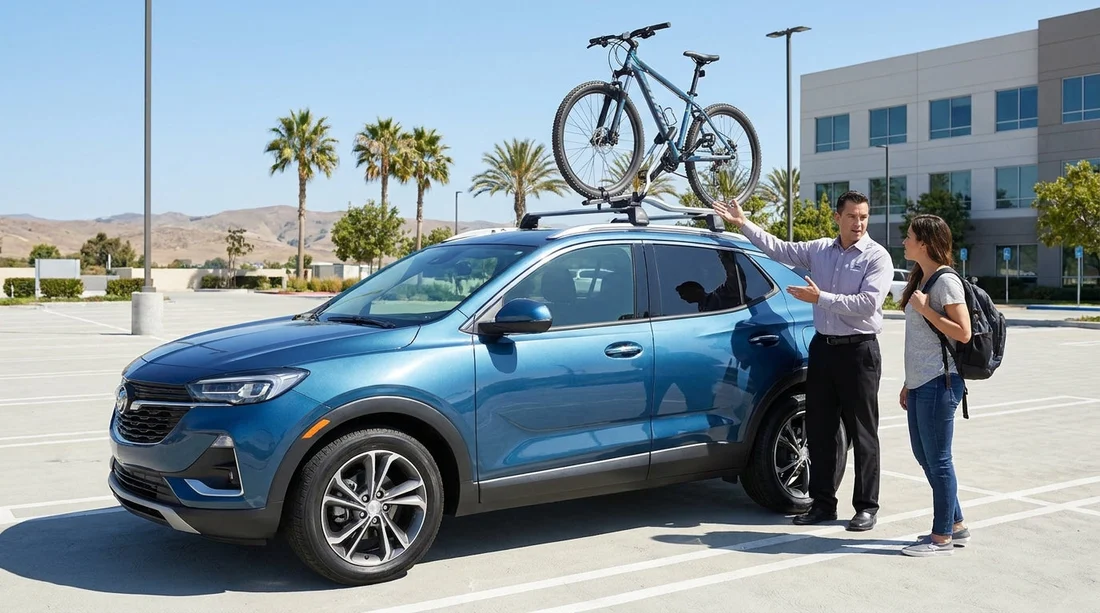
Quick Summary:
- Ask at booking whether racks are available for your exact vehicle class.
- Confirm rack type, weight limits, and compatibility with your bike frames.
- Inspect fitment at pick-up, ensure keys, straps, and locks are provided.
- Get written confirmation of any restrictions before leaving the car park.
Yes, it is sometimes possible to add a roof rack or bike rack to a rental car before car hire pick-up in California, but availability and fitment are not guaranteed unless you confirm the details in advance and again at the counter. Many rental fleets rotate vehicles frequently, and a “SUV” or “estate” booking does not automatically mean roof rails, crossbars, or a tow hitch will be present. The safest approach is to treat racks as a separate item that must be confirmed for your specific pick-up location, dates, and vehicle class.
If you are collecting at a major airport desk, such as car hire at Los Angeles LAX or car hire at San Francisco SFO, you may have more options than smaller depots. Even then, some locations only offer certain rack types, may subcontract installation, or may require you to fit a rack yourself using provided parts. The goal is to confirm what you will actually receive, and what you are allowed to do, before you drive off.
What to confirm when you make the booking
Start by checking whether the supplier offers roof racks, crossbars, or bike racks as an add-on in the booking flow. If the website only shows “ski rack” or “bike rack” without detail, assume it is a request rather than a guarantee until you receive confirmation. When you contact the supplier or agent, ask questions that tie the rack to your vehicle class, not just to your reservation.
Ask the following, and request the answers be noted on your reservation: what rack types are available at that specific branch, whether the rack is fitted at the depot or provided loose, and whether the vehicle class you are reserving commonly has factory roof rails. If you are comparing pick-up points, availability can vary between locations, for example car hire at Santa Ana SNA may have a different accessory inventory than a larger airport station.
Also confirm how charges work. Some suppliers price racks per day, others per rental, and some require a refundable deposit. If a rack is supplied loose, ask whether missing parts, damaged straps, or lost keys are billed separately. The more detailed the note on the booking, the easier it is to resolve disputes at the counter.
Fitment questions that prevent last-minute surprises
Fitment is where most problems occur, especially with roof systems. A roof rack may need existing rails, fixed mounting points, or a specific door clamp kit. If your rental turns out to have a bare roof or a panoramic glass roof, many systems cannot be installed at all. Before pick-up, ask what the rack expects to attach to: raised rails, flush rails, fixed points, or a hitch receiver.
For bikes, clarify the rack style. Common options include roof-mounted fork or wheel trays, boot mounted straps, and hitch-mounted carriers. Hitch racks are usually the easiest for loading and typically reduce the risk of roof strikes, but only if the vehicle has a suitable receiver and the supplier allows their use. Boot mounted racks can be problematic on vehicles with spoilers, unusual tailgate shapes, or rear cameras.
Bring your bike details into the conversation. State how many bikes you need to carry, whether they are carbon frames, full-suspension, e-bikes, fat bikes, or children’s bikes. These factors affect clamp compatibility and weight. If you plan to transport an e-bike, ask for the rack’s per-bike weight rating and the combined maximum load.
What to confirm at the counter before you accept the car
At pick-up, do not rely on verbal assurances. Ask the agent to show you the rack that will be supplied, and confirm it matches what was noted on the reservation. If the car assigned has no rails or points needed for a roof system, you may need a vehicle swap. A swap is easier before paperwork is finalised, and far easier before you leave the lot.
Do a quick parts inventory. For roof systems, check that crossbars are present, that all feet or clamps are included, and that you have any required tool or torque key. For bike carriers, confirm that all straps, wheel trays, locking knobs, and any hitch pin are present. If the rack includes locks, ensure you receive the key and that you can operate it. Missing keys can effectively strand you with a rack you cannot remove.
Ask where you are allowed to fit the rack. Some suppliers require a staff member to install it, and some forbid customers from fitting anything to the roof due to damage risk. If you are using your own rack, you must confirm whether customer-owned accessories are permitted, and whether any damage caused by installation would be treated as renter fault. Get this in writing if possible.
Restrictions to ask about before you drive off
Different suppliers set different rules. Some prohibit towing and hitch use entirely, even if a receiver is present. Others allow hitch racks but not towing. You should ask specifically whether hitch-mounted bike racks are permitted for your agreement, and whether you may use any existing receiver. If hitch use is restricted, do not assume you can simply attach a rack.
Next, confirm any driving restrictions that become more important with a rack fitted. Ask about maximum speed recommendations, whether you must avoid automated car washes, and whether there are route restrictions on certain roads. In California, height is the main practical concern with roof-mounted bikes, particularly in multi-storey car parks, hotel garages, and drive-through clearances.
Finally, ask how to handle damage or loss. Clarify whether the rack is covered by any protection product, whether theft of the rack is treated differently than theft of personal property, and how to report an issue if a strap fails or a bar loosens mid-trip.
Choosing a vehicle class that is more rack-friendly
Even with good preparation, the exact vehicle model is rarely guaranteed. If a rack is essential, choose a class more likely to have compatible mounting points and sufficient roof load rating. SUVs and larger estates are more likely to have rails than compact saloons, but you still need to check the actual car assigned.
If you are flying into Northern California and want more space for bikes and gear, comparing standard airport options with a larger vehicle class can help, including browsing an SUV rental at San Francisco SFO for better cargo flexibility. Remember that roof load limits vary, and a larger vehicle does not automatically mean a higher roof rating. Always follow the vehicle’s limit if it is provided in the handbook or on a door jamb label.
A practical pre-departure checklist
Before leaving the car park, take photos of the rack as fitted, including contact points and straps, plus the condition of the roof, tailgate, or hitch area. Check that doors open and close cleanly with any clamps installed. Give the rack a firm shake, confirm the bikes sit straight, and ensure nothing blocks lights, number plate visibility, or rear sensors more than necessary.
If you are renting through a branded desk, keep your documentation clear. For example, if you are picking up via Avis car hire at San Francisco SFO, ask for any accessory notes to appear on the final agreement. Written clarity matters if you later need to prove that a rack was supplied, installed, or restricted in a particular way.
FAQ
Can I guarantee a roof rack or bike rack when I arrange car hire in California?
Sometimes, but only if the supplier confirms availability for your specific pick-up branch and dates. If it is listed as a request, it may not be guaranteed.
What is the most important thing to confirm at the counter?
Confirm the assigned vehicle can accept the rack, and that all parts, keys, and straps are present. Also confirm any hitch or roof use restrictions on your agreement.
Are hitch-mounted bike racks always allowed on rental cars?
No. Some rental agreements restrict any hitch use, even if a receiver is installed. Ask explicitly whether hitch racks are permitted before you attach one.
What should I do if the car has no roof rails or mounting points?
Ask for a vehicle swap to a compatible model before leaving the lot. If none are available, discuss alternatives such as carrying bikes inside or removing the accessory.
Will a roof-mounted bike increase the risk of damage charges?
It can. Height strikes in car parks and scratches from poor fitment are common issues. Photograph the car and rack at pick-up, and follow weight and fitting guidance carefully.




























































































