


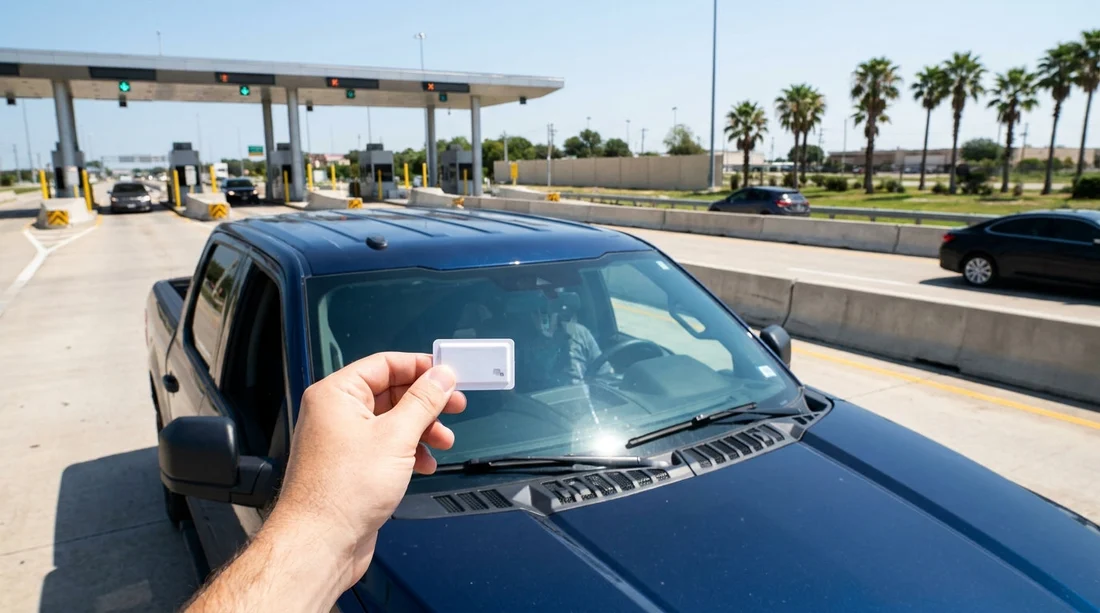
Quick Summary:
- Texas has several toll agencies, but one tag often works widely.
- Ask if your car hire includes a toll tag or plate billing.
- Confirm daily programme fees, admin fees, and when invoices arrive.
- Check routes for toll lanes, especially near Dallas, Houston, and Austin.
Picking up a car hire in Texas can be straightforward until you meet toll roads. Unlike some places with one unified system, Texas has several toll agencies and a mix of sticker tags, transponders, and pay by plate billing. That mix matters because renters can see tolls plus extra processing or administration fees if the vehicle’s plate is billed and the rental company later invoices you.
This guide clarifies the three toll tags most visitors hear about, TxTag, TollTag, and EZ TAG, then focuses on what to confirm at pick-up so you can avoid unexpected charges. The key idea is simple, understand what is installed in your vehicle, how tolls will be paid, and what extra fees may apply.
Texas tolling in plain English
Most Texas toll roads are cashless. That means there is no booth where you hand over cash, the road reads a toll tag (transponder) or photographs the number plate and bills the registered account. In a rental, the registered party is usually the rental company, not you, so the tolls can come back later through the rental agreement.
If you are arranging car hire collection at Dallas DFW, it is worth planning your first journey with tolls in mind, because navigation apps may automatically choose tolled routes to save time.
What are TxTag, TollTag, and EZ TAG?
Think of these as account brands linked to a device or a number plate. They are not separate toll roads themselves, they are ways to pay for toll roads. Importantly, most major Texas toll agencies participate in interoperability, which means one tag can be recognised across many Texas toll roads. However, the customer service, billing, and account rules differ by tag provider.
TxTag, the statewide option many people search first
TxTag is associated with the Texas Department of Transportation toll operations and is commonly presented as a statewide tag option. A TxTag account can be used on many toll roads in Texas because of interoperability arrangements. For a renter, you are unlikely to open a TxTag account for a short trip, but it is useful to recognise the name because some rental fleets may have tags that are compatible or managed via a tag programme described using this term.
TollTag, common around Dallas and North Texas
TollTag is associated with the North Texas Tollway Authority and is widely used in the Dallas area. It is designed to work on the region’s toll roads and, via interoperability, on many other Texas toll roads too.
For travellers flying into the area, browsing pick-up options like car hire at Dallas DFW Airport can help you compare vehicle types and providers, then you can focus your counter questions on tolls.
EZ TAG, widely seen around Houston
EZ TAG is associated with the Harris County Toll Road Authority in the Houston area. It is a common name on signs and lanes around Houston. As with the other tags, interoperability often means it can be recognised on many toll roads across Texas, but the account holder and billing rules still matter.
If you are collecting near Houston, including at Houston IAH, it is especially important to confirm how tolls are handled because ring roads and managed lanes can route you onto tolled segments.
How tolls are charged on a rental car
There are three common set-ups in Texas car hire. The first is an installed toll tag linked to the rental company’s account, with tolls passed through to you later, sometimes with an added convenience fee. The second is pay by plate, where no tag is used and the plate is billed, then the rental company invoices you with an administration fee. The third is an opt-in toll programme, where the rental company provides a tag or activates toll charging for a daily fee plus the tolls.
The names and rules vary by supplier, but your aim is to identify which model applies to your vehicle and what the fee structure is. Some programmes charge only on days you use tolls, while others charge for each rental day once you opt in.
What to confirm at pick-up, a practical checklist
1) Is there a toll tag in the vehicle, and which system is it? Ask staff to point to the transponder location, often near the windscreen, and tell you the provider name.
2) Are tolls charged via a toll programme, or pay by plate? Pay by plate can cost more because the toll agency’s pay by plate rate may be higher, and rental processing fees may apply.
3) What fees apply beyond the toll itself? Ask specifically about daily convenience fees, maximum caps, and administration fees.
4) How and when will charges be billed? Some charges appear after you return the car hire, sometimes weeks later. Confirm whether charges are posted to the card used for the rental and whether you will receive an itemised statement.
5) What happens if you use toll roads without opting in? In some cases, the vehicle’s plate will still be billed and passed through with added fees. It is better to understand the policy before you drive away.
Driving scenarios where renters get caught out
Express lanes and managed lanes: Around large cities, express lanes can be tolled even when the main lanes are free. Navigation apps may choose them automatically.
Airport exits and connector roads: Some airport area connectors lead onto toll segments quickly. If you are new to Texas roads, you can find yourself committed before you can change lanes safely.
One wrong turn: A short accidental toll segment can still trigger admin fees. That is why understanding the billing model is as important as understanding the tag names.
If you are selecting a larger vehicle for family travel, such as through minivan hire at Houston IAH, you may prioritise easier routes and less lane changing, which can also help reduce accidental toll lane use.
Common myths about Texas toll tags for car hire
Myth: You must have the “right” tag for each city. In practice, interoperability means one participating tag often works across many Texas toll roads. The more important question is how your rental company processes the tolls and fees.
Myth: If you do not stop at a booth, it must be free. Many toll points are fully electronic, especially on modern roads and express lanes. No booth does not mean no charge.
Myth: You can pay the toll later yourself to avoid rental fees. With a rental car, the toll agency usually bills the registered owner. Confirm the rental policy rather than relying on later workarounds.
FAQ
Do TxTag, TollTag, and EZ TAG all work on the same roads? Most major Texas toll roads support interoperability, so a participating tag can often be read across networks. The main difference for renters is who owns the account and how charges are passed through.
Will my car hire automatically include a toll tag? Not always. Some vehicles have a transponder installed, some use pay by plate billing, and some require you to opt into a toll programme. Ask at pick-up which applies to your vehicle.
Why did I get toll charges weeks after returning the car? Toll agencies can take time to process plate reads, then bill the rental company, which later bills you. Delays are common, so keep your rental agreement and receipt until all post-trip charges settle.
How can I avoid unexpected admin fees on tolls? Confirm the toll billing method and fee structure at pick-up, then decide whether to enable a toll programme or avoid toll roads in your navigation settings.
Are toll roads common near Dallas, Houston, and Austin? Yes, especially around ring roads, express lanes, and connectors. If you are driving in metro areas, assume you may encounter cashless tolling unless you intentionally plan free routes.




























































































