


Quick Summary:
- Skip paid GPS, use offline phone maps and bring a charger.
- Decline roadside cover if your card or insurer already includes it.
- Avoid pre-paid fuel unless you will return the tank nearly empty.
- Add extra drivers only when you will genuinely share longer driving.
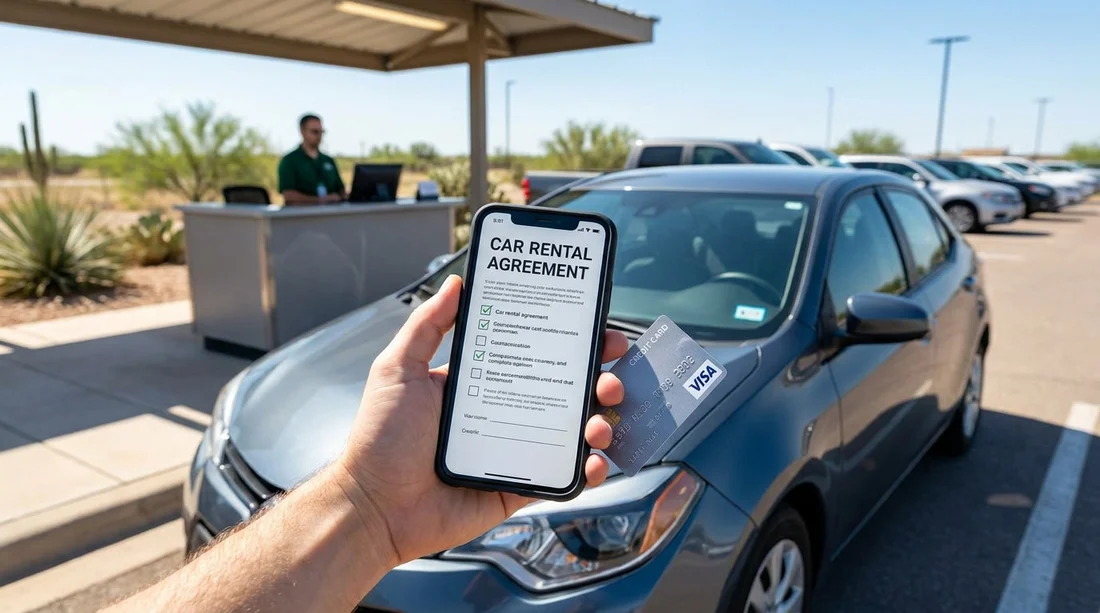
Picking up a car hire in Texas can feel like a speed test, the queue is moving, the agent is asking questions, and the counter screen fills with add-ons. Many optional extras are useful in specific situations, but plenty are duplicates of cover or kit you already have. The goal is not to decline everything, it is to decide quickly what genuinely reduces your risk or effort on Texas roads.
This guide breaks down the most common counter extras, what they cost you in practice, and the quickest checks you can do before you sign. If you are collecting at a major airport location such as Houston IAH or Fort Worth DFW, you will often be offered the same menu of options.
How to decide in 60 seconds at the counter
Use three questions and you can say yes or no without hesitation.
1) Does it duplicate something I already have? Your own car insurance, travel insurance, credit card benefits, phone plan, or your travel companion’s membership can overlap with counter products.
2) Is it priced per day or per rental? Per-day add-ons quietly become the largest part of the bill on a week-long Texas trip.
3) Will it change what I do today? If it will not affect how you drive off the lot, it is likely non-essential.
Optional extras you can usually decline
These are the most common items that inflate car hire costs, plus the situations where they might still be worth considering.
1) GPS or sat nav rental
Most travellers can decline a paid GPS. Texas cities are well mapped, and phone navigation is reliable on interstates and in metro areas. Before you fly, download offline maps for Dallas, Houston, Austin, San Antonio, and any rural stops, then pack a charging cable and a windscreen or vent mount.
When it might be worth it: if you will be without mobile data, if your phone battery is unreliable, or if multiple drivers need the same navigation without sharing a phone.
2) Fuel options: pre-paid fuel and convenience refuelling
Pre-paid fuel sounds simple, but it often assumes you will return the tank close to empty. If you bring it back half full, you pay twice. The “we will refuel it for you” option is usually the most expensive method because the per-gallon rate and service fee can be higher than local stations.
Better approach: decline these and choose “return full”. Texas has plenty of fuel stations near airports, but allow time, and keep the final receipt in case of disputes.
When it might be worth it: if you have a very early flight, you will not pass a station, and you are happy paying for convenience rather than value.
3) Roadside assistance plans
Roadside packages can cover call-outs, towing, lockouts, or flat tyres. They are often sold as peace of mind, but you may already have similar help through a credit card, travel insurance, or even your mobile provider. Some vehicles also include manufacturer roadside cover.
Quick check before pick-up: look up your card benefits and travel policy wording for “roadside assistance”, “towing”, and “lockout”. If you are unsure at the counter, ask what scenarios are excluded from the standard rental terms.
When it might be worth it: if you are driving long rural stretches, you are not confident changing a wheel, or multiple drivers are likely to lock keys in the car.
4) Extra driver fees
Adding another driver can cost per day. If only one of you will drive, decline it. If you expect to share driving on long distances between Texas cities, paying for an extra driver may reduce fatigue and risk, which can be worth more than the fee.
Decision tip: plan your driving legs now. If one person is happy to do all city driving and only short highway hops, skip the add-on.
5) Toll products and toll passes
Texas has many toll roads, especially around Dallas-Fort Worth and Houston. Rental toll programmes can be convenient, but some charge a daily service fee even if you use a toll only once. Others add admin charges per toll. The expensive part is usually the processing fee, not the toll itself.
What to do instead: decide if you will actively use toll roads. If you can set your navigation to “avoid tolls”, you may not need any toll product. If you will use them, ask for the exact fee structure in writing, including daily charges, per-toll admin fees, and any cap.
When it might be worth it: if you will drive toll routes daily and want minimal admin and no missed tolls.
6) Insurance-like add-ons you may not need
At the counter, you may see products labelled collision damage waiver, loss damage waiver, supplemental liability, personal accident insurance, or personal effects cover. Some can be valuable, but they are also where duplication is most common.
How to avoid paying twice: check what your travel insurance covers for rental cars, and what your credit card provides. Note that some card policies exclude certain vehicles, use cases, or locations. Also, your own car insurance from home may not extend to US rentals, especially for UK visitors, so do not assume it does.
Counter rule: if you cannot confirm your existing cover and you would be financially stressed by a claim, you might choose the rental company product for simplicity. If you can confirm your cover and you are comfortable with the deductible and process, declining can keep car hire costs down.
If you are comparing suppliers for airport collections, you can review location-specific options such as Thrifty at Dallas DFW or Payless at Houston IAH, then arrive knowing which protections you actually want.
FAQ
Q: Is it safe to decline GPS for a Texas car hire?
A: Usually yes, if you have a smartphone, a charger, and offline maps downloaded. GPS rental can be helpful if you will have no data or a poor battery.
Q: Should I buy the toll pass at the counter in Texas?
A: Only if you expect to use toll roads regularly and the fee structure is clear. Some toll products add daily service fees and admin charges that outweigh the tolls.
Q: Can I decline roadside assistance and still get help if I break down?
A: Yes, but your support route changes. You may rely on the rental company’s standard breakdown process, your insurer, your card benefits, or paid towing, depending on what you have.
Q: Is pre-paid fuel ever worth it?
A: It can be, if you will return the car nearly empty and you value speed at drop-off. If you return with fuel left, it is rarely good value.
Q: What is the quickest way to keep car hire costs down at pick-up?
A: Decide in advance on four items, fuel plan, extra drivers, toll approach, and whether you need any extra cover. Then decline anything that duplicates what you already have.




























































































