


Quick Summary:
- Economy suits solo travellers or couples with light luggage and low running costs.
- Compact adds shoulder room and a more usable boot for everyday trips.
- Intermediate fits three adults more comfortably and handles longer motorway drives better.
- Choose based on passenger count, luggage shape, parking confidence, and comfort needs.
New York trips often involve a mix of tight kerbside pick-ups, toll roads, bridges, and longer drives out to beaches or upstate. That is why choosing the right car hire class matters. “Economy”, “compact”, and “intermediate” sound similar, but they usually differ in cabin width, boot shape, and how relaxed the car feels at speed. Understanding the typical differences helps you avoid paying for space you do not need, or ending up with a car that feels cramped once you add luggage and passengers.
Car hire categories are not exact models. You usually book a class, then receive a vehicle with similar size and features. In New York, supply can vary by season and by pick-up point, so it helps to focus on what each class tends to include, rather than a specific badge. Below is a practical guide to space, luggage, comfort, and the kinds of journeys each class suits.
How car hire classes work in New York
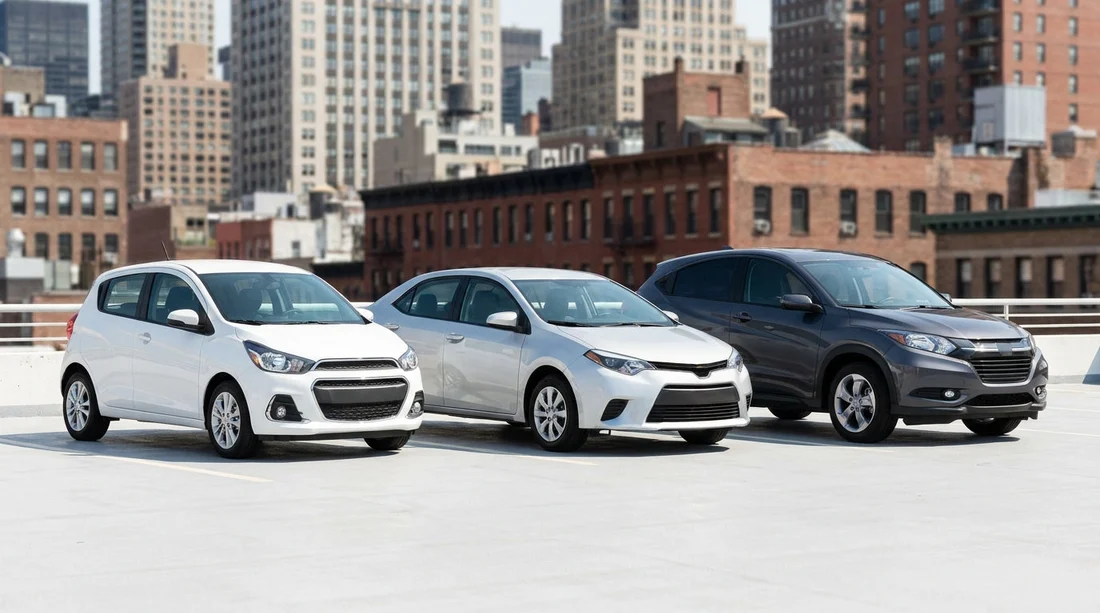
Car hire companies group vehicles by size and sometimes by transmission type and fuel economy. An “economy” car is usually the smallest mainstream class above mini. “Compact” is a step up in cabin width and boot volume, often a slightly longer body. “Intermediate” sits between compact and full-size, with noticeably better rear-seat space and a calmer feel on faster roads.
It is also worth remembering that New York City driving is a different challenge to wider US roads. Parking garages can be narrow, street parking is tight, and visibility matters. At the same time, many visitors use New York as a base for longer drives, where comfort, stability, and luggage access become more important than squeezing into a gap.
If you are collecting from a major airport, vehicle choice can be broader. For example, travellers comparing options at car hire at New York JFK may see clearer distinctions across categories than at smaller city locations. If you are flying into New Jersey, availability can also vary, so it is useful to review car class guidance alongside pick-up planning such as car hire at Newark EWR.
Economy car hire in New York: what you typically get
Best for: solo travellers, couples, light packers, short city-focused itineraries.
Economy car hire is generally the smallest class most travellers consider for New York. Typical features include a small footprint that is easier to manoeuvre, good fuel efficiency for stop-start traffic, and simple cabins with fewer comfort extras. On paper, many economy cars are listed as seating five, but in reality the rear bench is best for two adults, or for shorter journeys with a third passenger.
Space and luggage: Expect a modest boot opening and limited depth. A common real-world fit is one medium suitcase plus a smaller cabin bag, or two cabin bags. If you have a bulky pram, large hard-shell suitcases, or shopping bags for a longer stay, economy can feel tight quickly. Also pay attention to boot shape, not just litres, because a narrow opening can make packing harder.
Comfort: Economy cars are fine around Manhattan and the boroughs, but on longer motorway drives they can feel busier in terms of road noise and acceleration. If you are planning day trips that include extended highway time, you may appreciate the calmer ride of a larger class.
Compact car hire in New York: the everyday upgrade
Best for: couples with luggage, small families, travellers who want easier packing without going large.
Compact is often the sweet spot for New York visitors. You still get a city-friendly size, but typically with better front-seat width, more shoulder room, and a boot that is easier to load. Compacts can also feel more stable on bridges and faster roads, which matters when you are crossing into New Jersey or heading out on Long Island.
Space and luggage: Compacts commonly handle two medium suitcases if you pack thoughtfully, or one large suitcase plus a couple of smaller bags. The rear seat is still not ideal for three adults over long distances, but for short hops it is workable. If you are travelling with a child seat, compact often provides a little more space to fit it without pushing the front passenger too far forward.
Comfort: Compared with economy, you often get slightly better seat support and a less strained feel when merging. The difference is most noticeable when you have passengers and luggage onboard and need to join faster lanes confidently.
Intermediate car hire in New York: more room, more relaxed
Best for: three adults, families with luggage, longer road trips, comfort-first drivers.
Intermediate car hire generally gives you the biggest jump in rear-seat usability, without moving into large saloons, SUVs, or people carriers. The cabin tends to be wider, the wheelbase often longer, and the boot more accommodating. This pays off when you are doing airport runs with several bags, or when you are driving for multiple hours.
Space and luggage: Intermediate cars typically take two medium suitcases plus additional soft bags, and the rear seat is more realistic for three adults for shorter to medium journeys. For families, the extra space can make it easier to manage a buggy, nappy bags, and shopping without filling every inch of the cabin.
Comfort: This class generally feels quieter and more planted at speed. You may notice smoother cruising, better overtaking confidence, and less fatigue on longer stretches. If your plan includes upstate drives, coastal trips, or multiple borough-to-borough days, intermediate can be a practical choice.
Choosing the right class for your itinerary
If most of your driving is in Manhattan: Economy or compact usually wins. The ease of manoeuvring and parking is a real advantage. Compact is often the safer bet if you have checked luggage.
If you are doing airport pick-ups and drop-offs: Think in terms of luggage first. New York airport trips commonly involve at least one large case per person. If that is you, compact or intermediate is less stressful. If your flight arrives at JFK, you can compare practical pick-up considerations at car rental in New York JFK.
If you are planning day trips beyond the city: Intermediate tends to feel more comfortable on faster roads, particularly when the car is loaded. If you are heading over to New Jersey and expecting more space, it can also be useful to consider whether a larger class such as an SUV is more suitable. For travellers who prefer higher seating and extra room, see SUV rental at Newark EWR.
If you are travelling with extra passengers or kit: Once you get to four or five people, the category discussion changes. Even intermediate can struggle with luggage for a full load of adults. In that case, you may want to look at people carriers rather than forcing bags into the cabin. For families arriving at JFK, minivan hire in New York JFK may be closer to what you actually need.
FAQ
Is compact always worth paying more than economy in New York? Not always. If you have minimal luggage and will mostly drive short distances, economy can be sufficient. Compact becomes worth it when you have checked luggage, need more shoulder room, or want easier packing.
How many suitcases fit in an intermediate car hire category? Typically two medium suitcases plus a couple of smaller bags, depending on the boot shape. If you have three large suitcases, consider a larger class, SUV, or a minivan.
Are these categories the same across all car hire companies? The names are broadly consistent, but the exact vehicles in each class can vary by supplier and location. Focus on the typical space and comfort differences, and remember you are booking a class, not a specific model.
Which class is easiest for New York City parking? Economy is usually easiest, with compact close behind. Intermediate is still workable, but you may find fewer street spaces where the car fits comfortably.




























































































