


Quick Summary:
- A crossover SUV is usually a compact or midsize, car-based SUV.
- Expect five seats, higher seating, and easy motorway handling in California.
- Boot space suits two large cases plus smaller bags, not seven people.
- Check luggage, child seats, and fuel policy details, not model name.
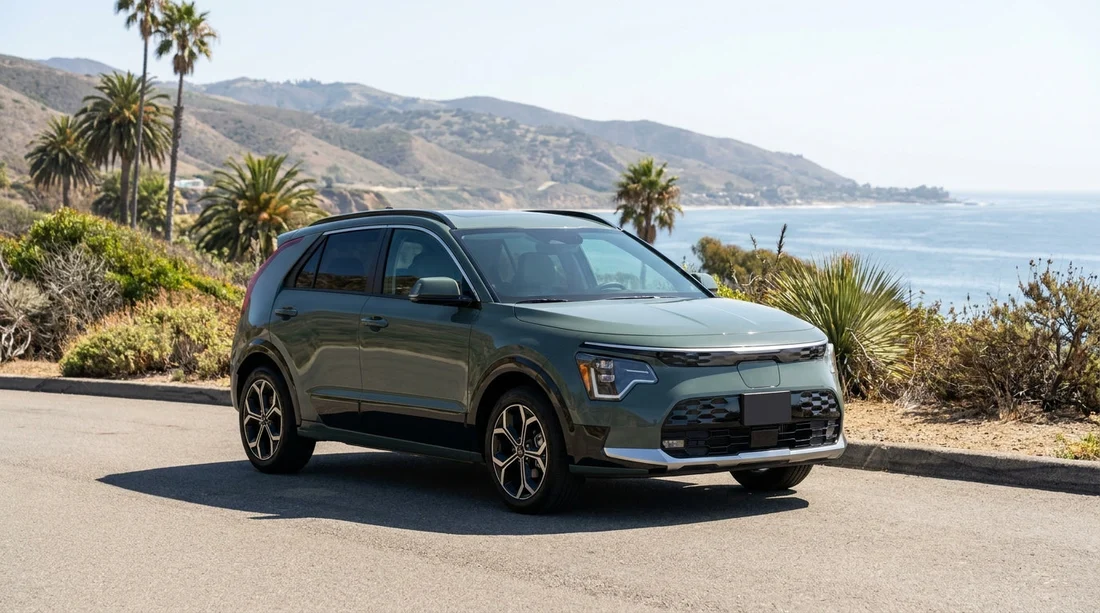
On a car hire booking in California, “crossover SUV” is a category label rather than a promise of a specific make or model. In the US rental market, it typically means a car-based SUV with a taller ride height and hatchback-style boot, built for comfort on city streets and long motorway runs. Think of the everyday SUVs you see around Los Angeles, San Francisco, and San Jose, not a heavy-duty off-road vehicle.
The key point is that rental categories describe a general size and feature set. You may receive a “similar to” vehicle depending on fleet availability at your pickup location and time. Understanding what the crossover SUV category usually includes helps you choose the right fit for passengers, luggage, parking, and the sort of driving you plan to do in California.
What a “crossover SUV” usually includes in US car hire
A crossover SUV (often shortened to “crossover”) is generally based on a car platform, so it drives more like a large hatchback or estate than a truck. That usually translates to smoother steering, easier parking, and better fuel economy than larger, body-on-frame SUVs.
In practical rental terms, a crossover SUV category most often overlaps with compact SUV and midsize SUV groups. Common examples in US fleets can include vehicles similar to a Toyota RAV4, Honda CR-V, Nissan Rogue, Mazda CX-5, Hyundai Tucson, Kia Sportage, Ford Escape, or similar. The exact model is not guaranteed, but the general footprint and usability are.
If you are comparing categories on a California car hire search, you may also see “standard SUV” or “full-size SUV”. Those usually step up in size and weight, sometimes with optional third-row seating. A crossover SUV is typically the more manageable, everyday choice for most California itineraries.
Seating expectations: how many people fit comfortably?
Most crossover SUVs are five-seaters, with two seats in front and a three-person rear bench. In reality, five adults can fit for shorter journeys, but comfort for long drives is usually best with four adults plus luggage. The centre rear seat can be narrower and the middle passenger may have a raised floor hump, depending on the model.
If you genuinely need six or seven seats, a crossover SUV category is unlikely to be the right match. Some crossovers offer a small third row, but that is not common in rental “crossover” groups, and third-row space can be tight and can reduce luggage capacity dramatically. For larger families, sports teams, or groups with bulky bags, a people carrier may be more suitable. Hola Car Rentals has location-specific options such as minivan rental in San Jose (SJC), which better aligns with true seven-seat needs.
Luggage space: what fits in the boot?
Luggage capacity is where many travellers feel uncertainty, especially when the booking shows only a category name.
Two large suitcases plus one or two cabin bags, with the rear seats up, depending on suitcase shape and the specific model. If you travel with four large suitcases, you may need to stack higher (reducing rear visibility) or fold part of the rear seat (reducing passenger seating). Soft bags are easier to pack than hard-shell cases.
California trips often involve shopping, day bags, and possibly hiking gear. A crossover SUV’s hatchback boot opening is convenient for this, and the rear seatbacks usually fold to create a long, flat load area for larger items. If your trip includes skis or surfboards, consider whether they will fit diagonally, or whether you would need a roof rack. Roof bars are not a given in rental fleets, so do not assume they will be available.
Driving feel in California: city streets to long motorway miles
One reason crossovers are popular for car hire is how predictable they are to drive. You typically get a higher seating position for visibility, car-like handling on winding roads, and comfort at speed for longer stretches.
Parking is still a consideration. Crossovers are taller and often wider than compact saloons, and city parking spaces can feel tight in neighbourhoods with older layouts. Many newer crossovers have parking sensors or a reversing camera, but treat these as “nice to have” rather than guaranteed.
All-wheel drive (AWD) vs two-wheel drive: what to expect
In California, a crossover SUV may be offered with front-wheel drive or AWD. The booking category does not always guarantee AWD unless it is stated explicitly. AWD can be useful if you plan to drive in winter conditions to mountain areas, or if you want extra traction in heavy rain, but it can slightly reduce fuel efficiency.
If your trip involves potential snow or icy conditions, focus on local requirements and road restrictions. In some circumstances, you may be required to carry snow chains, even with AWD. The most reliable approach is to select an option that clearly specifies AWD if that is important for your route, and to check the rental terms around winter equipment.
How to interpret “or similar” on a car hire booking
Most bookings describe the vehicle as “Model X or similar”. The “similar” part is doing a lot of work. It means you should expect the same general size, approximate seating, and category features, not the same badge on the bonnet. One day it may be a RAV4-type vehicle, another day a Rogue-type vehicle, depending on fleet rotation and return times.
Because of this, the smartest way to judge suitability is to evaluate the category on measurable needs: passenger count, number and type of suitcases, and whether you need AWD. If your trip has fixed constraints, like five adults with luggage, consider moving up a size class rather than relying on best-case packing.
California pickup locations: why availability can vary
Availability by category can vary by airport and season. Busy airports often have deeper fleets, but they also experience faster turnover. If you are collecting near Silicon Valley via car hire at San Jose Airport (SJC), you may see plenty of crossover choices, but the exact model can still change. At car rental at San Francisco (SFO), high demand can affect which brands and trims are on the lot at any given hour.
If you are flying into Southern California, you might compare crossover options with larger SUV categories at SUV rental in California (LAX). And if you are starting inland, car rental in Sacramento (SMF) can be a practical base for road trips towards Lake Tahoe, wine regions, or national parks.
What to check before choosing a crossover SUV category
To avoid surprises, scan the booking details for specifics that matter more than the label. Confirm seating and luggage guidance, transmission type, fuel policy, child seat availability, and general driver comfort. The takeaway is straightforward: “crossover SUV” in California car hire usually means a sensible, mid-sized, easy-driving SUV with five seats and flexible luggage space, but not a guaranteed model and not a true seven-seater.
FAQ
Is a crossover SUV the same as a compact SUV on a California car hire site? Often, yes. Many rental companies use crossover SUV, compact SUV, and midsize SUV categories with some overlap. Focus on the listed passenger and luggage capacity rather than the label.
Will my crossover SUV booking include AWD? Not always. Some crossovers are AWD, many are two-wheel drive. If AWD matters for your route, choose an option that states AWD explicitly in the features.
How much luggage fits in a typical crossover SUV? Commonly, two large suitcases plus one or two smaller bags with seats up. Four large suitcases may require folding a seat section or packing higher, which reduces comfort and visibility.
Is a crossover SUV good for driving in San Francisco? It can be. You get good visibility and comfort, but parking can be tighter than with a small car. If you expect a lot of street parking, consider whether a smaller class would be easier.
Should I choose a minivan instead of a crossover SUV for a family trip? If you need six or seven seats with proper luggage space, a minivan is usually more practical. A crossover SUV is better for five people or fewer and moderate luggage.




























































































