


Quick Summary:
- In NYC, keep your car hire at least 15 feet away.
- Ignore kerb paint alone, rely on signs and hydrant position.
- Measure from the hydrant body, not the kerb end points.
- If signage is unclear, photograph the hydrant, kerb, and nearest sign.
Parking rules feel deceptively simple until you are circling Manhattan with a car hire, tired, late, and spotting an empty space beside a fire hydrant. In New York City, that empty space can become an expensive mistake. The key point is that NYC applies a specific minimum distance from a hydrant, and enforcement is common, especially in busy neighbourhoods where firefighters need immediate access.
This guide explains the NYC distance rule, the kerb markings and street features that often mislead visitors, and the exact photos you should take to protect yourself if signage is missing or unclear. The examples apply whether you are in Manhattan, Brooklyn, Queens, the Bronx, or Staten Island, and they are particularly useful if you have collected your vehicle at car hire airport New York JFK or driven in from New Jersey.
The legal rule in NYC: 15 feet from a fire hydrant
In New York City, you must not park within 15 feet of a fire hydrant. That distance is the core legal rule visitors need to remember. Fifteen feet is about 4.6 metres, or roughly the length of a typical mid-size car plus a bit more.
For a practical approach, if your car hire would be close enough that someone could comfortably run a hose from the hydrant around your bumpers, you are likely too close. Do not try to squeeze in because you see other cars doing it. Tickets can be issued even if your vehicle is only slightly inside the restricted zone.
Also note that the rule is about parking and standing. If you stop and wait in the driver’s seat, you can still be in violation depending on the situation and local enforcement. In dense parts of New York, it is safer to assume that stopping within 15 feet invites attention.
Where do you measure the 15 feet from?
Visitors often ask, “Is it 15 feet from the kerb paint, the sign, or the hydrant cap?” In practice, measure from the fire hydrant itself. The simplest and safest method is to treat the hydrant body as the starting point and keep your vehicle’s nearest end at least 15 feet away.
Because the hydrant usually sits on the pavement close to the kerb, drivers misjudge the distance by looking only at the kerb edge. If the hydrant is set back a little, the kerb distance can feel longer than it is. If it is right at the edge, the kerb distance can feel shorter. Either way, the hydrant is what matters.
If you are trying to judge without a tape measure, use steps. Fifteen feet is roughly five adult walking paces. Walk from the hydrant along the kerb line to where your bumper would be. If it is fewer than five paces, do not park there. This is not a legal measurement method, but it is a helpful safety margin when you are making a quick decision.
Common NYC kerb markings that mislead visitors
Kerb paint in New York can be confusing because it is not always consistent, may be worn away, and may not reflect the legal boundary you assume it does. Some areas have painted kerb sections near hydrants, others do not, and repainting schedules vary. The result is that relying on colour alone can get you ticketed.
Short painted sections that do not equal 15 feet. You might see a small yellow or white painted patch by the hydrant and assume that is the no-parking area. Sometimes it is shorter than 15 feet, sometimes longer, and sometimes it is simply old paint that no longer reflects current enforcement priorities.
Fresh paint that looks official but does not include the full restriction. Construction crews and contractors sometimes repaint kerbs as part of a project. It may look neat and “official” but it is not a substitute for the city rule. Treat any kerb colour as a warning, not as a measurement tool.
Driveway cuts and building entrances that distort your perception. A curb cut for a driveway or loading bay can make the hydrant feel farther away because the kerb line changes. The 15 feet still applies regardless of kerb shape.
Hydrants near corners and crosswalks. At intersections, you may be juggling several restrictions at once, including crosswalk clearance, corner rules, and hydrant clearance. If a hydrant sits near a corner, do not assume you can park “up to the corner” if you have met one rule. You must satisfy all of them.
If you are driving in from Newark after collecting a vehicle, it can be worth reviewing local expectations before you hit Manhattan street parking. Hola Car Rentals provides pick-up options such as car hire airport Newark EWR and related New Jersey pages, and the big change once you enter NYC is how aggressively kerbside rules are enforced.
When signage is missing or seems contradictory
Hydrant clearance is a citywide rule, so a specific hydrant sign is not required for the restriction to apply. That is why visitors feel blindsided, they look for a sign, do not find one, and assume it is fine. In reality, you are expected to know the hydrant rule.
Where signs do matter is the rest of the block. You might be correctly 15 feet from a hydrant but still be in a spot reserved for street cleaning, loading, buses, or residential permit rules in nearby jurisdictions. New York City uses a dense mix of signs, and it is common for restrictions to apply on certain days or hours.
If signs appear contradictory, focus on these steps:
1) Identify the nearest sign for the exact kerb segment. Signs usually apply from the signpost to the corner, or to the next sign. If you are between two signs, you must interpret both.
2) Treat hydrants as an automatic exclusion zone. Even if the sign suggests parking is allowed, hydrant clearance still overrides. The hydrant is not “covered” by a permissive sign.
3) Assume enforcement favours safety access. When in doubt, do not park near the hydrant. A legal space a few metres farther down is cheaper than a ticket plus potential tow complications with a car hire.
Photo-proof to take if signage is unclear
If you decide to park and you are not fully confident about signage or boundaries, take a quick set of photos before you walk away. This is useful for two reasons: it helps you argue a ticket if the circumstances were misleading, and it helps you document that you acted reasonably if you need to discuss the issue with your car hire provider or insurer.
Take the photos in good light if possible, and make sure your phone captures location metadata. Here is a practical checklist.
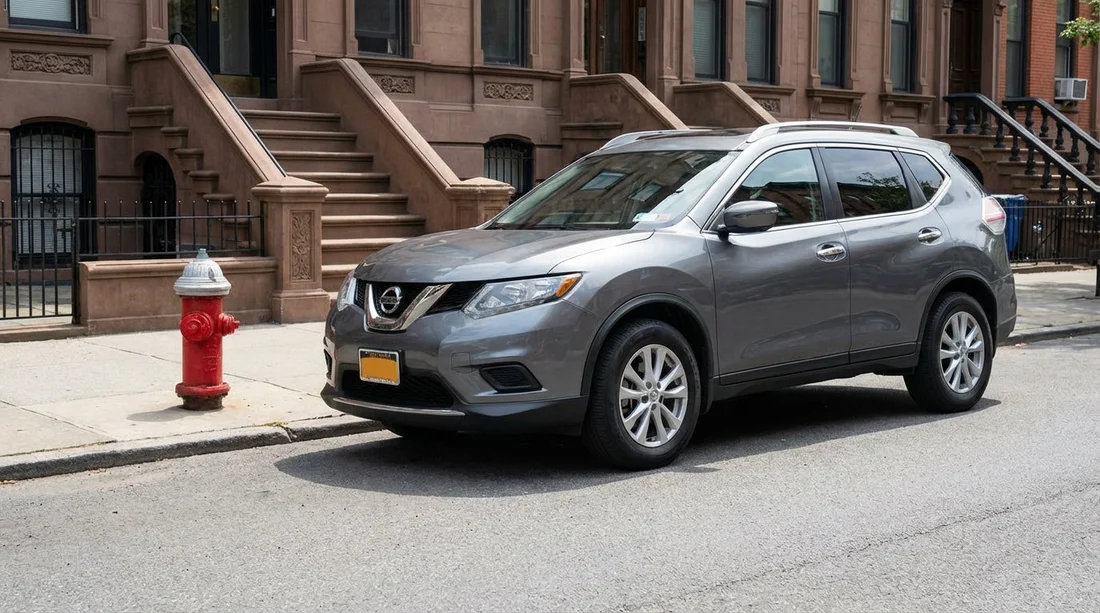
Photo 1: The hydrant and your vehicle in one frame. Stand far enough back to show the hydrant and your nearest bumper together. This clarifies whether you were outside the 15-foot zone.
Photo 2: A close shot of the hydrant. Capture the hydrant’s position relative to the kerb and pavement. If there is kerb paint, include it.
Photo 3: The nearest parking sign, readable. Take a clear picture of the sign text and time restrictions. If there are multiple signs on one pole, capture them all, top to bottom.
Photo 4: A wide shot down the block. Include your car, the signpost, and the corner. This helps show which sign logically applied to your kerb segment.
Photo 5: Street name and building number. Capture a street blade or a building number in the same direction as your parked car. This helps confirm the exact location if you later need to reference the spot.
Do not rely on “I have a photo of my dashboard” type images. What matters is proving the street context and your distance from the hydrant. A quick photo set takes less than a minute and can save a lot of confusion later.
Why hydrant parking is enforced so strictly
In NYC, hydrants are vital infrastructure. Fire crews need rapid access and enough space to connect hoses. Even a partially blocked hydrant can slow response times. That is why enforcement is strict, and why you should not expect leniency because you are in a hire car or are unfamiliar with local rules.
Another point visitors miss is that access is not only about using the hydrant itself. Firefighters may need room to move around it, connect equipment, and lay hoses along the street. Keeping the full clearance is the simplest way to avoid interfering with emergency operations.
Extra parking pitfalls near hydrants for car hire drivers
Hydrants often sit in areas that already have complicated kerbside rules. These are common patterns where car hire drivers get caught:
Stopping “just for a minute” while someone runs inside. In busy areas, stopping beside a hydrant attracts attention quickly. If you need to load or unload, look for a legal loading zone or a garage.
Trusting the behaviour of other drivers. You may see locals parked closer than 15 feet. Some are taking a risk, some are double-parked temporarily, and some will still get ticketed. Their choices do not make the spot legal.
Assuming an SUV length equals safe clearance. Fifteen feet is longer than many people think. One large vehicle length is often not enough. If you cannot confidently clear the zone, keep moving.
Night-time parking without rechecking signs. NYC parking rules change by time and day. You may arrive late and miss a restriction that kicks in early morning. Photograph the signs at night, then re-check the next day if you plan to leave the car.
If your trip involves airport pick-up, it also helps to plan parking before you arrive at your accommodation. Options vary depending on whether you picked up at JFK or Newark. For example, travellers comparing providers sometimes start with pages like Dollar car hire New York JFK or Hertz car rental Newark EWR, then decide whether street parking is realistic for their itinerary.
A simple decision rule when you are unsure
When you are driving an unfamiliar car hire in New York, your goal is to avoid high-risk kerbside decisions. Use this rule of thumb: if you cannot clearly confirm you are more than 15 feet from the hydrant and compliant with the nearest sign, do not park there. Look for a different spot, a metered space with clear instructions, or an off-street garage.
This is especially true in dense areas where a ticket can be followed by towing, or where recovering the vehicle is time-consuming. Even when you are confident, take those photos. They are quick, and they give you a record of what you saw at the time.
FAQ
How far from a fire hydrant can you legally park in New York City? You must park at least 15 feet away from a fire hydrant in NYC. Treat this as a strict minimum and give extra space when unsure.
Does kerb paint near a hydrant show the exact no-parking distance? Not reliably. Kerb paint can be missing, worn, or not match the full 15-foot rule, so use the hydrant distance rule first.
If there is no sign near a hydrant, can I park closer than 15 feet? No. The hydrant clearance rule applies even without a specific sign, and enforcement does not depend on hydrant signage.
What photos should I take after parking my hire car near unclear signage? Photograph your car and the hydrant together, the hydrant close-up, the nearest readable sign, a wide shot down the block, and the street name or building number.
What is an easy way to judge 15 feet without measuring tools? Use walking paces as a safety check. Five adult paces is roughly 15 feet, and if it is fewer, find another space.




























































































