


Quick Summary:
- Expect a refundable security deposit hold on your card at pickup.
- Keep extra headroom for tolls, fuel, extensions, and possible upgrades.
- Deposit amounts vary by vehicle class, protection choices, and supplier rules.
- Ensure available credit covers rental estimate plus deposit before travelling.
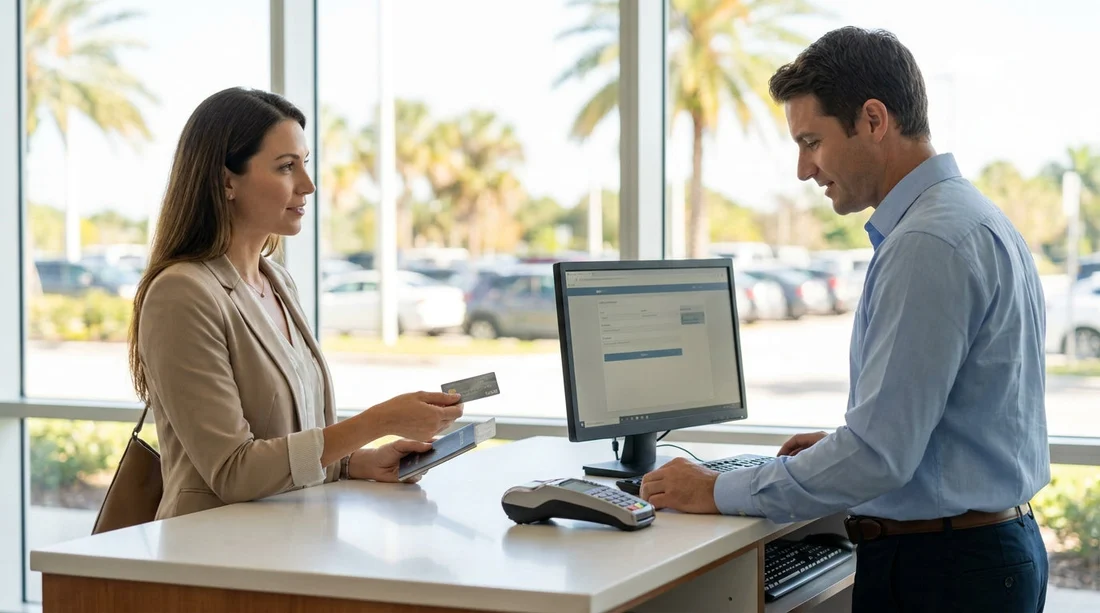
If you are arranging car hire in Florida, the most common credit card surprise is not the rental price, it is the temporary security deposit placed on your card at pickup. This is a pre-authorisation, sometimes called a “hold”, that reduces your available credit until the vehicle is returned and the final bill is settled. You do not usually pay this money upfront, but your card must have enough available credit for the hold to be approved.
The exact amount of available credit you need can vary by supplier, vehicle category, location, and the protection options you choose. The safest approach is to budget for two things at the same time, the estimated rental charges plus a separate deposit buffer that stays available throughout the hire.
Hola Car Rentals works with major suppliers, so deposit requirements can differ depending on which brand provides the vehicle at the counter. You can see how supplier-led pages differ in what they highlight, for example Thrifty car hire at Tampa TPA and Hertz car hire in Coral Gables. The key point is that your available credit is what determines whether the pickup can proceed smoothly.
What “available credit” means at the rental desk
Available credit is the remaining spending capacity on your credit card at the moment the supplier requests the pre-authorisation. If you have a £3,000 limit and £1,200 already used, you may only have the equivalent of £1,800 available. The deposit hold temporarily reduces that number further.
Two common misunderstandings cause problems. First, travellers look only at their credit limit, not what is actually available after other spending. Second, they assume a debit card balance works the same way. Many Florida rental counters prefer a credit card for the deposit, and when debit cards are accepted, the rules may be stricter and the hold may be larger.
What the deposit is for, and what can increase it
The security deposit is there to cover potential additional charges after pickup. In Florida car hire, these often include fuel differences, toll administration, extra driver fees if not prepaid, damage excess, traffic fines, and late returns. Even if you plan to return the car perfectly, the supplier still generally requires the hold.
Several factors can push the required deposit higher:
Vehicle type. Larger, newer, or higher-value vehicles often come with higher deposits. A compact car usually needs less available credit than a premium SUV. If you are considering a larger category, compare how vehicle class can influence requirements on pages such as SUV rental in Salt Lake City, even though your hire is in Florida, the principle is similar across the US.
Protection and excess. If you decline certain optional protections at the counter, the supplier may require a higher deposit or may pre-authorise a larger amount reflecting the potential damage liability. Conversely, taking the supplier’s coverage can reduce the deposit for some brands. The relationship is not identical everywhere, which is why reviewing your voucher and terms matters.
One-way rentals and extensions. Changing the return location or extending the hire can trigger a new authorisation. That means you might need more available credit later, not just at pickup.
A practical way to estimate how much available credit you need
Because exact deposit numbers can vary, a practical budgeting method is to maintain a buffer that comfortably covers typical holds plus day-to-day incidentals. Think in layers:
1) Rental estimate. This is the amount you expect to pay for the days booked, plus taxes and any preselected extras.
2) Deposit hold. A separate amount that is placed as a pre-authorisation. It is usually released after return, but release time depends on your bank.
3) Incidental buffer. Fuel, tolls, parking, and any itinerary changes. Florida toll roads are common around Orlando, Tampa, and Miami, so leaving headroom is sensible even if you plan to avoid tolls.
As a traveller-friendly rule of thumb, aim to have enough available credit to cover the rental estimate plus a meaningful deposit buffer on top. If your card is close to the line, the safer option is to reduce other spending on that card before pickup, or bring a second credit card in the main driver’s name.
How long the hold stays on your card
Even when everything goes perfectly, your available credit does not always bounce back immediately. The supplier releases the authorisation after return, but your bank controls when it disappears from your pending transactions. It might be the same day, or it can take several business days. If you are travelling onwards and need the card for hotels or flights, that delay matters.
This is one of the best reasons to avoid running your card close to its limit during a Florida holiday. Plan for the hold to remain in place until after you are home, especially if your bank is slow to process releases.
Tips to avoid a declined pre-authorisation at pickup
Check your available credit, not your limit. Log into your banking app on the day of travel and ensure enough headroom remains.
Use the main driver’s credit card. Most suppliers require the card to be in the name of the person collecting and driving the car.
Avoid mixing cards for payment and deposit. Some counters can take payment on one card and deposit on another, but not all. Assume you need one card that can handle both the rental charges and the deposit hold.
Tell your bank you are travelling. Fraud blocks happen, and a blocked authorisation can look like “insufficient funds” at the desk.
Keep a second card as backup. If the first card fails, you can switch quickly. Make sure it also has sufficient available credit.
Read the terms for your chosen supplier. Hola Car Rentals presents supplier and location options, and while your trip is Florida-focused, it can help to see how requirements vary by brand and desk setup. For comparison of airport desk operations, pages like car rental at San Francisco airport and car hire at Chicago ORD show how location context can matter across the US.
Bottom line: how much available credit should you keep?
For Hola car hire in Florida, you should plan on having enough available credit to cover both the estimated rental charges and a separate refundable deposit hold, plus extra room for tolls, fuel, and changes. Because deposit policies vary by supplier and vehicle type, the best protection against surprises is margin. If you keep your available credit comfortably above what you expect to spend, you reduce the risk of a declined authorisation and you protect your holiday budget from temporary holds lingering on your account.
FAQ
Do I pay the deposit, or is it just a hold?
In most cases it is a pre-authorisation hold, not a completed charge. It reduces your available credit until the vehicle is returned and the hold is released.
Can the deposit be taken on a different card from the rental payment?
Sometimes, but not always. Many suppliers prefer the same card for both, so it is safest to have one main driver credit card with enough available credit for everything.
Will choosing a larger car increase the required available credit?
Often yes. Higher-value categories can come with higher deposit requirements, so keep more available credit if you plan to upgrade or select a larger class.
How long does it take for my available credit to return after drop-off?
The supplier may release the hold quickly, but your bank can take several business days to remove the pending authorisation and restore your available credit.
Why should I keep extra credit available if I have prepaid my car hire?
Even with prepaid rentals, the supplier may still require a deposit, and you may incur incidentals such as tolls, fuel differences, extensions, or add-on fees.




























































































