


Quick Summary:
- Ask whether your rental includes a transponder, and how it is billed.
- Confirm toll-by-plate rules, as invoices can arrive after return.
- Opt in or out of the rental toll programme before leaving.
- Avoid ExpressLanes charges by staying in general-purpose lanes when unsure.
Los Angeles has an expanding network of tolled lanes that promise faster journeys, but they can also create confusing charges when you are driving a rental. The key to avoiding surprise fees is understanding how express lanes collect tolls, what device or account is linked to your car hire, and how your rental company handles administration and payment.
This guide breaks down transponders, toll-by-plate and common rental toll programmes, then turns that into a simple checklist you can follow before you drive off, and again when you approach an express lane on the freeway.
What “express lanes” mean in Los Angeles
In Los Angeles, “express lanes” are priced lanes, usually in the median of major freeways, where the cost can change depending on traffic. You will see them branded as ExpressLanes on parts of I‑10 and I‑110, and other managed lanes may appear on different corridors over time. The important point for a visitor is practical: these lanes generally do not use cash booths. They rely on electronic tolling, which means your vehicle is identified by a transponder signal or by a camera reading your number plate.
That is why rental drivers get caught out. The toll itself may be reasonable, but the billing method can add extra steps, delays, and sometimes additional admin fees depending on your agreement.
The three ways an express lane can charge your rental
Most surprise toll fees come from not knowing which of these three methods applies to your car hire at that moment.
1) A transponder already associated with the car
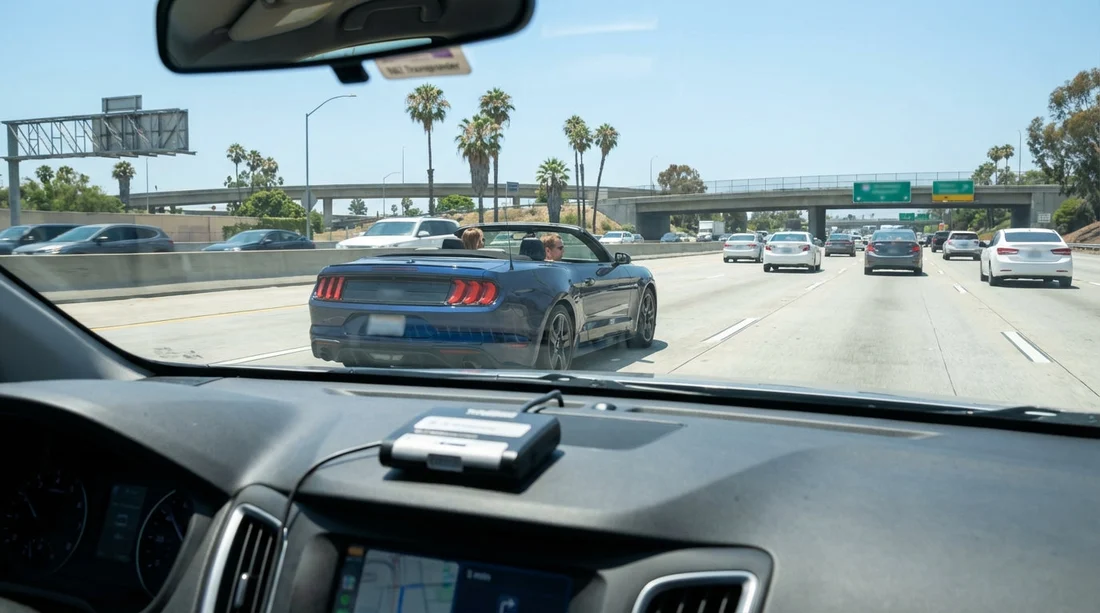
Many rental companies fit a toll tag or transponder to the windscreen, or embed a device in the vehicle. If it is active, the express lane system will read it and post the toll to the account behind that device. You then get charged according to your rental’s toll programme terms, which might be a per-day fee when you use tolls, plus the tolls themselves.
What to do: before leaving the lot, ask whether the vehicle has a transponder, whether it is active by default, and exactly how charges appear on your final receipt. If you pick up near the airport, it is worth doing this at the counter rather than at the exit gate, where it is harder to change settings.
If you are arranging a vehicle around LAX, the Hola pages for local options can help you compare providers and likely toll policies, for example car rental at Los Angeles Airport (LAX) and Los Angeles LAX car rental.
2) Toll-by-plate (camera-based billing)
If no transponder is read, or if the lane uses plate recognition for some trips, the system captures the number plate and issues a bill to the registered owner of the vehicle. For a rental, that registered owner is the rental company, not you. The rental company then matches the date and time to your agreement and re-bills you.
This is where “surprise” usually happens. Toll-by-plate bills can take days or weeks to reach the rental company, so you may see a charge after you have returned home. Many programmes also add an admin fee per toll or per day of toll usage.
What to do: ask whether toll-by-plate charges are passed through with an admin fee, and whether the transponder is required to avoid higher plate rates. Some roads price toll-by-plate differently from transponder rates.
3) A rental toll programme that bundles or automates toll payments
Many rental companies offer toll programmes with one of these structures:
Pay-as-you-go with an admin fee, where each toll is billed plus a fixed processing charge, or a daily fee on days you incur tolls.
Daily all-inclusive, where you pay a flat daily amount for unlimited toll usage, sometimes only in certain states.
Opt-in transponder activation, where the tag stays in the car but only activates if you sign up.
What to do: read the toll section of your rental agreement on the spot. If the daily fee triggers on any toll activity, one accidental express lane entry can cost more than the toll itself. If you do not plan to use express lanes, you may prefer to remain opted out and avoid lanes that bill electronically, but you must then be confident you can keep to free lanes and avoid tolled facilities.
Transponders in LA, what you need to know before you drive
Different systems exist in Southern California, but your decision-making can stay simple. Focus on these points:
Is a transponder present and switched on? If yes, you need to know the associated programme and fees. If it is present but you are opted out, confirm how the company prevents charges, and what happens if the device is read anyway.
Can you use your own transponder? Some travellers already have a compatible tag from previous US trips. A rental company may still require you to use their programme, or they may allow your own tag if the vehicle is not enrolled. Only rely on this if you have explicit confirmation in writing.
Does the express lane require a specific setting? Some managed lanes treat carpools differently, and the transponder may need a switch position to declare occupancy. If your rental tag has a switch, ask how it affects billing and whether you are allowed to use carpool discounts as a visitor.
How to check if you are about to enter an express lane
In Los Angeles, the approach to managed lanes is usually well signed, but it can still be easy to drift into them in heavy traffic. Use this quick detection routine:
Look for pricing signs. If you see a digital price to a destination, it is a priced lane.
Watch for double white lines and limited entry points. Express lanes often have separated segments where you can only enter at marked openings.
Note “FasTrak” or “ExpressLanes” markings. These indicate electronic tolling. If you are unsure about your car hire toll setup, stay in the general-purpose lanes.
A practical checklist, do this at the counter
Before you leave in your car hire, take two minutes to confirm the following and avoid later disputes:
1) Ask for the toll programme name and fee structure. You are listening for daily fees, per-toll admin charges, and whether the fee triggers only on toll days.
2) Ask how express lanes are billed specifically. Some drivers assume “tolls” only means bridges or turnpikes, but express lanes are tolls too.
3) Confirm the billing timeline. Ask whether tolls can post after return and how you will be notified.
4) Ask what to do if you accidentally enter an express lane. Staff can tell you whether to keep going to the next exit, and what charges to expect.
5) Take photos. Photograph the number plate and the windscreen area showing any transponder device. This helps if you later need to query a charge, because you can show what equipment was in the vehicle.
On the road, how to avoid charges when you do not want them
If your goal is to avoid express lane fees entirely, the strategy is straightforward but requires attention:
Use general-purpose lanes by default. In LA, you can still reach most places without express lanes, even if it takes longer at peak times.
Follow navigation settings carefully. Many map apps let you avoid tolls. Turn this on before setting off. Be aware that “avoid tolls” may not always prevent a brief tolled segment if the route is recalculated, so keep an eye on signs.
Do not cross solid separation lines. If you find yourself next to an express lane with double white lines, wait for a legal entry or exit point rather than weaving across.
Choose your timings. If you travel outside the busiest periods, you reduce the temptation to jump into priced lanes.
When using express lanes can still make sense in a rental
Sometimes paying is the sensible choice, for example if you have a flight, an appointment, or you are trying to escape a severe traffic build-up. The trick is to choose “paying on purpose” rather than “paying by accident.”
If you plan to use express lanes more than once, it is often cheaper and simpler to opt into the rental toll programme that fits your usage, rather than accumulating multiple toll-by-plate admin fees. This varies by provider, so compare terms when you select a vehicle class and pickup point. For readers weighing different providers, you can review options like Budget car hire California LAX or Avis car hire Los Angeles LAX, then verify the toll policy at the desk because programme details can change.
Common “surprise fee” scenarios and how to prevent them
Scenario: You used the lane once, but were charged multiple days. Some programmes apply a daily convenience fee on any day tolling occurs, and that day might be defined by a 24-hour window rather than a calendar day. Prevention: ask how a “toll day” is counted, especially if your rental spans odd pickup or return times.
Scenario: You avoided tolls, but still got billed. This can happen if you used a toll bridge, tolled express lane, or a tolled connector without noticing. It can also happen if a plate read is incorrectly matched. Prevention: keep “avoid tolls” enabled, photograph the plate and transponder area, and save your itinerary so you can sanity-check dates and times.
Scenario: You were carpooling and assumed it was free. Not every lane is a free HOV lane. Some are toll lanes that allow discounts with the right transponder setting, and some rules vary by time of day. Prevention: treat any “ExpressLanes” marking as billable unless you know the exact carpool rules and your rental equipment supports them.
Scenario: The rental company charged an admin fee you did not expect. Prevention: get the toll programme terms in writing or take a photo of the relevant page on the rental agreement before you leave.
What to do if you receive a toll charge after returning the car
Start by separating the toll amount from any service fees. Then:
Check your rental dates and times. Ensure the toll time stamp falls within your possession of the vehicle.
Ask for supporting details. Rental companies can often provide an image reference or the toll record showing date, time and facility.
Compare against your route. If it does not match where you drove, raise it promptly, as disputes can have time limits.
Keep documentation. Your agreement number, photos, and any emails about the toll programme make resolution much easier.
FAQ
Do I need a transponder to use express lanes in Los Angeles with a car hire? You can usually use express lanes without bringing your own transponder, because the rental may have one or the lane can bill by plate. The important part is knowing how your rental company will pass the charge on to you, including any admin fees.
What is toll-by-plate, and why does it cause surprise fees? Toll-by-plate uses cameras to read the number plate, then invoices the vehicle owner later. With a rental, the invoice goes to the rental company first, so you may be billed after you return the car, sometimes with an added processing fee.
Can I avoid all express lane charges by selecting “avoid tolls” in my sat nav? It helps, but it is not a guarantee. Routes can change, and signage matters more. If you are unsure about your toll setup, stay in the general-purpose lanes and watch for express lane markings and price signs.
Will my rental toll programme charge me even if I only used one express lane segment? Possibly. Some programmes add a daily fee on any day you incur tolls, even if the toll itself was small. Confirm whether fees are per-toll, per-day of use, or a flat daily rate for the whole rental.
How can I reduce the chance of incorrect toll charges on my rental? Photograph the number plate and any transponder device at pickup, keep your rental agreement, and save a record of your general routes. If a charge appears later, you can quickly check whether the date and time match your driving.




























































































