


Quick Summary:
- Check the fuel flap and cap label for petrol or diesel wording.
- Match the rental agreement fuel line with the vehicle make and model.
- Confirm fuel details in dashboard menus or instrument cluster prompts.
- Ask the agent to note fuel type in writing before leaving.
Misfuelling is one of the easiest ways to spoil a Florida trip, and it often happens in the first hour, when you are tired from a flight, learning unfamiliar controls, and heading to the first fuel stop. With car hire, the safest approach is to confirm the fuel type in more than one place before you leave the pick-up area. In Florida you will also see US pump labelling, where “gas” means petrol, not LPG, so a quick double-check prevents costly mistakes.
This guide explains exactly where to look on the car, where to look on the paperwork, and what to do if anything does not match. The goal is simple, you should be able to say with confidence whether the car takes petrol (gasoline) or diesel, and which grade to choose at a US pump.
Why misfuelling happens with rental cars in Florida
Florida rental fleets include a mix of petrol and diesel, especially among larger SUVs and some premium models. Many drivers also arrive from markets where diesel is common, while most US mainstream cars are petrol. Add in different terminology and pump layouts, and a wrong assumption can slip through.
Two common traps are: relying on what you “usually drive”, and assuming the pump nozzle will not fit. While diesel nozzles are often larger, fit can vary, and some filler necks accept both. The best protection is confirming the fuel type on the vehicle itself and cross-checking it against the documents before you drive away.
Check the car first: the most reliable places to confirm fuel type
1) Fuel flap and filler cap labels
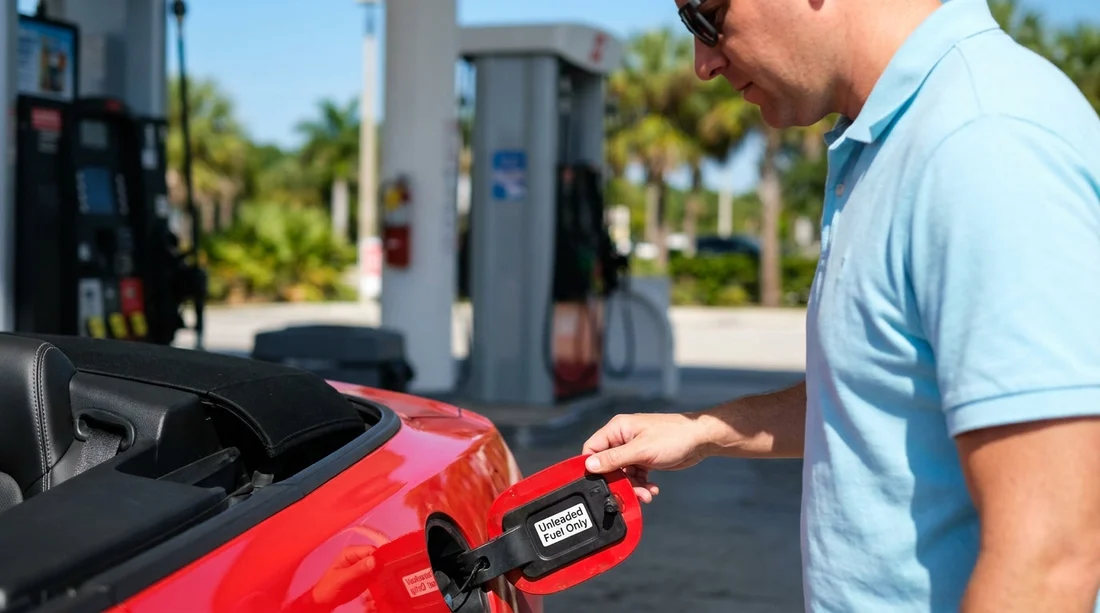
Open the fuel door and look for printed wording on the inside of the flap or directly on the cap. Many vehicles specify “Diesel Fuel Only”, “Unleaded Fuel Only”, or similar wording. If you see “Unleaded”, that means petrol. If you see “Diesel”, it is diesel. Also look for any label that lists an octane rating, that is petrol, not diesel.
2) Sticker near the fuel door hinge or on the door jamb
Some vehicles place fuel information on a nearby sticker, sometimes alongside tyre pressures. If the fuel flap is unlabelled, check the driver’s door jamb and the B-pillar area for a placard. You are looking for fuel or emissions references that may mention “Diesel” explicitly on diesel models.
3) Dashboard prompts and vehicle settings
Modern cars sometimes show fuel information in the infotainment “Vehicle” menu, or in the digital instrument cluster. This is not always obvious, but it can confirm the engine type, especially if it displays “Diesel exhaust fluid” or “DEF” information, which is a clear diesel indicator. If you see a “DEF” gauge or warning, you have a diesel vehicle.
Confirm on paperwork before leaving the pick-up area
The rental agreement or checkout sheet often includes a fuel section. It may show the fuel policy (for example, return full) and may also list the fuel type. Do not assume it always does. Use it as a cross-check:
1) Match the agreement to the actual car
Verify the make, model, registration, and vehicle class on the paperwork matches what you are standing next to. A simple swap in the bay can happen, particularly during busy airport rushes. If the paperwork is for a different model, the fuel type may differ too.
2) Look for the fuel entry and abbreviations
Some systems use short codes. “Gas” means petrol in the US. If you see “Diesel” written out, that is explicit. If the document only shows the fuel policy, not the fuel type, rely on the car labels and then ask an agent to confirm.
3) Ask for a written note if anything is unclear
If the cap label is missing, or you have any doubt, ask the staff member at the exit gate or desk to confirm the fuel type and note it on your paperwork or checkout comments. This can save time later if you have to explain a dispute or request assistance.
If you are collecting in a busy location, it can help to review your documents calmly before joining traffic. For example, if you are arranging car hire at Orlando MCO or car hire at Tampa TPA, build in two minutes at the bay to confirm fuel type, fuel level, and the correct vehicle details.
Use US pump labels correctly: petrol grades vs diesel
At Florida stations, petrol is labelled “Regular”, “Midgrade”, and “Premium”, with octane numbers such as 87, 89, and 91 or 93. Diesel is usually clearly labelled “Diesel”, often on a separate pump or nozzle position.
For most standard petrol rental cars, “Regular” (87) is typically acceptable unless the fuel flap or manual specifies premium. If the cap says “Premium recommended” or “91 minimum”, follow that label. Do not guess based on price or performance.
For diesel vehicles, only select the diesel nozzle. Do not add petrol, even a small amount. If you accidentally choose the wrong nozzle but have not pumped fuel yet, stop immediately and reassess. The moment the wrong fuel goes in, the safest next step is to avoid starting the engine and contact roadside assistance through your rental provider.
A simple two-minute checklist before you drive off
Do this while still in the pick-up lanes, where help is nearby:
1) Open the fuel flap
Read the flap or cap label. Say the fuel type out loud to yourself, petrol (gas) or diesel.
2) Photograph the fuel label
A quick photo of the flap label can help later if you forget at the pump. It is also useful if the label is damaged and you need to show staff what you saw at collection.
3) Cross-check the agreement
Confirm the car details match and scan for any fuel-type line. If it conflicts with the flap label, do not leave until it is resolved.
4) Set a reminder note
On your phone, add a short note like “Rental fuel: petrol 87” or “Diesel only”. This is handy on multi-stop trips when you hand over driving to someone else.
These steps are useful whether you pick up in central areas or by the beach. If you are comparing options such as car hire in Doral or National Car Rental in Miami Beach, the process is the same, confirm on the car, confirm on the paperwork, then drive.
What to do if the labels are missing or contradictory
Occasionally, a fuel flap is unlabelled, a cap has been replaced, or a sticker has worn off. If you cannot confirm fuel type in under a minute, treat it as unresolved.
Ask staff to verify using the vehicle identification details
Rental staff can confirm the engine type using the fleet record tied to the registration or VIN. Request that they either move you to a clearly labelled vehicle or provide written confirmation of fuel type for your specific car.
Do not rely on assumptions from the model name alone
Some model lines offer both petrol and diesel variants in different markets. Even if you recognise the badge, the sure proof is the fuel flap label or the fleet record.
If you already left the lot and still feel unsure
Pull into a safe spot, re-check the fuel flap and door jamb, and consult the infotainment vehicle information screen. If uncertainty remains, call the rental provider before refuelling. It is much cheaper to spend five minutes confirming than to deal with a drained tank and fuel system clean-out.
FAQ
Where is the quickest place to confirm petrol vs diesel on a rental car?
Open the fuel flap and read the label on the flap or cap. It is usually the fastest and most reliable confirmation.
My paperwork says “gas”, does that mean petrol in Florida?
Yes. In the US, “gas” is short for gasoline, which is petrol. Diesel will normally be labelled as diesel.
What petrol grade should I use for most rental cars in Florida?
Use the grade stated on the fuel flap or cap. If it says unleaded and gives no premium requirement, Regular (87) is commonly accepted.
What should I do if I accidentally put the wrong fuel in?
Do not start the engine. Move the car only if it is safe and required, then contact the rental provider or roadside assistance immediately for instructions.
What if the fuel flap has no label and I cannot find any information?
Return to the desk or exit gate and ask staff to confirm the fuel type from the fleet record for your specific vehicle, ideally noted in writing.




























































































