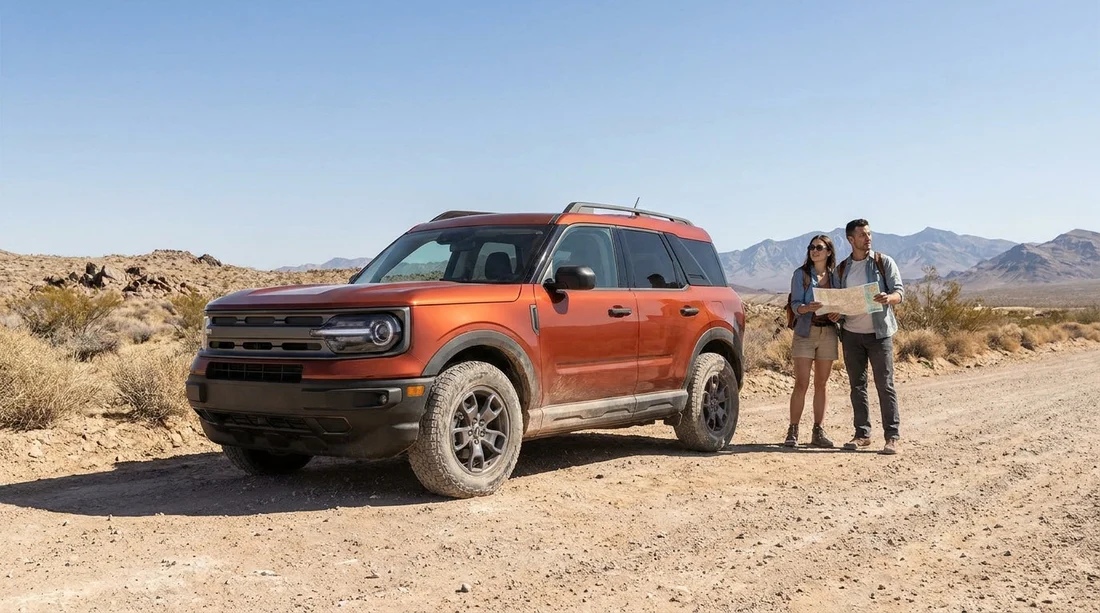
Quick Summary:
- LDW usually excludes damage from unpaved or off-road use entirely.
- Check for “gravel”, “unpaved”, “off-road” exclusions and underbody damage clauses.
- Confirm allowed road types for your route before leaving the counter.
- Inspect tyres and underbody, then photograph condition to document pre-existing issues.
When planning car hire in Las Vegas, it is tempting to add a Loss Damage Waiver (LDW) and assume you are protected everywhere you drive. In reality, LDW is designed for typical, on-road use. Many rental terms treat unpaved roads as a higher-risk scenario, and either exclude them outright or exclude the most common kinds of damage that happen on rough surfaces.
This matters around Las Vegas because popular day trips and photo stops can involve graded dirt access roads, gravel car parks, or short stretches of washboard surface near viewpoints. The question is not only “Does LDW cover it?”, but “What does the contract define as acceptable use, and what types of damage are excluded even with LDW?” Getting clear on that before you collect the keys can prevent unexpected charges later.
What LDW normally covers, and what it is not
LDW typically reduces or removes your financial responsibility if the rental car is damaged or stolen, subject to the rental agreement. It is not always called insurance, and it is not the same thing as liability coverage for damage you cause to other vehicles or property. Think of LDW as a damage waiver with conditions. If those conditions are breached, the waiver can be voided, leaving you responsible for repair costs, towing, loss of use, and administrative fees.
Because policies vary by supplier and by state, focus on the written terms you are shown for your specific car hire in Las Vegas. If you are collecting from the airport, you may want to review supplier and location details in advance, such as options described for car hire at Las Vegas airport and how they compare with car rental in Las Vegas more generally.
How unpaved roads are commonly treated in LDW terms
Many rental agreements include an “unauthorised use” section. Unpaved roads are often mentioned there using wording such as “off-road”, “non-public roads”, “unsealed roads”, “gravel roads”, or “dirt roads”. The strictest versions prohibit driving on any unpaved surface at all. Others allow short access roads but still exclude specific damage types that are very common off pavement.
Even when the terms do not outright ban gravel or dirt, it is common to see exclusions like:
Underbody damage, including scrapes, punctures to the oil pan, exhaust, suspension components, and damage caused by rocks or uneven surfaces.
Tyres and wheels, including sidewall cuts, punctures, rim damage, and sometimes valve or sensor damage.
Glass and lights, including chips and cracks from flying stones.
Towing and recovery, especially if the vehicle becomes stuck in sand, mud, or a wash. Some agreements exclude “recovery off paved roads” even if towing from a paved shoulder is covered.
Negligent use, a broad category that can include ignoring warning signs, proceeding past “Road Closed” barriers, or driving into areas not suitable for the vehicle.
So, does LDW cover unpaved road driving? Often, not fully, and sometimes not at all. The exact answer depends on whether unpaved use is prohibited, and which exclusions apply even when LDW is purchased.
Exclusions and phrases to look for before you sign
Before finalising car hire in Las Vegas, scan the rental agreement and LDW wording for these terms and ask for clarification if you see them:
“Off-road” or “off-highway”. This can be interpreted broadly, including dirt access roads, fire roads, desert tracks, and some trailhead roads.
“Unpaved”, “unsealed”, “gravel”, “dirt”. If listed as prohibited, any resulting damage may be excluded, even if you only drove a short distance.
“Non-maintained roads” or “non-public roads”. This can include private ranch roads, construction detours, and some access tracks to viewpoints.
“Underbody” exclusions. These are especially relevant on washboard roads where hidden rocks can strike underneath.
“Tyres, wheels, glass” exclusions. If these are excluded, you could be paying for the most likely damage on gravel.
“Misfuel, keys, and roadside assistance”. Not directly linked to unpaved roads, but roadside help can be limited if you leave paved routes.
If you are choosing a vehicle type for desert-area driving, note that higher clearance can help reduce underbody strikes, although it does not automatically make unpaved driving permitted. For context on vehicle options people commonly consider, you can compare SUV hire in Nevada with standard cars, and still confirm what the supplier allows.
What to confirm at the counter before you leave
Counter conversations can be rushed, so go in with a short checklist and ask questions that produce a clear, practical answer. You are trying to confirm permission, not just coverage.
1) Are unpaved roads allowed at all for this rental? Ask the agent to define what counts as unpaved in their policy. If they say “no off-road”, ask whether that includes graded dirt access roads to car parks or scenic viewpoints.
2) If unpaved is allowed, which damage is excluded even with LDW? Specifically ask about tyres, wheels, glass, and underbody. These are often excluded categories that surprise drivers later.
3) What happens if the car needs towing from an unpaved area? Confirm whether roadside assistance applies, and whether recovery from sand or a wash is excluded.
4) Are there written restrictions for certain areas? Some companies restrict travel on specific roads or to certain regions, regardless of surface type.
5) Who decides whether damage came from unpaved use? Ask how they determine this. For example, underbody scrapes, gravel rash, and dust ingress can all be used as indicators.
Keep in mind that supplier rules vary. If you are comparing providers, pages like Enterprise car hire in Nevada and Budget car hire in Nevada can be useful starting points, but the signed agreement at the counter is what controls your rental.
Practical route planning around Las Vegas
To reduce risk during car hire in Las Vegas, plan your itinerary with surface type in mind. Mapping apps do not always distinguish between paved and graded dirt, and a short “last mile” detour can turn into several miles of washboard.
Use these habits:
Check road status before you go, including closures after storms. Flash flooding can affect desert routes and leave ruts.
Avoid unknown shortcuts. A route that looks faster may switch to dirt without obvious warning.
Park before the dirt begins if you are unsure. Walking the final stretch is often safer than risking prohibited use.
Do not rely on vehicle type alone. An SUV may handle rougher surfaces better, but permission and exclusions still apply.
Inspection and documentation tips that help with disputes
Whether you stay on paved roads or not, documentation protects you. Unpaved-road disputes often come down to whether damage was pre-existing, and whether it is consistent with rough-surface use.
Before leaving the lot:
Photograph all four wheels and tyres, including close-ups of rims and sidewalls.
Photograph the windscreen and headlights for chips and cracks.
Record a short walkaround video showing panels, bumpers, and the roofline.
Check underneath visually as far as you safely can, looking for hanging plastic shields or existing scrapes.
Ensure damage is logged on the condition report and keep a copy.
On return, take another quick set of photos in the return lane, especially of wheels and glass. This is useful if you are later told there is new damage.
Bottom line for Las Vegas car hire
LDW is helpful for many common incidents, but it is not a universal permission slip for unpaved roads. With car hire in Las Vegas, the safest approach is to treat unpaved driving as potentially excluded unless your agreement clearly permits it, and you understand which parts of the car are still not covered. Confirm the rule at the counter, plan routes that keep you on sealed roads, and document the vehicle condition before and after your trip.
FAQ
Does LDW automatically include driving on gravel or dirt roads?
Not automatically. Many agreements either prohibit unpaved roads or exclude common unpaved-related damage, such as tyres, wheels, glass, and underbody.
If unpaved roads are not allowed, what happens if I drive one anyway?
It can be treated as unauthorised use. That may void LDW protection, meaning you could be charged for damage, towing, and related fees.
Are car parks and short access tracks treated as “off-road”?
Sometimes. Some suppliers consider any unpaved surface off-road, even if it leads to a viewpoint or trailhead. Ask for the supplier’s definition before leaving.
What should I ask at the counter to avoid confusion?
Ask whether unpaved roads are permitted, and if yes, whether tyres, wheels, glass, underbody, and towing are covered or excluded under LDW.
Does hiring an SUV mean I am covered on unpaved roads?
No. Higher clearance may reduce the chance of underbody strikes, but permission to drive unpaved and LDW exclusions depend on the rental terms, not vehicle type.