


Quick Summary:
- Yes, you can bring your own child seat and fit it at pick-up.
- Allow extra time to install, tighten, and recheck angles before driving.
- Compare airline handling hassle with rental cost, cleanliness, and correct sizing.
- Before leaving, confirm belt path, minimal movement, and harness fit.
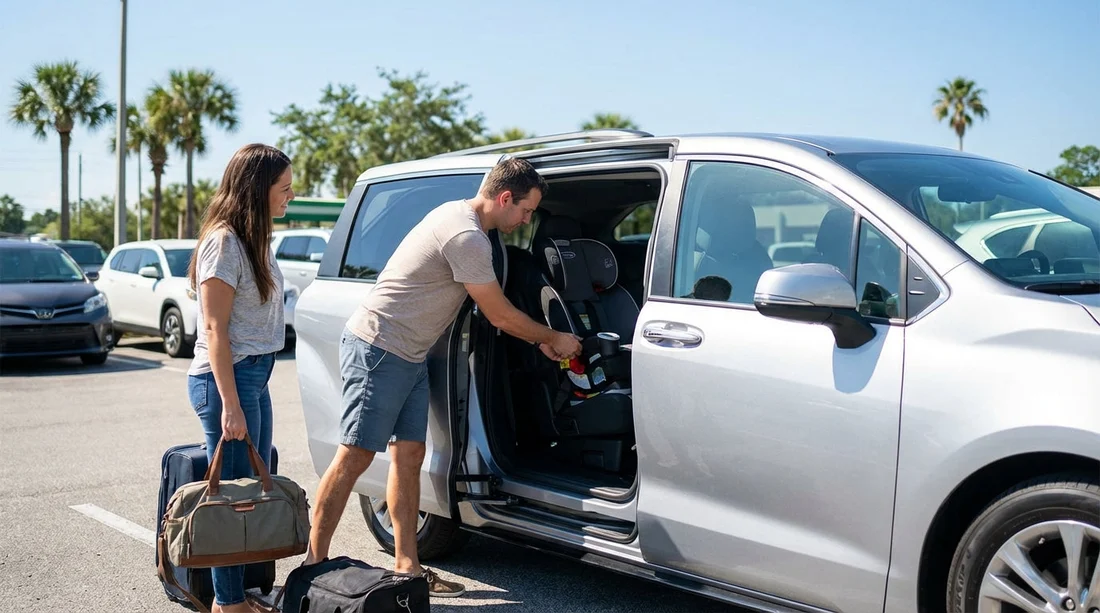
Families collecting a car hire in Florida often ask the same practical question: can we bring our own child car seat and fit it at pick-up? In most cases, yes. You can travel with your child restraint and install it in the hire vehicle before you drive away. The key is knowing what to expect at the counter, choosing a vehicle that works with your seat, and doing a short set of checks on the lot.
This guide helps you weigh up bringing your own seat versus renting one, and it includes a fit checklist you can use at Florida pick-up locations. If you are collecting near Orlando, see car hire Orlando MCO for location context. For Miami area pick-ups, the practicalities can differ slightly by facility layout, such as budget car hire Miami Beach.
Can you bring your own child car seat for car hire in Florida?
Yes, you can bring your own child car seat to Florida and install it in your hire car at pick-up. Car hire companies generally allow customers to use their own restraints. What they typically cannot do is install it for you, because staff training and liability rules vary. Plan to do the installation yourself, or with another adult in your party.
Florida law requires children to be in an appropriate child restraint based on age and size. That makes it essential that your seat is suitable for your child and that it is fitted correctly. If you are unsure about your seat’s limits, check the label on the side for height and weight ranges, and confirm whether it is designed to be used with a lap and shoulder belt, or lower anchors, or both.
Bringing your own seat vs renting one, what is usually better?
The better option depends on your travel style, your child’s needs, and how much driving you will do.
Reasons families bring their own seat include familiarity and fit. You already know how the harness tightens, where the belt path is, and how to adjust recline. Some children also settle better in a seat they recognise, which can matter on longer drives between airports and hotels.
Reasons families rent a seat include luggage convenience and avoiding airline handling. Carrying a seat through Florida airports can be tiring, especially with buggies and hand luggage. Renting can also be easier if you are travelling with multiple children and do not want to bring several bulky restraints.
What to be cautious about when renting is the exact model and condition. Availability and seat type can vary, and you may not get the same brand you use at home. If you plan to rent, ask in advance what categories are offered (rear-facing, forward-facing, booster) and make sure it matches your child’s age, weight, and height.
Choose a hire vehicle that suits your seat
In Florida, many standard saloons and SUVs will take most child seats, but the ease of fitting can vary a lot. Tight rear benches, fixed headrests, and sharply sloped seat backs can make getting a secure fit harder. If you are travelling with grandparents, multiple children, or lots of luggage, a larger vehicle can make fitting and daily buckling less stressful. For bigger family trips, look at minivan hire Disney Orlando MCO. If you are routing through Miami and want extra space, van rental Florida MIA is another relevant option.
What to do at pick-up: a quick fit routine before leaving the lot
Give yourself time. Even if you are experienced, first-time fitting in an unfamiliar car can take longer than expected. Aim to complete your paperwork, locate the car, and then do the installation without pressure from a queue of vehicles behind you.
1) Inspect your seat after travel. If it was checked on the flight, look for cracks, stress marks, missing parts, or twisted straps. Confirm the harness moves smoothly and the buckle clicks securely. If anything looks damaged, do not use it.
2) Choose the best seating position. Start with a rear outboard seat (behind the driver or passenger), because it often provides easier access and consistent belt geometry. If you need the centre, confirm the seat is level enough and that the belt buckle is reachable but not sitting inside the belt path.
3) Route and tighten using the correct belt path. Use the rear-facing or forward-facing belt path as labelled on your seat, not whichever seems to fit. Remove slack by pushing down and back where the child’s bottom would be while tightening.
4) Check for movement at the belt path. Hold the seat near the belt path and try to move it side-to-side and front-to-back. It should not move more than about 2.5 cm.
5) Confirm the top tether when forward-facing. If your seat uses a top tether, locate the tether anchor and attach it as instructed. Make sure the strap is not twisted and is snug.
6) Do a harness fit check with your child. Tighten until you cannot pinch slack at the collarbone area. Position the chest clip at armpit level.
Common mistakes to avoid at Florida pick-up
Using the wrong belt path is the biggest issue, especially when seat covers or labels are hard to see. Take a moment to locate the correct routing and lock-off method if your seat has one.
Not locking the vehicle belt. Many installations require switching the belt into a locked mode, depending on the seat design. If the belt remains freely retracting, the seat can loosen over time.
Bulky coats under the harness. Even in Florida, air-conditioned cars can tempt parents to keep layers on. Puffy clothing prevents a tight harness. Use a light layer and a blanket over the harness if needed.
Skipping a final check after a short drive. After leaving the facility, pull in somewhere safe within a few minutes and recheck tightness. Settling can happen as the seat compresses into the vehicle cushion.
When renting a child seat may be the more practical choice
Renting can make sense if you have limited baggage allowance or you are travelling alone with more than one child. It can also suit short visits where you will do minimal driving. If you rent, build time at pick-up to inspect the seat, confirm it matches your child’s size, and fit it carefully using the movement and harness checks above.
Whichever route you choose, the goal is the same: a correctly fitted restraint in a suitable vehicle, before you leave the lot. That is what keeps Florida driving calm and predictable for families, especially in unfamiliar traffic patterns and busy tourist corridors.
FAQ
Can the car hire staff fit my child car seat for me in Florida? Usually you should expect to fit it yourself. Some staff may offer general guidance, but many companies avoid installing seats due to liability and training rules.
How long should I allow at pick-up to install a child seat? Allow at least 15 to 30 minutes, especially after a flight. If you have two seats, add extra time for routing belts and checking tether anchors.
What quick checks confirm the seat is installed securely? Check the seat moves less than about 2.5 cm at the belt path, confirm the correct belt path or anchors are used, and ensure the harness passes the pinch test.
Is a booster seat easier than a harnessed seat for car hire? A booster is often quicker because it uses the vehicle belt, but it still must fit the child and car properly. Ensure the lap belt sits low on hips and the shoulder belt crosses the centre of the shoulder.
Should I recheck the installation after I start driving? Yes. After a short, safe stop, recheck tightness and harness fit, because seat cushions can compress and belts can settle.




























































































