


Quick Summary:
- Reroute if AQI exceeds 150, or smoke odour persists inside.
- Use dipped headlights in smoke, stop if you cannot see ahead.
- Set ventilation to recirculate, close windows, replace wiper fluid before driving.
- After driving, remove ash gently and document condition to avoid disputes.
Wildfire smoke can turn an ordinary California road trip into a low visibility, high irritation drive, and it can also leave ash and odours that raise questions at return time. If you are using a car hire vehicle, you need clear thresholds for when to continue, when to reroute, and when to stop, plus simple steps to protect the car’s paint, glass and interior.
This guide focuses on actionable checks you can do quickly, using air quality alerts, visibility cues and official closure information. It also covers in car settings that reduce exposure, and post drive steps that help prevent avoidable cleaning charges. If you are collecting near major hubs such as Los Angeles Airport (LAX) or planning a one way route through different smoke zones, use the same decision points every time you stop for fuel or a rest break.
Before you set off: three checks that prevent most problems
1) Air quality (AQI) at your current location and along the route. Use the AQI number and the trend. As practical thresholds for travel planning:
AQI 0 to 100: Usually manageable for most drivers. Keep windows closed if you smell smoke, and use recirculation if needed.
AQI 101 to 150: Unhealthy for sensitive groups. If anyone in the car has asthma, COPD, heart conditions, is pregnant, or you have children travelling, plan to reroute or delay. Even healthy travellers may get headaches and throat irritation over longer drives.
AQI 151 to 200: Unhealthy. For car hire trips, treat this as a reroute threshold unless the drive is short and essential. Expect ash to settle on the vehicle and visibility to fluctuate.
AQI 201+: Very unhealthy to hazardous. Avoid driving unless you are evacuating or following official guidance. If you must move, keep the drive as short as possible and avoid stopping outdoors.
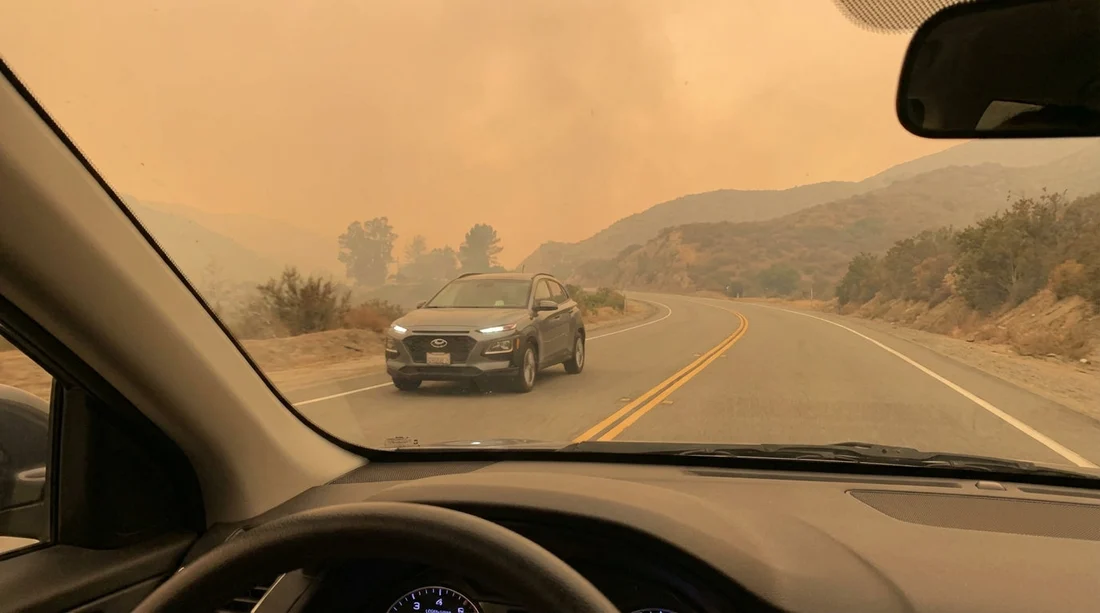
2) Visibility, not just daylight. Smoke can look thin in bright sun and still cut contrast. A useful rule: if you cannot clearly see the next set of roadside reflectors, lane markings, or the vehicle two to three seconds ahead, reduce speed. If you cannot see a safe stopping distance ahead, pull off at a safe location rather than pressing on.
3) Closures and restrictions. Wildfires often trigger rapid changes, including road closures, escorted convoys, and National Forest access limits. Check state and local alerts before leaving and again after any long stop. Do not rely on a sat nav reroute alone, since it may send you onto smaller roads that are also restricted or have poor visibility. This matters if you are travelling between cities, for example from Southern California toward inland areas or the Bay Area after picking up at San Jose (SJC).
When to reroute, pause, or stop completely
Use a simple decision ladder so everyone in the car understands why you are changing plans.
Reroute now if any of these apply:
AQI is 151+ on your route for multiple hours. Longer exposure increases fatigue and irritation, and you are more likely to run the blower hard, which can bring odours into the cabin if the filter is stressed.
You smell smoke inside the cabin even with windows closed. Switch to recirculation. If the smell persists, assume outside smoke is intense or the filter is saturated, and reroute to cleaner air.
Falling ash is visible on the windscreen in daylight. Ash can scratch glass when wiped dry. If you are seeing steady ashfall, consider delaying until conditions improve.
Traffic is slowing unpredictably. This can indicate a visibility pocket, an incident, or an enforcement point ahead.
Pause and wait (at a safe indoor location, not on the shoulder) if:
Visibility is variable. Smoke often moves in bands. Waiting 30 to 90 minutes can turn an unpleasant drive into a manageable one.
You are approaching dusk or night. Headlights reflect off smoke and reduce contrast, so night driving in smoke is harder even when roads are open.
Stop driving completely if:
You cannot see a safe stopping distance ahead. If you cannot see far enough to stop for a hazard, you are already beyond safe limits.
You are in heavy smoke and feel dizzy, nauseous, or unusually tired. Treat this like any other impairment. Pull off somewhere safe and rest indoors.
Authorities have issued evacuation orders or road closures. Follow official directions. Do not attempt to bypass barricades.
Lights, speed, and spacing: what actually helps in smoke
Use dipped headlights, not high beams. High beams can reflect off smoke and make visibility worse. Dipped headlights help other drivers see you and can improve your ability to pick out lane edges.
Turn on rear lights as well. Many cars do not illuminate rear lights with daytime running lights. Manually switch headlights on so the rear is visible in grey conditions.
Slow down early and increase following distance. Smoke can hide stopped traffic and animals. Give yourself extra time to react, especially on multi lane freeways where sudden slowdowns are common.
Avoid sudden lane changes. Other drivers may not see you clearly. Signal earlier and move gradually.
Use windscreen washers generously, but never wipe dry ash. If ash is present, soak the screen with washer fluid before using wipers. If your fluid is low, top up before you enter smoky areas. Dry wiping can grind ash into the glass and cause hazing.
In car settings that reduce exposure and protect the vehicle
Set ventilation to recirculate. This limits smoke intake. If windows fog, briefly switch to fresh air to clear, then return to recirculation. If your car has an “auto” climate mode, verify it is not pulling in outside air continuously.
Keep windows and sunroof closed. Even a small crack can pull in smoke and ash, and it increases interior odour risk, which is a common car hire complaint.
Use air conditioning to dehumidify. Smoke particles and humidity can irritate the throat. A/C helps keep the cabin comfortable with windows closed.
Do not leave the engine idling in dense smoke. If you are waiting, park and go indoors where possible. Idling pulls more air through the intake area and can worsen odours.
Avoid parking under falling ash. If you stop for a meal or shopping, choose covered parking. This reduces ash accumulation and potential paint abrasion when you later wipe or wash.
These steps are useful whether you are in a small car from Dollar at LAX or a larger vehicle for a family trip, such as a minivan from Santa Ana (SNA).
Protecting the exterior: ash is abrasive, treat it like sand
Wildfire ash can contain fine mineral particles. On paint and glass, the biggest risk is scratching from dry wiping or brushing.
If the car is lightly dusty: Leave it until you can rinse properly. Do not use a dry cloth, paper towel, or a dusty garage brush.
If visibility is affected by ash on the windscreen: Use washer fluid to flood the glass before running wipers. If you are out of fluid, buy more as soon as practical. If the screen is heavily coated, consider stopping at a car wash that offers a pre rinse.
If you must remove ash from mirrors or lights: Use bottled water to wet the surface first, then wipe gently with a clean, soft cloth. The aim is to float particles off rather than drag them across the surface.
Check wiper blades. Ash can embed in the rubber and cause streaking or scratching. If they start juddering or leaving lines, replace them and keep the receipt. It is a minor cost compared with visibility risk.
Protecting the interior: odours and residue are the dispute triggers
Most return issues in smoky conditions relate to interior smell, visible residue on dashboards, and smoke particles tracked in on shoes and luggage.
Use a simple barrier routine. Shake out floor mats, keep a small rubbish bag for masks or wipes, and avoid placing luggage on seats if it has been sitting outdoors in ash.
Ventilate only when air is cleaner. If AQI improves, open windows briefly while driving at speed to exchange air, then close and return to recirculation. Do not do this in heavy smoke, it can embed odours in soft trim.
Avoid aerosol “air fresheners” to mask smoke. They can combine with smoke smell and make the car harder to neutralise. A better approach is clean air exchange when conditions allow.
Post drive steps: reduce risk, document condition, and avoid cleaning surprises
When you reach your accommodation or destination, take five minutes to stabilise the car’s condition.
1) Photograph the exterior and windscreen. Capture the level of ash, number plate, and any existing marks. Time stamped photos help if questions arise later about paint swirls or glass haze.
2) Remove loose ash safely. If you have access to a hose, rinse from top down. Avoid high pressure jets close to paint edges. If you only have water bottles, use them for critical areas like the windscreen and mirrors, not a full wipe down.
3) Vacuum mats and footwells if ash is tracked in. Many service stations have vacuums. Focus on the driver footwell first, since fine grit there can be mistaken for dirt beyond normal use.
4) Wipe touch points with a damp microfibre cloth. Lightly clean the steering wheel, gear selector, and infotainment screen area. Do not use harsh cleaners that can stain plastics.
5) Note any mechanical warnings. If a warning light appears or the blower becomes noisy, record it with a photo and report it through your rental provider’s normal channel. Smoke and ash can stress cabin filters and blowers, and early reporting prevents confusion.
If you are returning in Northern California after travel near Sacramento, plan extra time for a rinse and quick vacuum before drop off, particularly if your car hire collection was via Sacramento (SMF).
Common sense route planning in California during wildfire season
Smoke patterns change with wind and terrain. Coastal routes can be clearer when inland valleys trap smoke, but marine layers can also hold particulates near the surface. Mountain passes can look clean on a map and then drop into dense pockets. The practical method is to check AQI and alerts at each major decision point, then pick a route that keeps you in the lowest band even if it adds time.
Also plan for your own wellbeing. Smoke exposure increases fatigue, and fatigue increases crash risk. Share driving, schedule more stops, and keep water in the car. For longer one way journeys, build flexibility into accommodation so you can pause if conditions worsen.
FAQ
Q: What AQI should make me change plans when using car hire in California?
A: Treat AQI 151+ along your route as a strong reroute or delay threshold. At 201+ avoid driving unless essential, and follow official guidance.
Q: Should I use headlights in daytime smoke?
A: Yes, use dipped headlights so you can be seen, and ensure rear lights are on. Avoid high beams because glare can worsen visibility in smoke.
Q: Is it safe to use the car’s air conditioning in wildfire smoke?
A: Yes. Set ventilation to recirculate, keep windows closed, and use A/C to maintain comfort. Switch briefly to fresh air only if windows fog.
Q: How do I clean ash off a rental car without scratching it?
A: Do not dry wipe. Rinse with water first, then gently wipe with a clean soft cloth. Flood the windscreen with washer fluid before using wipers.
Q: What should I document to avoid cleaning or damage disputes at return?
A: Take time stamped photos of exterior ash, glass condition, and interior mats. Keep receipts for any wiper blades or washer fluid you needed to buy.




























































































