


Quick Summary:
- Zero-excess reduces covered damage costs, but deposits secure other charges.
- A pre-authorisation is a temporary hold, not an upfront payment.
- Deposits can cover fuel, tolls, fines, upgrades, and late returns.
- Use a credit card in the main driver’s name.
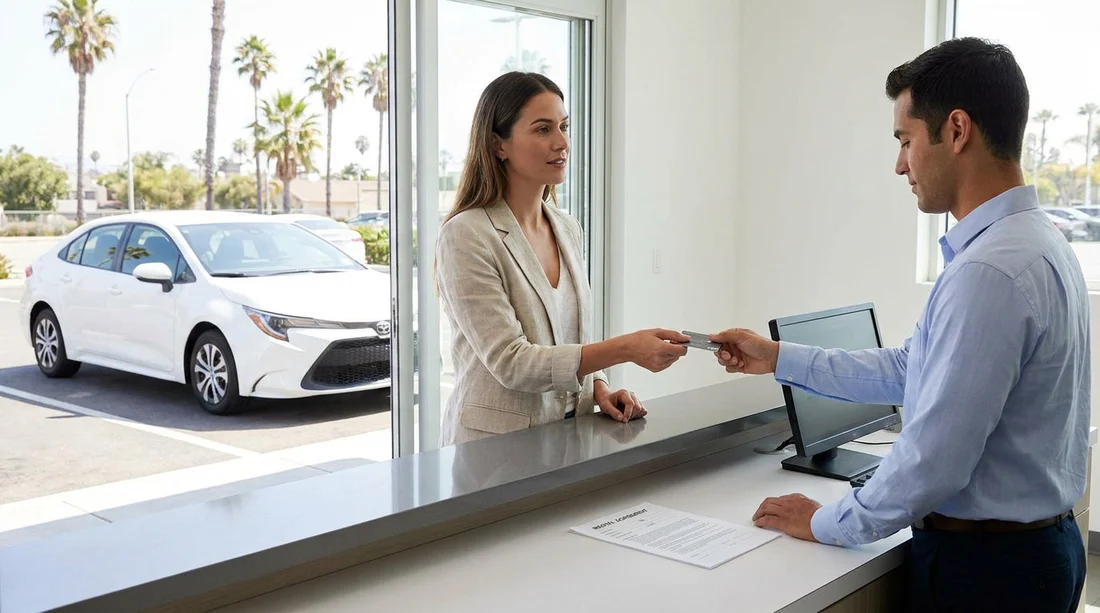
“Zero-excess” sounds like you should be able to pick up a vehicle in California with nothing more than your driving licence and a smile. Then the rental desk asks for a credit-card deposit, often as a pre-authorisation hold, and it feels like a contradiction. It is not. Zero-excess relates to what you may pay if the vehicle is damaged or stolen, while the deposit protects the rental company against a different set of costs that can arise during any car hire.
This distinction matters in busy pickup locations where queues move quickly and staff have to verify payment security before releasing a vehicle. If you turn up expecting “zero-excess” to mean “no deposit”, you can face delays, reduced vehicle choice, or even a refusal to rent if the payment method does not meet the supplier’s rules. The goal of this guide is to explain what is happening, what the pre-authorisation covers, and the practical steps that help you collect your car smoothly.
Zero-excess vs deposit, two different concepts
In California car hire, “excess” is the portion of damage or theft costs that you would be responsible for, even when the vehicle is covered by a damage waiver or similar protection. A zero-excess policy means that, for covered damage events, that portion is reduced to zero. In plain terms, if an incident is covered, you are not expected to contribute an excess amount.
A credit-card deposit, by contrast, is a financial security mechanism. It is usually taken as a pre-authorisation, which places a temporary hold against your credit limit rather than charging your account. The hold can look like a transaction in online banking, but it is not settled unless the supplier later converts part of it into a charge, for example to pay for fuel or unpaid tolls. If nothing is owed at return, the hold is released.
So the key point is simple: zero-excess addresses damage liability, while the deposit addresses operational and third-party costs that do not fall under damage cover.
What a credit-card pre-authorisation actually does
A pre-authorisation checks that your card is valid and that sufficient credit is available to cover potential charges. It also reduces the supplier’s risk when expenses appear after you have driven away. In California, some common costs can arrive later, such as toll-road fees processed through a tolling provider, parking charges billed to the registered vehicle, or administrative fees for handling notices.
To see how airport pickups can differ by location and supplier, compare the practical details for car hire at Los Angeles LAX with options such as car hire in San Diego or car hire in Sacramento. The basic principle remains the same, but deposit requirements can vary.
What the deposit covers if you already have zero excess
Even with zero-excess for damage, there are several categories of charges that a deposit is designed to cover. These are usually spelled out in the rental terms, and they are the reason a “zero-excess” deal still needs card security:
Fuel and refuelling service. If you return the vehicle with less fuel than agreed, suppliers may charge for missing fuel and an additional refuelling service fee. A deposit ensures that cost can be collected without disputes.
Tolls and toll administration. California has toll roads and bridges, and many rental vehicles are enrolled in electronic toll programmes. Charges can post after your rental ends, so the supplier needs a way to settle them.
Traffic or parking fines, and processing fees. If the vehicle receives a citation during your hire period, the authority may send the notice later. The supplier may charge the fine plus an administration fee for handling the paperwork.
Late return or extra days. If you return late, you can be charged for additional time. Even if you call ahead, extensions can require updated security on file.
Extras and upgrades. Child seats, additional driver fees, GPS, toll passes, and upgraded vehicle categories can all create charges beyond the base rental price.
Smoking, cleaning, or specialist valeting. These are not “damage excess” events, but they can still lead to significant charges if the vehicle needs deep cleaning.
Notice how none of these items are resolved by a damage excess waiver. They are commercial charges linked to vehicle use, and a deposit is the standard way to secure them.
Why a credit card is usually required, not a debit card
Suppliers often insist on a credit card, rather than a debit card, for the main driver. There are three reasons. First, a credit card supports pre-authorisation holds smoothly and reliably, including higher hold amounts. Second, credit cards offer stronger fraud protections for merchants, which reduces the risk of non-payment. Third, debit card rules can vary by bank, and some debit cards do not allow the same type of hold or may release it unpredictably.
If you arrive with only a debit card, the desk agent may require extra checks, a higher deposit, additional documentation, or a different payment method altogether. At peak times, that can mean delays while staff seek approval or while you contact your bank. For certain vehicle groups, including larger or premium models, a debit card may not be accepted even if it works for smaller cars.
For travellers considering bigger vehicles for Californian road trips, it helps to check the deposit and card requirements early, especially for options like SUV rental in San Jose, where vehicle category can influence the amount held.
How to avoid pickup delays in California
Most delays happen because the deposit cannot be taken quickly or cleanly. These steps reduce the risk:
Use a credit card in the main driver’s name. Matching names across the licence, rental agreement, and card is one of the most common desk checks.
Ensure your credit limit can absorb the hold. Remember a pre-authorisation reduces available credit temporarily. If you are close to your limit, the hold may fail even though the card works for smaller purchases.
Avoid combining multiple holds. If you are hiring more than one vehicle, or using the card for hotels, bear in mind that each provider may place separate holds.
Decline unwanted extras clearly. Desk staff often confirm optional products, and confusion can lead to extra authorisations. Make sure you understand what is included and what is optional before signing.
These checks matter no matter which supplier you pick. For example, when comparing supplier-specific options such as Budget car rental at Los Angeles LAX with other brands, you will still see the same underlying pattern: a damage policy can reduce your excess, while a deposit remains standard practice.
Will the deposit be charged or just held?
In most California car hire scenarios, the deposit is held as a pre-authorisation, then released after the vehicle is returned and checked. Release timing depends on your bank, not only the rental company. Some banks show the hold dropping off within a couple of days, while others can take longer. If the supplier needs to collect a charge, they may convert part of the hold into a final charge and release the rest, or they may release the hold and charge separately.
If you want the smoothest return process, keep your fuel receipts if you refuel close to drop-off, allow time for the return inspection, and confirm whether tolls will be billed later through a separate process. Being clear on these points reduces surprises and helps you understand why the hold may remain visible temporarily.
FAQ
Why is there a deposit if my policy says zero excess? Zero excess applies to covered damage or theft costs. The deposit secures other charges like fuel, tolls, fines, late returns, and optional extras.
Is a pre-authorisation the same as paying a deposit? Usually not. A pre-authorisation is a temporary hold on your credit limit, not a completed payment, and it is released if nothing is owed.
Can I use a debit card for car hire in California? Sometimes, but many suppliers prefer or require a credit card for the main driver. Debit cards can mean extra checks, higher holds, or refusal for certain vehicles.
How long does it take for the deposit hold to be released? It depends on your bank. The rental company may release it promptly, but banks can take several days to remove the hold from your available credit.
What’s the best way to avoid pickup delays? Bring a credit card in the main driver’s name, ensure enough available credit for the hold, and review the payment and deposit rules before arrival.





























































































