


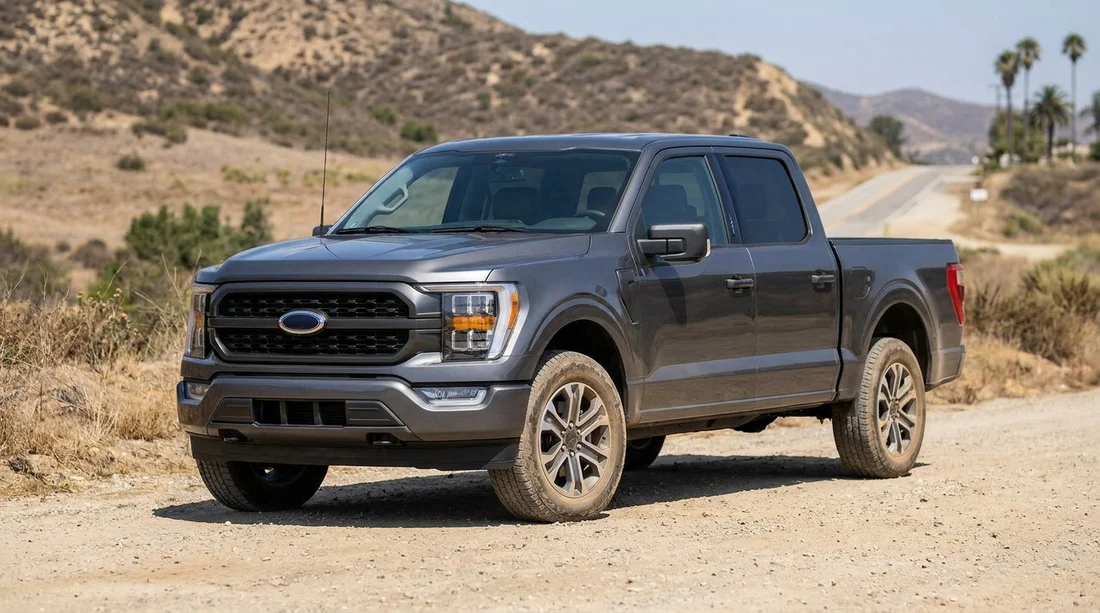
Quick Summary:
- AWD suits mixed city and motorway driving with better all-weather stability.
- 4WD is best for steep, loose, or snowy roads when engaged.
- AWD often uses more fuel than 2WD, but usually less than 4WD.
- Choose tyres, clearance, and route first, then pick AWD or 4WD.
When you’re arranging car hire in California, the badge on the tailgate can feel like a big decision. “AWD” and “4WD” both put power to all four wheels, but they do it in different ways, and those differences show up in handling, fuel use, and how confident you feel on typical California routes. The right choice depends less on marketing and more on where you’ll actually drive, plus the season and road conditions.
California is a mix of dense urban motorways, long coastal stretches, hot deserts, and high mountain passes. Most visitors spend the majority of their time on paved roads, where modern traction control and good tyres matter more than a heavy-duty drivetrain. Still, if your plan includes winter conditions, unpaved access roads, or towing, the distinctions between AWD and 4WD become important.
AWD vs 4WD in plain English
All-wheel drive (AWD) is typically an always-on or automatically managed system. It constantly monitors traction and shifts torque between front and rear axles, and sometimes side to side, to reduce wheelspin. Many AWD vehicles are car-based crossovers, tuned for comfort and stable road manners.
Four-wheel drive (4WD) is traditionally a part-time system found on trucks and more rugged SUVs. In normal driving, many 4WD vehicles run in 2WD, then you manually engage 4WD when conditions demand it. Many also offer a low-range mode (often called 4L) for slow, controlled climbing or descending on steep or slippery surfaces.
The most practical takeaway for car hire is this: AWD tends to help you stay composed on wet, windy, or variable tarmac without you thinking about it. 4WD tends to give you extra capability when the road surface is genuinely challenging, but it also asks more of the driver, including knowing when to engage and disengage the system.
Handling differences on California roads
On dry motorways around Los Angeles, San Diego, and the Bay Area, you will rarely “need” either system for traction. What you may notice is stability. AWD can feel planted during sudden rain showers, on painted lane markings, or when merging briskly onto fast-moving freeways. Because the system is always monitoring wheel slip, it can respond quickly without driver input.
If you are collecting a vehicle near Orange County and heading up the coast with occasional inland detours, an AWD crossover can be a comfortable match. For pick-ups and drop-offs around John Wayne Airport, it can help to compare categories and availability via car hire at Santa Ana SNA and, if you prefer a specific supplier’s range, Hertz at Santa Ana SNA.
Fuel use and costs: what to expect
Fuel economy is one of the clearest differences. AWD systems add weight and drivetrain drag, so they usually consume more fuel than a comparable 2WD model. The penalty can be modest on modern crossovers, but it is still real, especially at sustained motorway speeds or on climbs.
4WD vehicles are often larger and heavier, with truck-style components, higher ride height, and more aggressive tyres. Even when driven in 2WD, they may use more fuel than an AWD crossover. When 4WD is engaged, additional mechanical losses can increase consumption further. If your trip is a long loop with lots of highway miles, fuel costs may be a bigger factor than traction.
Which drivetrain suits common California trip plans?
City breaks in San Francisco, San Diego, and Los Angeles: For dense cities with steep streets (San Francisco) and busy freeways (all three), AWD can provide a calmer feel in rain and on hills, but it is not essential. Parking size and visibility often matter more than drivetrain. If your plans include only urban areas and major routes, prioritise a smaller footprint and good safety tech.
When planning airport arrivals and departures, it can be helpful to check local vehicle options around San Francisco SFO or San Diego SAN, then choose the drivetrain based on side trips rather than the airport city itself.
Yosemite, Lake Tahoe, and Sierra Nevada in winter: This is where the decision matters most. AWD can handle light snow and slush well, especially with proper winter-rated tyres, but ground clearance and tyre type become limiting factors. 4WD can offer more traction on deeper snow or unploughed access roads, and low range can be helpful for controlled movement at low speed. However, even with AWD or 4WD, you may be required to carry snow chains in certain conditions, and some roads may close entirely.
Camping, big luggage, or group travel: People often choose 4WD because they associate it with space. In practice, an AWD crossover can carry plenty while staying efficient. If you genuinely need more capacity, a larger vehicle class may matter more than the drivetrain. For example, if you are starting around Sacramento for national parks or lake country, compare people-movers and cargo options via van rental at Sacramento SMF.
Tyres, clearance, and legality: the often-missed factors
Many travellers over-focus on drivetrain and under-focus on tyres. Tyres are your only contact with the road. An AWD crossover on worn all-season tyres can struggle more than a 2WD vehicle on fresh, severe-snow-rated tyres. While you cannot always choose the exact tyre model in car hire, you can inspect tread depth at pick-up and ask for another vehicle if the tyres look poor.
Ground clearance matters too. In heavy snow, rutted tracks, or uneven trailheads, clearance can be the limiting factor. Many AWD vehicles are low-ish crossovers, while 4WD SUVs and trucks often sit higher. That said, higher vehicles can be more affected by crosswinds on open highways.
How to choose the right car class for your California car hire
Start with your route and the season. If you will stay on paved roads, mainly in cities and on major highways, pick the smallest comfortable vehicle and consider AWD only if you expect rain, mountain weather, or you prefer extra stability. If you are travelling to high elevations in winter, or you expect to encounter steep, slippery access roads, a 4WD class can be worth it, provided you are comfortable using it correctly.
Then sanity-check the costs. Heavier 4WD vehicles may cost more to rent and more to fuel. If the extra capability does not match your real driving, that premium may not deliver value. In many California itineraries, AWD is the balanced middle ground, while 4WD is a specialist tool for genuinely demanding conditions.
FAQ
Is AWD or 4WD safer for driving in California? Both can improve traction, but neither shortens braking distances. Safety comes mostly from tyres, speed, and road conditions. AWD is often safer for mixed wet roads because it operates automatically.
Do I need 4WD for a trip to Tahoe or Yosemite? In summer, usually no if you stay on main roads. In winter, AWD or 4WD can help, but chains may still be required and closures can occur.
Will AWD use more fuel on long highway drives? Usually yes compared with a similar 2WD model. The difference varies by vehicle, but it can add up on long California road trips.
Can I leave 4WD switched on all the time? Not on many part-time 4WD systems, especially on dry pavement. Use 2WD for normal roads, engage 4WD on loose, snowy, or slippery surfaces.
What matters more than AWD or 4WD when choosing car hire? Tyre condition, ground clearance for your route, and whether the rental terms allow the roads you plan to drive.





























































































