


Quick Summary:
- Test every exterior light, including hazards and reverse, before leaving.
- Run wipers and washers on all speeds, checking spray strength and streaks.
- Confirm air con cools quickly, airflow changes, and no odd smells.
- Photograph faults, then ensure the condition report matches before driving away.
Florida driving often means bright sun, sudden rain, and heavy traffic. That combination makes working lights, wipers, and air conditioning more than comfort features, they are basic safety equipment. A two minute check in the pick up area can save you from discovering a problem on a dark highway, in a downpour, or in stop start heat.
The goal is simple: spot issues early and make sure the condition report reflects what you found before you leave the lot. If you are collecting near a busy hub such as Miami Airport car hire or heading north from Fort Lauderdale car hire, doing the checks while you still have staff nearby is especially helpful.
Before you start, set yourself up for a fast inspection
Park the car safely, then do the checks in a logical order. If it is daytime, use the car’s reflection in a window or another vehicle to confirm lights are actually on. At night, use a wall or pillar to see headlight beam pattern quickly. Keep your phone ready for photos and short videos.
Two practical tips that reduce missed items: first, do exterior lights with the engine on so voltage is stable. Second, do wipers and AC with the bonnet closed, doors shut, and windows up, because wind noise can hide odd sounds.
Lights: what to test and what “good” looks like
Lights are quick to test but easy to overlook because the dashboard indicator can be misleading. Walk around the car and visually confirm each light function.
Headlights and high beams should both illuminate evenly, with no flicker. Look for one side significantly dimmer, a yellowed lens, or a beam that points too high or too low. Misalignment can reduce visibility and dazzle other drivers, which is a common complaint risk when you are unfamiliar with the car.
Front and rear indicators should flash at a normal pace. A rapid flash often signals a bulb or LED fault on that side. Use the hazards too, it confirms all indicator lamps at once. While you are there, check brake lights by pressing the brake pedal and looking at reflections, or asking a passenger to confirm. Do not forget the centre high mounted brake light in the rear window or tailgate.
Reverse lights matter in tight hotel car parks. With your foot on the brake and parking brake applied, shift into reverse and check the white lamps come on. If the car has a reversing camera, confirm the image appears promptly and is not distorted or blank.
Fog lights are less critical in Florida but still worth a glance if fitted. Also confirm the number plate light works, it is commonly missed on condition notes.
If you pick up in neighbourhood locations such as Coral Gables car hire, lighting around the lot might be softer, so take a few extra seconds to verify rear lights clearly.
Wipers and washers: the rain test you can do in sunshine
Florida storms can start suddenly, and highway spray quickly overwhelms weak wipers. You can test performance even on a dry windscreen using washer fluid.
Run the washers first. You want a strong, even spray that hits the main viewing area. If one jet is blocked or weak, you may get a dry patch that causes smearing. Also check the washer fluid warning is not showing. If it is empty, note it before you leave.
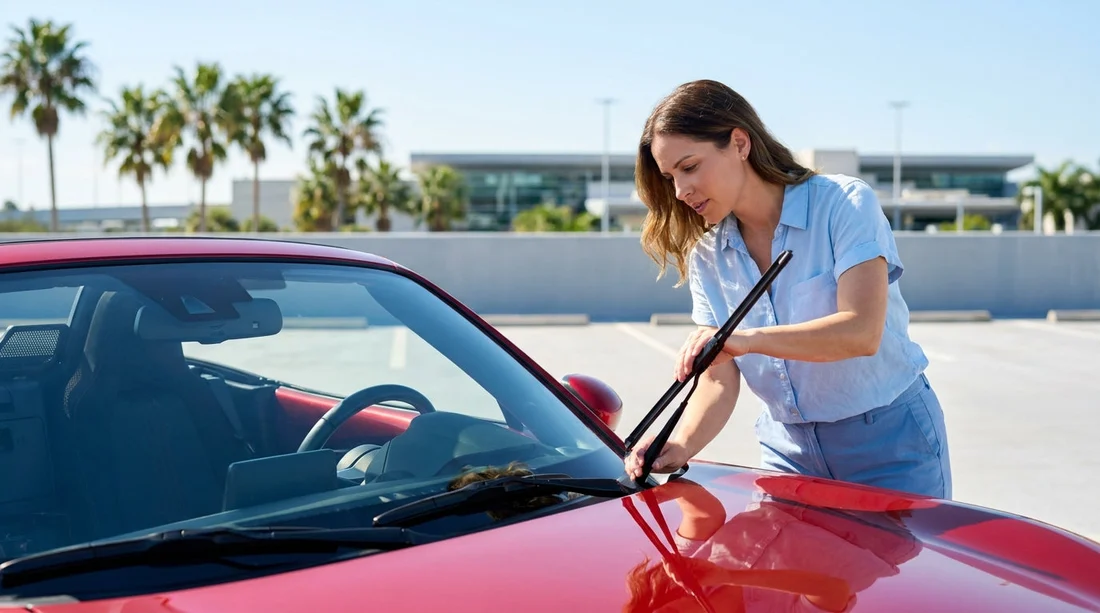
Test wiper speeds across intermittent, low, and high. Listen for chattering or squeaking, which suggests hardened blades or uneven pressure. The sweep should be smooth and the blades should return to the park position reliably.
Check for streaking after a few passes with washer fluid. A light haze might simply be road film, but thick streaks in the driver’s direct line of sight often mean the rubber edge is damaged. Look closely at the blade ends for tearing or missing sections.
Rear wiper matters on SUVs and minivans, particularly if you plan to load luggage high. If you are using a larger vehicle option such as minivan hire in Brickell, check the rear washer works too, because that window collects grime quickly in rain.
Also confirm the wiper arms are secure and not loose at the base. A loose arm can skip under load at speed. If the windscreen has chips or heavy pitting in the sweep area, capture it in a photo since it can exaggerate streaking and can be mistakenly attributed to you later.
Air conditioning: a quick function and comfort check
In Florida, air conditioning is part of safe driving. Overheating and fogging can affect concentration and visibility. Test it properly while still parked.
Start with maximum cool. Set temperature to the lowest setting, fan speed to high, recirculation on, and vents aimed at your face and upper body. Within a minute or two you should feel a clear drop in vent air temperature. Mildly cool is not the same as working well, especially when you are about to sit in traffic.
Cycle the modes. Switch airflow between face, feet, and windscreen defrost. Air should redirect quickly. Weak airflow from certain vents can indicate a stuck blend door or blocked cabin filter.
Listen and smell. A musty odour can indicate mould in the evaporator area, common in humid climates. A sharp chemical smell, or loud clicking when the AC engages, is worth noting. Also check for a loud fan bearing noise at higher speeds.
Check defogging. Turn on the front defrost with AC on. Even in warm weather, the system should clear light fog quickly. If the car has rear defrost, switch it on and confirm the indicator stays lit.
How to document issues so the condition report matches
If anything seems off, document it before you drive away. Take photos of the dashboard showing the time and mileage, plus close ups of the fault. For lights, a short video showing the indicator flashing fast or a headlight out is useful. For AC, a video showing settings and a lack of cold air can help, especially if a staff member cannot reproduce it immediately.
Then compare your notes against the condition report or check out sheet. The key is to be specific: “right rear indicator flashing fast” is clearer than “indicator issue”. For wipers, note “wiper blades streak in driver view” rather than “wipers poor”.
If you are collecting through a branded partner location, the process can vary, but the principle is the same. When using options like Budget car rental in Florida (Miami), make sure any discrepancies are acknowledged in writing or in the digital checkout record before you exit the car park.
When to ask for a swap before leaving
It is reasonable to request another vehicle if a primary safety item is not working. A headlight or brake light out, washers not spraying, wipers that severely streak, or AC that cannot cool the cabin are all problems that can turn a simple drive into a stressful one.
If you are travelling at night, prioritise lights. If rain is forecast, prioritise wipers and washers. If you have passengers who struggle in heat, prioritise AC performance. The earlier you raise it, the easier it is to resolve without disrupting your plans.
FAQ
Q: How long should I test the air conditioning before deciding it is not cooling?
A: Give it two to three minutes on max cool with recirculation on and windows up. If it is still barely cool, document it and report it before leaving.
Q: What is the fastest way to check brake lights when I am alone?
A: Back up near a wall or glass surface, press the brake pedal, and look for the red reflection. You can also record a short rear video with your phone.
Q: The indicators flash quickly on one side, is it safe to drive?
A: A fast flash usually indicates a failed bulb or LED segment. It reduces how clearly others can see your signal, so it should be corrected or noted immediately.
Q: My wipers smear even after using washer fluid, what should I do?
A: Check for torn rubber edges or a dirty windscreen in the sweep area. If smearing remains in the driver’s view, record it on the condition report and ask about replacement.
Q: Do I need to check interior lights as well?
A: Interior lights are less critical, but a working cabin light helps at night and can reveal door issues. Focus first on exterior lights, wipers, washers, and AC, then check interior lights if time allows.





























































































