


Quick Summary:
- Bring an insurance card plus declarations page showing current effective dates.
- Ensure the named driver matches your licence and rental agreement details.
- Proof should show collision and comprehensive coverage that applies to rentals.
- Have digital and printed copies ready, counter rules can vary.
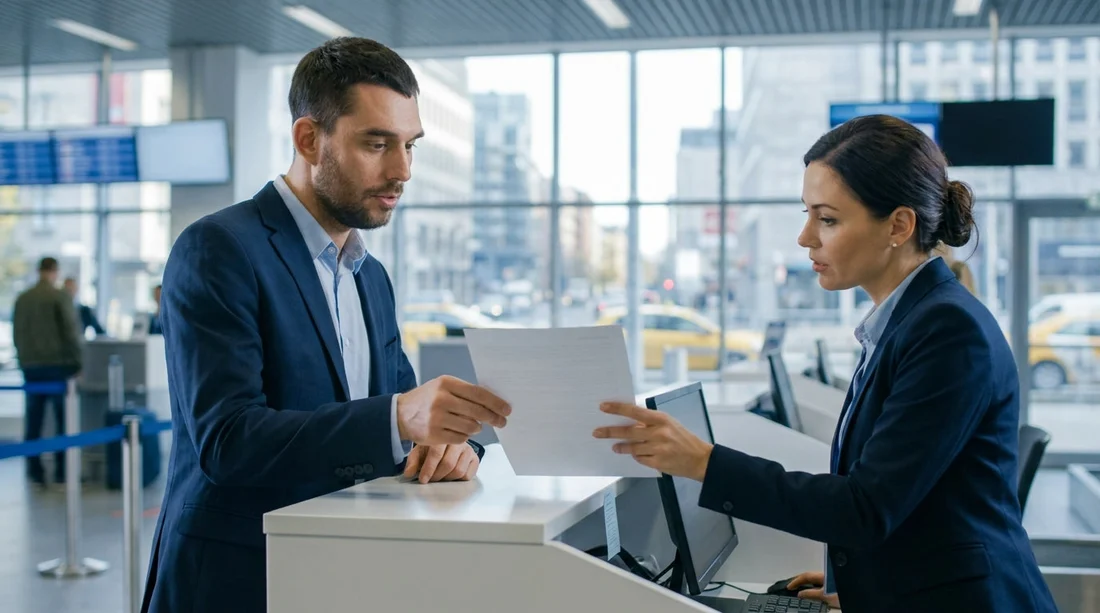
When you collect a rental car in New York, the counter agent will often offer Loss Damage Waiver (LDW), sometimes called Collision Damage Waiver (CDW). LDW is not the same as mandatory liability cover. It is an optional waiver that limits what you owe the rental company if the vehicle is stolen or damaged. If you already have US auto insurance that extends to a rental vehicle, you may be able to decline LDW, but only if you can show acceptable proof on the spot.
This guide explains what typically counts as proof, what each document must show, and how to avoid delays at pick-up. It is written for travellers arranging car hire in New York, including airport collections, where queues and time pressure make preparation important.
What the rental counter is trying to verify
To let you decline LDW, the rental company generally needs confidence that you have qualifying coverage that will respond to damage to the rental vehicle. In practice, the agent is checking three things: the policy is active, the person collecting the car is covered, and the coverage applies to a private passenger rental car in the United States.
They are not adjusting a claim at the counter. They are confirming that your proof is credible and complete enough for their rental terms. Policies vary widely, so you want documents that clearly show the essential details without the agent having to guess.
Acceptable proof documents, and what they must show
Different insurers and states issue proof in different formats, but in New York you will usually be safest carrying at least two forms of proof: your insurance card and your declarations page. If you only have one document, bring the one that shows the most detail.
1) Insurance card (physical or digital)
An insurance ID card is commonly accepted as evidence you have an active policy. It should show the insurer name, the policy number, the named insured, and effective dates. Many drivers only carry the card, but for declining LDW it can be insufficient because it may not show the coverages, limits, or whether physical damage cover exists.
If your insurer issues a digital card in an app, bring a screenshot as a backup in case you lose signal in an underground garage or inside a terminal. Make sure the dates visible cover the entire rental period.
2) Declarations page (recommended)
The declarations page is often the best single document for declining LDW because it lists the coverage types, limits, deductibles, the policyholder name, address, vehicles on the policy, and the policy term. It is also where many policies show comprehensive and collision coverage, which is what typically matters for LDW decisions.
Current policy term: effective and expiration dates that include your pickup date in New York.
Named insured and drivers: the policyholder name that matches the renter.
Physical damage coverage: often listed as Comprehensive and Collision, with deductibles.
What details must match your rental agreement
Even with perfect documents, mismatches cause delays. The name on the insurance proof should match the primary driver on the rental agreement. If you are an additional driver on someone else’s policy, bring proof that you are a listed driver or a named insured, not just someone who “usually drives the car”.
Spelling matters, especially middle initials, double surnames, and hyphenated names.
Policy term should be current, so do not rely on a renewal notice without dates.
What “coverage applies to rentals” really means
Many US personal auto policies extend liability coverage and also extend collision and comprehensive to a non-owned auto, including a rental car, but there are common exceptions. Your proof at the counter should support that your coverage is likely to apply.
Collision and comprehensive present: if you only have liability insurance, it will not replace LDW for damage to the rental vehicle.
Vehicle class: exotic cars, large passenger vans, or certain trucks may be excluded.
Deductible awareness: if your collision deductible is high, declining LDW may still leave you with a large out-of-pocket amount.
Digital proof vs printed proof, what works best in practice
Digital proof is often accepted, but it depends on the rental location’s procedures and the agent. Airports can have patchy reception, and some insurer apps require login verification. A printed declarations page plus a digital insurance card is a reliable combination. If you only bring digital documents, download them offline before you travel.
If you are collecting around major hubs, policies can be checked quickly, but the counter may still ask for more detail. For example, when arranging airport collection through New York JFK car rental listings, assume you will be asked to show dates and named insured at minimum.
Special situations that commonly cause LDW to be required
Some renters cannot decline LDW because their proof does not establish qualifying cover. Non-US insurance is typically not accepted as proof for US rental damage cover, and liability-only cover does not prove physical damage protection for the rental vehicle.
If your trip requires a larger vehicle, compare options like van hire at New York JFK or minivan hire at Newark EWR and confirm your insurance covers that class before you arrive.
What to prepare before you reach the counter
Use this short checklist to avoid being forced into LDW due to missing details: gather your insurance card and declarations page, check effective dates for the full rental period, and keep an offline copy on your phone plus a printed backup.
If you are picking up outside New York City but still serving the metro area, you may see slightly different desk practices. Locations connected to Newark Airport car rental can be just as strict on documents because they handle many international arrivals and a high volume of one-way rentals.
LDW vs other cover, avoid mixing them up at the desk
At the counter, several products can be offered alongside LDW, such as supplemental liability insurance, personal accident insurance, or roadside assistance. Your US auto policy may cover liability, but it may not cover personal property theft or medical costs. Declining LDW only addresses damage to the rental vehicle, not every risk on your trip.
If you are comparing providers, supplier rules can differ even at the same airport. For example, inventory shown under Enterprise at New York JFK may have different documentation expectations from other brands in the same terminal.
FAQ
Can I decline LDW in New York with only an insurance card? Sometimes, but it depends on what the card shows. If it does not list collision and comprehensive, bring a declarations page to prove physical damage coverage.
Does my US auto insurance need collision and comprehensive to replace LDW? In most cases, yes. Liability-only insurance may satisfy legal liability needs, but it does not cover damage to the rental vehicle itself.
Will a photo of my declarations page on my phone be accepted? Often it is accepted if it is readable and shows your name, policy number, coverages, and effective dates. Download it offline and bring a printed backup when possible.
What if I am an additional driver on someone else’s policy? Bring proof you are a listed driver or a named insured, not just related to the policyholder. If your name is not shown, the agent may require LDW.
Does proof need to show coverage in New York specifically? Usually it just needs to show the policy is active and applies in the United States. If your policy has any territory limits, bring policy wording or a coverage letter confirming New York is included.





























































































