


Quick Summary:
- Confirm registration and insurance proof are in the glovebox before leaving.
- Verify rental agreement details, including drivers, dates, vehicle class, and plate.
- Check roadside and accident instructions include clear 24-hour contact numbers.
- Review tolling and fuel rules in writing to avoid surprise charges.
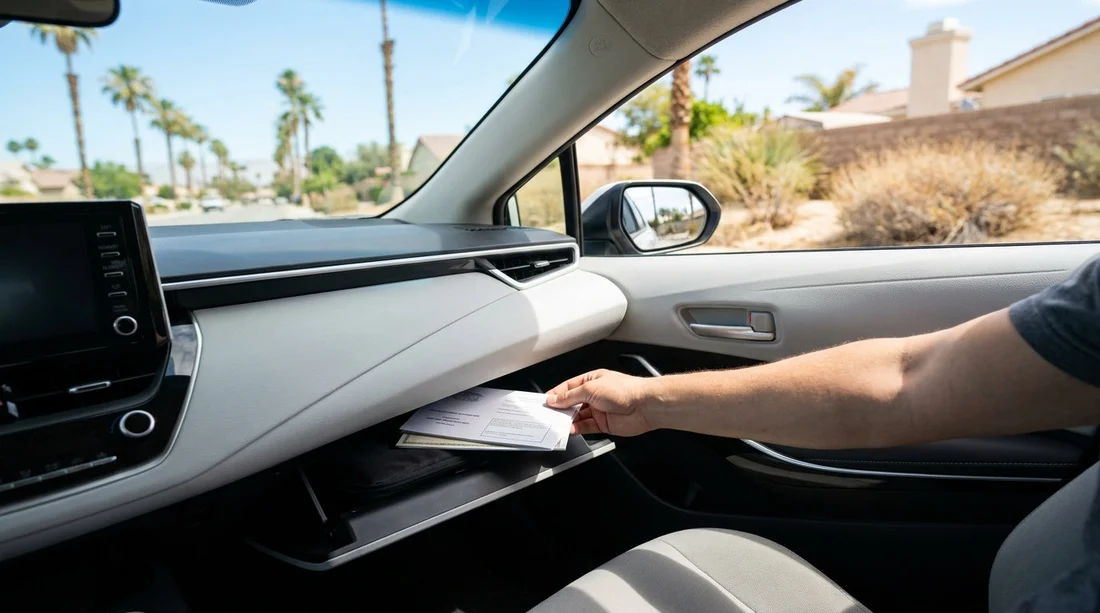
In California, a counter-to-car check takes a few minutes and can save hours later. Most rental issues on the road are not about the car itself, they are about missing paperwork, unclear instructions after an incident, or documents that do not match the vehicle you were given. The glovebox is the first place to look, because it is where rental companies typically keep the essentials you may need for a traffic stop, an accident report, or a breakdown.
This checklist focuses on what should be in the vehicle before you drive away, and what to ask the desk agent or exit booth to provide if something is missing. Requirements and formats vary by company, but the practical goal is the same: you want documents that identify the car, show that it is insured for rental use, and tell you exactly what to do if anything goes wrong.
If you are picking up near major hubs like Los Angeles LAX or San Francisco SFO, queues and time pressure can make it tempting to skip checks. Do them anyway, ideally before you join the exit line, so fixes are simple.
1) Vehicle registration (or equivalent registration document)
In California, you should be able to show that the vehicle is registered. In many rentals, the actual registration card or a copy is kept in the glovebox, sometimes inside a plastic sleeve, with instructions not to remove it from the vehicle.
What to look for: a registration document that matches the vehicle you are driving, including licence plate number and vehicle identification details. If you notice it references a different plate, different make, or a different unit number, stop and request the correct document before leaving.
What to ask for if missing: a printed copy or the company’s approved registration substitute, plus confirmation of where it must be stored. For a police stop, it needs to be readily available, not locked in the boot under luggage.
2) Proof of insurance or rental coverage letter
Rental cars are typically covered under the rental company’s policy, and additional cover may come from your chosen protection package or sometimes your own insurer or card provider. Regardless, you want something in the vehicle that indicates the rental is insured and who to contact in case of an incident.
What to look for: an insurance card, a certificate, or a letter on company letterhead that identifies the insurer or self-insured entity and provides a claims contact number. Some companies provide a “proof of financial responsibility” card rather than a traditional policy card.
3) Rental agreement and summary sheet
Your rental agreement does not always live in the glovebox, many people keep it in a bag or email. Still, you should have a printed copy or an accessible digital version before you drive off, because it is the master document that proves you are authorised to operate the vehicle.
What to verify on the agreement: the correct pick-up and return times, vehicle class, plate number or unit number, and all authorised drivers. Ensure the fuel policy is clearly stated and matches what you were told. If you are collecting after a long flight, confirm that any “after-hours” notes do not change your return responsibilities.
Pay particular attention to add-ons. If you did not request them, they should not appear as charges. If you did request them, confirm they are listed accurately. If you are hiring around the Bay Area using options such as San Jose SJC, it is common to see multiple protection lines. Ask the agent to explain each line item in plain language before you sign.
4) Damage inspection form and check-out condition report
The most important “paperwork” for avoiding disputes is the condition record, whether it is a printed slip, an electronic check-out, or a diagram showing existing scratches and dents.
What to look for: a form that either lists existing damage or explicitly states the vehicle is free of noted damage at check-out. If it is an electronic process, take your own time-stamped photos or video at the car, including wheels, bumpers, windscreen, and the interior.
What to do before leaving: compare the form against what you actually see. If there is unmarked damage, go back immediately and have it added. Do not rely on verbal assurances like “it will be fine”, ask for an updated record or confirmation in writing.
5) Roadside assistance information and emergency contacts
A glovebox should contain clear steps for a breakdown, flat tyre, lockout, or dead battery. Even if you have phone signal, having the correct number avoids calling a general customer service line that cannot dispatch help.
What to look for: a roadside assistance card, an emergency contact sheet, or a booklet with a dedicated 24-hour phone number. Ideally it also lists what information you will need to provide, such as the vehicle unit number, location, and a call-back number.
Ask specifically about tyres: some rental policies treat tyre damage differently from mechanical failures. Knowing whether you are expected to change a spare, use a sealant kit, or call for service can prevent additional charges and delays on California freeways.
6) Accident report instructions and forms
If you are in an accident, the rental company will want specific information quickly. Some vehicles include a small accident packet with forms, a claims number, and step-by-step guidance.
What to look for: an accident instruction sheet that tells you when to call emergency services, when to contact the rental company, and what photos and details to collect. A simple blank form for other party details is helpful, but even a clear checklist is enough.
What to ask for if not provided: a printed accident guidance page or confirmation of where it is in the company’s app. If your pickup is busy, such as through Alamo at LAX, ask for the incident number and claims contact before you leave the lot so you are not searching later under stress.
Counter-to-car mini routine (two minutes at the vehicle)
Stand at the car with the glovebox open and do a quick, repeatable sequence. Confirm registration and insurance proof are present. Check the accident and roadside numbers. Compare the plate and vehicle class to your paperwork. Then do a fast walk-around, photographing existing marks and each wheel. If anything is missing, resolve it before you drive out.
FAQ
Do I legally need to carry the rental agreement in the car in California? It is not typically required like registration, but it is smart to have it accessible. It proves you are an authorised driver and helps resolve questions quickly.
What if the glovebox is empty or locked when I collect the car? Go back to the counter or exit booth before leaving the lot. Ask for the registration and proof-of-insurance documents, plus roadside and accident instructions.
Is a digital insurance card on my phone enough for a rental car? It depends on the rental company’s process and what you need to show during a stop. Having the company’s printed proof in the vehicle is safer if your phone battery dies or signal is poor.
What documents matter most if I am stopped by police? The key items are the vehicle registration (or approved copy) and evidence the vehicle is properly insured, plus your driving licence. The rental agreement can also help confirm authorised use.
How can I reduce disputes about damage after return? Ensure the check-out condition record matches the car, and take time-stamped photos at pick-up and drop-off. Get any unlisted damage added in writing before leaving.





























































































