


Quick Summary:
- In New Jersey, stay in the car and tell the attendant fuel type.
- Know your hire car’s fuel door label, never guess petrol or diesel.
- Pay at the pump with card, or pay the cashier inside.
- Tipping is optional, offer $1–$2 for extra help or bad weather.
If you are picking up a car hire in New York and crossing the Hudson, New Jersey’s petrol rules can catch you off guard. The biggest difference is simple: in New Jersey, you generally cannot pump your own fuel. Stations are full-service, meaning an attendant operates the pump for you. It is easy once you know the routine, but it helps to understand what to say, how payment usually works, and how to avoid a costly misfuelling mistake with a hire car.
This guide focuses on what to do at attendant-only pumps, what locals consider polite when it comes to tipping, and the practical checks that stop you putting the wrong fuel into your vehicle. If your trip involves airports, it is also worth knowing where you collected the car and what your agreement says about returning it with fuel. For airport collections in the city, see car hire at New York JFK. If you collect or return near Newark, the New Jersey pages for car hire New Jersey EWR and car rental New Jersey EWR can help you compare options. Larger groups sometimes prefer a bigger vehicle, and van hire New York JFK is useful if you need extra space.
Why New Jersey is different from New York
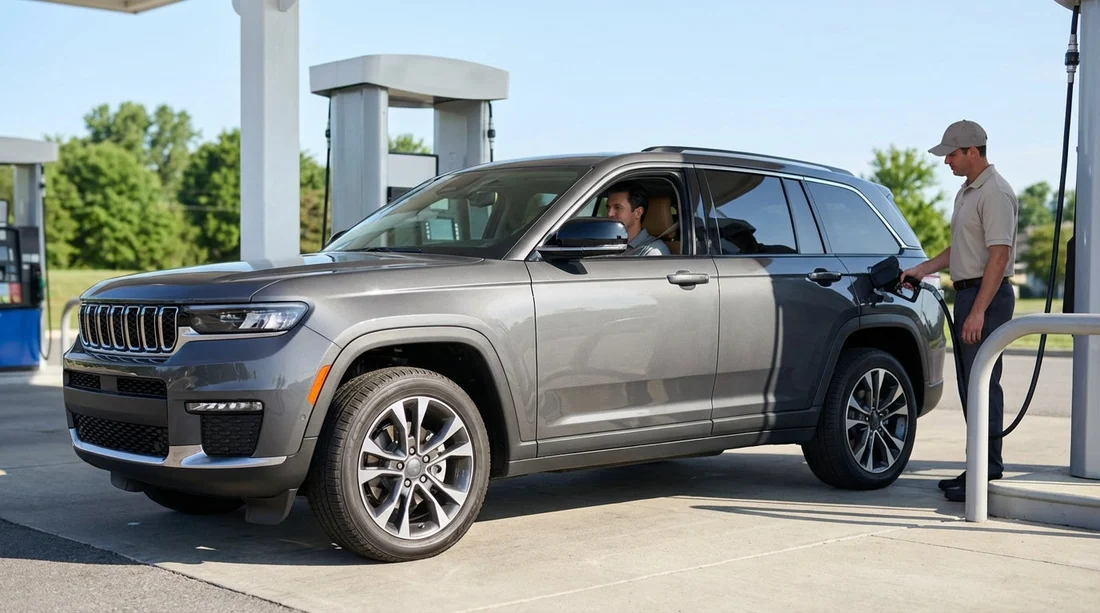
New York allows self-service petrol stations, and many visitors assume that is the norm everywhere. New Jersey is the well-known exception: attendants pump fuel for you at most stations. You will usually see signage saying “Full Service” or “Attendant on Duty”. Even if a station has multiple lanes, do not reach for the nozzle unless the attendant explicitly tells you to, which is uncommon.
For drivers used to doing everything themselves, the main change is psychological: you slow down, pull up correctly, lower your window, and communicate clearly. The process is quick, and many drivers come to like it, especially when it is cold, wet, or you are travelling with children.
Step-by-step: how to fuel up at an attendant-only pump
1) Choose the right side and pull in neatly. Before you enter the forecourt, check which side your fuel door is on. In most cars, there is a small arrow next to the fuel icon on the dashboard that points to the correct side. Pull in so the pump is adjacent to the fuel door, close enough for the hose to reach without stretching. Leave room for the attendant to move safely.
2) Stay in the car unless asked otherwise. Most locals stay seated with their seatbelt off, window down, and the engine turned off. Put the car in Park, apply the handbrake if you have one, and unlock the fuel door if your car uses an interior release.
3) Tell the attendant what you want. Keep it short and specific. The attendant usually asks “Regular?” or “How much?” In the US, “Regular” generally means the lowest octane petrol (often 87). Many hire cars are fine on regular unleaded. If your vehicle requires premium, it will be clearly stated on the fuel door or in the handbook. If you are unsure, do not guess, check the label first.
Common phrases that work well:
“Regular, fill it up please.”
“Regular, ten dollars please.”
“Diesel, fill it up.” (Only if the car is diesel, see the misfuelling section below.)
4) Decide how you are paying. Payment varies by station. Some attendants take your card and run it at the pump terminal. Others ask you to prepay a specific amount, especially for cash. Sometimes you pay inside after the attendant finishes, but prepay is common.
If you are paying by card, you may be asked for your billing ZIP code. Visitors using a UK card sometimes cannot enter a US ZIP at the pump, in that case paying inside at the cashier is usually easiest. Keep your payment method ready so you do not block the lane longer than necessary.
5) Collect receipt and confirm the pump is closed. When finished, the attendant will replace the nozzle and close the fuel door. Still, take a second to check your fuel door is properly shut before pulling away. If you are returning to the motorway, use the forecourt space to re-set sat nav and check mirrors rather than stopping on the exit.
Tipping etiquette at New Jersey petrol stations
Tipping for petrol attendants in New Jersey is not mandatory. Many drivers do not tip at all, particularly for a routine fill-up. That said, a small tip can be appreciated when the attendant provides extra help.
Situations where a tip is common or considerate:
Bad weather. Heavy rain, snow, or freezing temperatures.
Extra service. Checking tyre pressure, cleaning the windscreen, or helping with a tricky fuel door release.
Accessibility needs. If the attendant goes out of their way to assist.
What is reasonable? Often $1 to $2 is plenty for helpful service. If you are paying by card, tipping at the pump is not always straightforward, so cash is simplest. If you do not have cash, a polite “Thanks very much” is perfectly acceptable.
How to avoid putting the wrong fuel in a hire car
Misfuelling is one of the quickest ways to turn a smooth trip into a major delay. It can also be expensive because draining and flushing a fuel system is specialist work, and your hire agreement may hold you responsible. The good news is that preventing it is mostly about slowing down and checking two things.
Check 1: the fuel type on the fuel door. Open the fuel door and look for wording such as “Unleaded Fuel Only” or “Diesel Only”. Many modern cars have clear labels. If it says unleaded, you want petrol. If it says diesel, do not allow anyone to select regular, mid-grade, or premium petrol.
Check 2: the dashboard warning stickers or key tag. Some car hire providers attach a reminder to the key fob, and some place a sticker on the dashboard. Do not rely on colour, the US uses different nozzle colours by station and brand, and “green means diesel” is not a universal guarantee.
Know the words used at the pump. In the US, “gas” and “gasoline” mean petrol. “Diesel” is stated plainly, but it may be on a separate nozzle. The octane choices (regular, plus, premium) are petrol grades, not diesel.
If you are unsure, stop the process. At a full-service station, you have an advantage: you can tell the attendant to wait while you confirm. Say “One second please, I need to check the fuel type on the car.” It is normal, and it is far better than hoping.
What to say to the attendant, and what questions to expect
Most interactions take less than a minute. Expect one or more of these questions:
“Regular?” If your car takes unleaded petrol and you have no premium requirement, “Yes, regular” is fine.
“Fill it up?” If you want a full tank, say “Yes, fill it up”. If you are topping up for a return, you might say “Can you do ten dollars?” or “Stop at half a tank, please,” though the latter is less precise because pump shut-offs can vary. A dollar amount is clearer.
“Cash or card?” If cash, you often prepay. If card, you may hand it over briefly.
Useful extra note for a car hire return: if your agreement requires a full-to-full policy, consider fuelling shortly before you arrive at the drop-off location. Keep the receipt as proof in case of a dispute about fuel level.
Fuel grades, labels, and UK comparisons
UK drivers often think in terms of E10, E5, 95 RON, and 97 to 99 RON. In the US you will commonly see 87, 89, and 91 to 93 at the pump. These are octane ratings using a different method, so do not try to match numbers directly. Your car hire documentation and the fuel door label are what matter.
Also note the language difference: in the UK you say “petrol station”, in the US it is typically “gas station”. Asking for “petrol” is understood by many attendants, but “gas” or “unleaded” avoids confusion.
Practical tips for driving from New York into New Jersey with a fuel stop
Plan your stop rather than waiting for the low-fuel light. Densely populated areas have plenty of stations, but motorway exits can be busy and confusing if you are unfamiliar with the signage.
Be careful with toll roads and turnpikes. If you are heading towards Newark or further south, you may encounter toll routes. Do not stop abruptly near toll plazas to search for a station, instead exit safely and rejoin when ready.
Watch your lane choice on the forecourt. Some stations separate diesel lanes or have dedicated full-service lanes in other states, but in New Jersey it is typically all full-service. Still, check signs so you do not queue behind a vehicle that is clearly waiting for something else, such as air or a car wash.
Keep the car hire paperwork accessible. If you need to confirm fuel type, having the rental agreement or vehicle info on hand can help, but the fuel door label remains the best authority.
What if you accidentally start misfuelling?
If you realise the wrong nozzle is about to go in, stop immediately and say so. If fuel has already gone in, do not start the engine. Starting circulates fuel through the system and can worsen damage. Inform the station staff and then contact your car hire provider for instructions. They will typically arrange recovery and advise the next steps. Acting quickly and not starting the engine can reduce complications.
FAQ
Do I really have to use an attendant at New Jersey petrol stations? In most cases, yes. New Jersey is known for requiring attendants to pump fuel at the majority of stations, so plan to stay in the car and tell them what you need.
How do I pay at a full-service pump in New Jersey? Many attendants can take your card at the pump, or you can prepay inside with the cashier. If your UK card has issues at the pump, paying inside is usually simplest.
Should I tip the petrol attendant, and how much? Tipping is optional. If the attendant provides extra help or the weather is poor, $1 to $2 in cash is a common, polite amount.
What fuel should I ask for with a typical car hire? Most standard hire cars use unleaded petrol, often fine on regular. Check the fuel door label for “Unleaded only” or any premium requirement, and never guess.
What should I do if the wrong fuel goes into my hire car? Tell the attendant to stop, do not start the engine, and contact your car hire provider immediately for recovery and guidance.





























































































