


Quick Summary:
- Bay Area bridges are cashless, your licence plate is read automatically.
- With car hire, toll charges arrive later, often after return.
- Ask at pick-up about toll programmes, pay-per-use, and admin fees.
- Note crossing dates and times to check charges and resolve disputes.
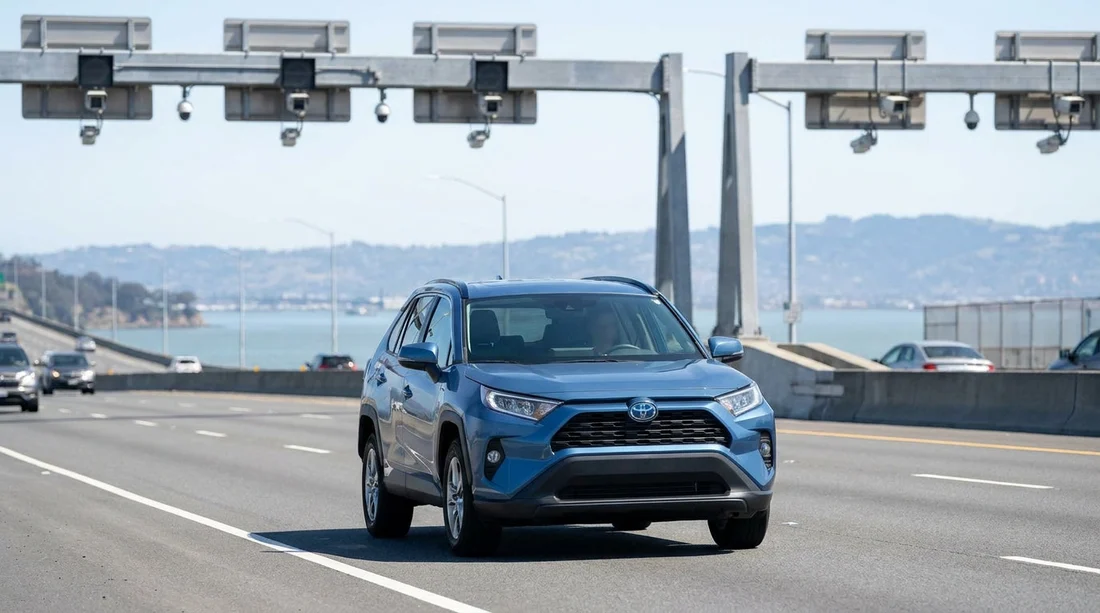
Driving around San Francisco often involves a bridge crossing, and the key thing to know is that Bay Area bridge tolling is cashless. There are no toll booths taking cash at the major bridges, instead, cameras and sensors identify vehicles by licence plate and electronic tag. In a privately owned car you might manage your own FasTrak account, but with car hire the billing path is different, and it can feel delayed and opaque if you do not set expectations up front.
This guide explains how toll-by-plate works on Bay Area bridges when you are in a rental car, what you will likely be charged, why charges can arrive after your trip, and which toll options to ask about when you collect the keys in San Francisco.
What “toll-by-plate” means on Bay Area bridges
Toll-by-plate is the back-up method used when a vehicle crosses a toll point without an electronic toll tag being read. Cameras capture the licence plate, the system matches it to the vehicle record, then a toll notice is issued to the registered owner of the vehicle. With car hire, the registered owner is the rental company, not the driver. The rental company then passes the toll to you, usually by charging the payment card linked to your rental agreement.
For most visitors, the practical takeaway is simple: you can cross the bridges without stopping, but you should expect toll charges later. If you were hoping to pay on the spot, that is not how Bay Area bridges operate today.
Which San Francisco Bay Area bridges use cashless tolling
In and around San Francisco, the Bay Bridge and Golden Gate Bridge are the crossings most travellers think about. Many other Bay Area bridges also use all electronic tolling, and the experience is broadly consistent: drive through at normal speed, and the toll is captured electronically.
Two details matter for expectations. First, toll rates can vary by bridge, time of day, and vehicle type. Second, some bridges only collect tolls in one direction, which can make charges look “missing” on one leg of your route when, in fact, no toll was due.
How a toll turns into a charge on your rental agreement
When you cross a toll point, the system will attempt to read an electronic toll tag (FasTrak). If the rental car has a tag and it is correctly activated for your hire, the toll is typically recorded against that tag and later billed through the rental company’s toll programme. If there is no tag, or it is not activated, the system relies on plate images, which still lead back to the rental company as registered owner.
If you are collecting at the airport, staff can explain which toll programme applies to that fleet. When comparing options around arrivals, you can check San Francisco Airport car rental, and then confirm at the counter what toll method is attached to your specific contract.
Why toll charges can show up days or weeks later
Delayed billing is normal with toll-by-plate and with some rental toll programmes. The toll system itself can take time to process plate images, validate the read, and post the transaction. After that, the rental company still has to receive the transaction, map it to your hire, and run the charge through its payment system.
As a result, it is common to see tolls on your card after you have flown home. If you are managing travel expenses, keep a note of likely crossings and dates, so you can reconcile charges when they land.
Administrative fees: what they are and when they apply
Many rental companies apply an administrative fee when they process tolls on your behalf. The fee structure varies by supplier and programme, and it may be charged per day of toll usage, per toll event, or as a flat processing fee. This is the single biggest reason travellers feel a toll was “more expensive than expected”, because the toll itself is only part of the total.
Ask two specific questions at pick-up: whether an admin fee applies, and whether it is per toll or per day. If you are shopping brands, compare policies and confirm in the hire documents at the desk, for example Hertz car hire in San Francisco SFO or Alamo car hire in San Francisco SFO.
Toll options to choose at pick-up (and what they mean)
Most car hire counters in the Bay Area offer some combination of these options. Names vary, but the logic is consistent.
1) Toll pass or toll tag programme (often “all inclusive”). You pay a daily fee for the days you use toll roads or bridges, sometimes with tolls included, sometimes with tolls billed separately. This can be convenient if you expect multiple crossings and want fewer surprises, but it can be poor value if you only cross once.
2) Pay-per-use programme. You are billed for each toll you incur, plus a service or admin fee. This often suits light bridge use, but check whether the admin fee applies to every single toll event.
3) Decline toll programme. You may still be charged if you use toll facilities, because toll-by-plate will identify the vehicle anyway. Declining is not the same as opting out of toll billing, it is usually opting out of a specific programme. If you then cross a bridge, you could end up in a less favourable violation processing path, depending on the supplier rules, which can be more expensive.
If your itinerary includes pickups or drop-offs outside San Francisco, the same questions apply. For example, travellers doing a Silicon Valley leg via car rental in San Jose SJC should still clarify which toll programme is tied to the vehicle, because bridge tolling and express lanes can be part of that drive.
Golden Gate Bridge specifics: tolling direction and expectations
The Golden Gate Bridge uses all electronic tolling and collects tolls in one direction only. For many visitors, that means you will see a toll when heading southbound into San Francisco, but not necessarily when leaving the city to the north. This can make your charges look odd if you are expecting a toll both ways.
In a rental car, the toll-by-plate process is the same: the bridge system identifies the plate, the rental company is billed as owner, and you are charged later under your hire agreement and chosen toll option.
How to avoid unnecessary fees and disputes
You cannot avoid the toll if you take the bridge, but you can avoid unpleasant surprises.
Confirm your toll option before you drive off. Ask what happens if you take one bridge crossing. Ask what happens if you take several in one day. Ask when charges typically post.
Keep your paperwork. Save the rental agreement number and the vehicle plate details from your contract. If a toll charge arrives long after your trip, those details make it easier to verify.
Allow time for corrections. If something looks wrong, contact the rental company with your agreement number and crossing notes. Because toll systems and rental billing are delayed, quick resolution is not always possible, but clear details speed up verification.
If you want to confirm pick-up details ahead of time, use the main car rental in San Francisco SFO page to check what to expect at collection.
FAQ
Can I pay cash on Bay Area bridges with a rental car? No. Major Bay Area bridges are cashless, tolls are captured electronically via toll tag or licence plate imaging.
Will tolls be charged to me automatically when using car hire in San Francisco? Usually yes. The toll is billed to the rental company as vehicle owner, then passed to you under your rental agreement, often with an admin fee.
How long after my trip will toll-by-plate charges appear? It varies, but it is common for tolls and related fees to post days or even weeks after you return the car.
What should I ask at the counter to avoid unexpected toll fees? Ask which toll programme is active, whether fees are per day or per toll, and what happens if you decline the programme but still cross a bridge.
Why did I only get charged once for the Golden Gate Bridge? The Golden Gate Bridge typically charges in one direction only, so one-way tolling can be normal depending on your travel direction.





























































































