


Quick Summary:
- LDW/CDW generally covers vehicle damage or theft, not your belongings.
- For stolen personal items, look for PEC, travel insurance, or home cover.
- Report break-ins fast, file a police report, and notify the rental company.
- Check exclusions, deductibles, and unattended-vehicle rules before collecting keys.
If you are arranging car hire in New York, it is easy to assume that Loss Damage Waiver (LDW) or Collision Damage Waiver (CDW) works like full insurance for everything in and around the car. In most cases, it does not. LDW/CDW is primarily about the rental vehicle itself, covering the cost of damage to the rental car, and sometimes the car’s theft, depending on the contract. Your personal property, for example a laptop, suitcase, camera, or phone, usually sits outside that protection.
This distinction matters in New York because rental cars are often parked on busy streets, in garages, or briefly unattended during hotel check-ins and sightseeing. Opportunistic theft can happen anywhere, and the question becomes: if someone smashes a window and steals items, what pays for your belongings, what pays for the car, and what steps protect you from extra charges?
What LDW/CDW is designed to protect
LDW/CDW is a waiver offered by the rental company. It normally reduces what you owe the rental firm if the vehicle is damaged, vandalised, or stolen. The exact scope varies by provider and by location, but the core idea is consistent: it is tied to the car, not to what you carry in it.
Think of LDW/CDW as a way to limit your financial responsibility for repair or replacement of the rental vehicle. If a thief breaks a window, LDW/CDW may address the window damage, subject to exclusions and any deductible. If the car itself is stolen and not recovered, the waiver may address the vehicle loss. However, the waiver typically does not reimburse you for stolen personal items inside the car.
This is why it helps to read the contract language at the desk. You will usually see wording that separates “damage to the vehicle” from “loss of personal property”. When in doubt, ask the agent to confirm in writing or point to the clause that addresses personal effects.
Does LDW/CDW cover theft of personal items from a rental car in New York?
In the overwhelming majority of cases, no. LDW/CDW is not intended to pay for your belongings if they are stolen from the rental car in New York. Even when theft is involved, the waiver is concerned with the vehicle and the rental company’s losses, not yours.
There are two separate loss categories in a break-in:
1) Vehicle loss or damage. Broken glass, forced locks, damaged panels, and similar repairs generally fall under the vehicle side. LDW/CDW may cover these costs, depending on the terms, any deductible, and any exclusions.
2) Personal items taken. Bags, electronics, passports, and other property are typically excluded. You would usually need a different type of cover to recover the value, such as Personal Effects Coverage (PEC) if offered, a travel insurance policy, or sometimes your home contents insurance.
When planning car hire for a New York trip, treat LDW/CDW as one piece of the puzzle. It can be very useful for damage and theft of the car, but it is not a substitute for cover that follows you and your belongings.
What typically covers stolen belongings instead
If you want protection for personal items stolen from a rental car, you generally look to one of these sources. Which is best depends on the value of what you are carrying and the conditions under which theft might occur.
Personal Effects Coverage (PEC). PEC is an optional product some rental companies sell. It is designed to cover theft of personal items, but it often comes with limits per item, overall limits, and exclusions. It may also require evidence of forced entry and a police report. PEC can be convenient if you do not have another policy, but you should compare it to travel insurance or existing cover.
Travel insurance. Many travel insurance policies include baggage and personal possessions cover. The policy may still have exclusions such as leaving valuables unattended, not taking reasonable care, or leaving items visible in a vehicle. It can also include excesses and limits for electronics. Read the unattended vehicle clause carefully, because some policies require items to be locked in the boot and out of sight.
Home contents insurance (UK residents). Some UK home insurance policies include “personal possessions” away from home, sometimes worldwide, sometimes for an additional premium. This can cover theft from a vehicle, but conditions often apply. For example, cover may be restricted to items concealed in a locked boot, and it may exclude cash, passports, or business equipment.
Card benefits. Some premium cards provide limited protection for purchases or travel possessions. However, benefits vary widely, and some focus on trip delay or purchase protection rather than theft from a vehicle. Always check the benefit guide for exclusions, documentation requirements, and claim windows.
Common exclusions that affect theft claims
Even when you have a policy that could cover stolen items, claims often hinge on the details. These are the common issues that can reduce or eliminate reimbursement:
Unattended vehicle rules. Insurers often require the car to be locked, with no items visible. Some demand that items be in the boot, and that the boot is not accessible from the cabin. In a typical SUV or hatchback, luggage in the rear can be considered “visible” unless covered and out of sight.
No signs of forced entry. If there is no visible forced entry, a claim may be questioned. Always document damage and obtain a police report if theft occurs.
High-value item limits. Laptops, cameras, and jewellery may have specific per-item caps unless you declared them. If you travel with expensive kit, check whether you need specialist cover.
Carelessness exclusions. Leaving a bag on the back seat while you step away “for a minute” is a common reason claims fail. In busy New York areas, that minute is often enough.
What to do immediately if items are stolen from your rental car
If you experience a break-in during car hire in New York, act quickly. Your ability to claim, and to avoid disputes, improves when you document everything from the start.
1) Move to a safe location. If the car is damaged, check for glass hazards and ensure passengers are safe.
2) Call the police and request a report. A police report is often required for both rental company processes and any insurance claim for stolen items. Ask for the report number and how to obtain a copy.
3) Notify the rental company promptly. The rental firm needs to know about damage, stolen vehicle parts, or keys. They will guide you on repairs, replacement vehicles, and documentation.
4) Photograph everything. Take clear photos of the window, locks, interior, and the surrounding area. List missing items, including approximate purchase dates and values.
5) Keep receipts and proof of ownership if possible. Order confirmations, photos of the item, serial numbers, and bank statements can all help.
How this affects your rental charges
A break-in can create two separate money tracks: the rental company’s vehicle costs and your personal loss.
On the vehicle side, without LDW/CDW you might be responsible up to the full cost of repairs, plus potential additional charges such as loss of use or administrative fees, depending on the contract. With LDW/CDW, your responsibility for the car damage may be reduced or removed, again depending on exclusions and deductibles.
On the personal items side, the rental company will usually not reimburse you. If you bought PEC, it may cover some or all of the loss up to limits. Otherwise, you would pursue a claim through travel insurance, home insurance, or another applicable policy.
Planning practical theft prevention in New York
Insurance is only part of managing risk. In New York, small habits make a large difference.
Keep belongings out of sight. A bag on a seat is an invitation. Use the boot, and if you are in an SUV, consider a cargo cover.
Do not store valuables in the car. Treat the vehicle as a temporary transport tool, not a locker. Bring passports, electronics, and important documents with you.
Choose parking carefully. Well-lit garages with staffing and controlled access can reduce opportunistic theft compared with isolated street parking.
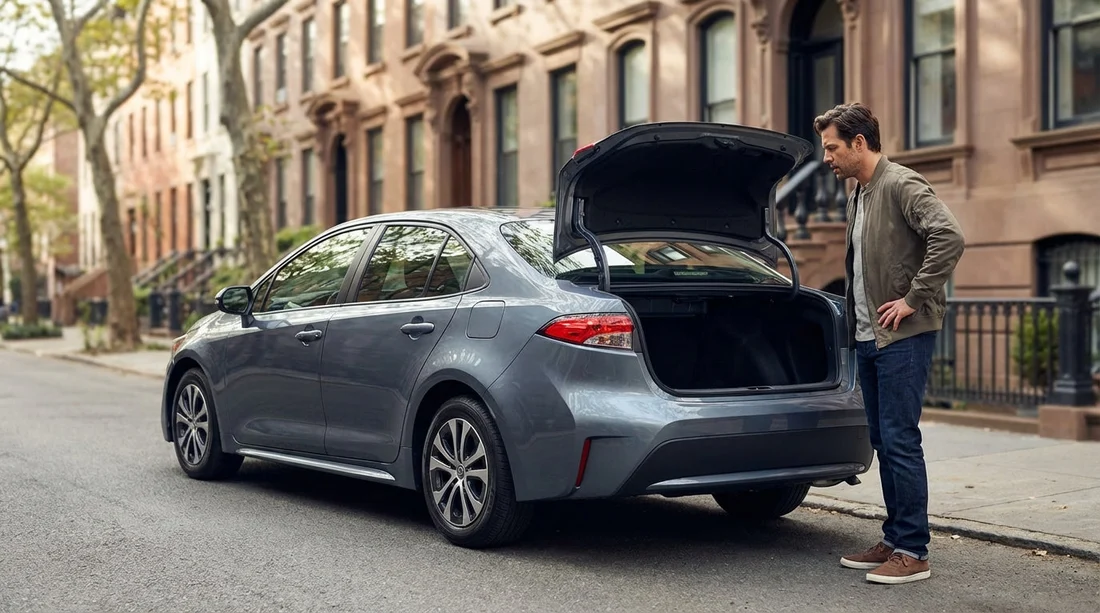
Limit “transition moments”. Theft often happens while you check in, load luggage, or stop for food. Keep one person with the car if the boot is open and bags are visible.
Picking the right car hire setup for your trip
Choosing a vehicle type and pickup point can influence how easy it is to secure luggage. For example, larger vehicles can carry more, but open-cargo layouts can leave items visible unless covered. If you are arriving via nearby airports, you may compare pickup options like car hire at Newark Airport (EWR) or browsing local inventory for car hire in New Jersey near EWR to match your route and accommodation plans.
If you will be moving as a family or group with multiple bags, it may be worth considering a vehicle where luggage can be fully enclosed. Options such as a minivan rental in New York (JFK) can make it easier to keep items in the rear and reduce what is left in view. If you prefer an SUV for winter driving or space, compare layouts like SUV rental in New York (JFK). The goal is not only comfort, but also the ability to keep belongings covered and secured.
Key takeaways before you sign
Before you finalise your paperwork, separate the questions you are trying to answer:
Will LDW/CDW protect me if the car is damaged or stolen? Usually yes, within the waiver’s terms, but check the deductible and exclusions.
Will anything protect my belongings if someone steals them from the car? Usually not LDW/CDW. Look for PEC, travel insurance, or existing cover, and check unattended vehicle rules.
What proof will I need if something happens? Usually a police report, photos, and a clear item list help the most.
FAQ
Is CDW the same as theft protection for my bags? No. CDW/LDW is primarily for damage to the rental vehicle, and sometimes the vehicle’s theft, not your personal property.
If a thief breaks a window and steals luggage, what does LDW/CDW do? It may cover the broken window and related car repairs, subject to the agreement. It typically will not reimburse the stolen luggage or electronics.
Do I need a police report for stolen items from a rental car in New York? Usually yes. A police report is commonly required by travel insurers and PEC policies, and it helps document the incident for the rental company.
Will travel insurance cover theft from a parked car? It can, but many policies apply strict rules, such as the car being locked and items being out of sight, often in the boot. Always check your policy wording and limits.
What is the simplest way to reduce theft risk during car hire in New York? Keep valuables with you, store other items out of sight, and avoid leaving luggage visible during stops, loading, or check-ins.





























































































