


Quick Summary:
- Most California EV rentals include a basic Level 1 charging cable.
- Adaptors are not guaranteed, confirm J1772, CCS, or Tesla compatibility.
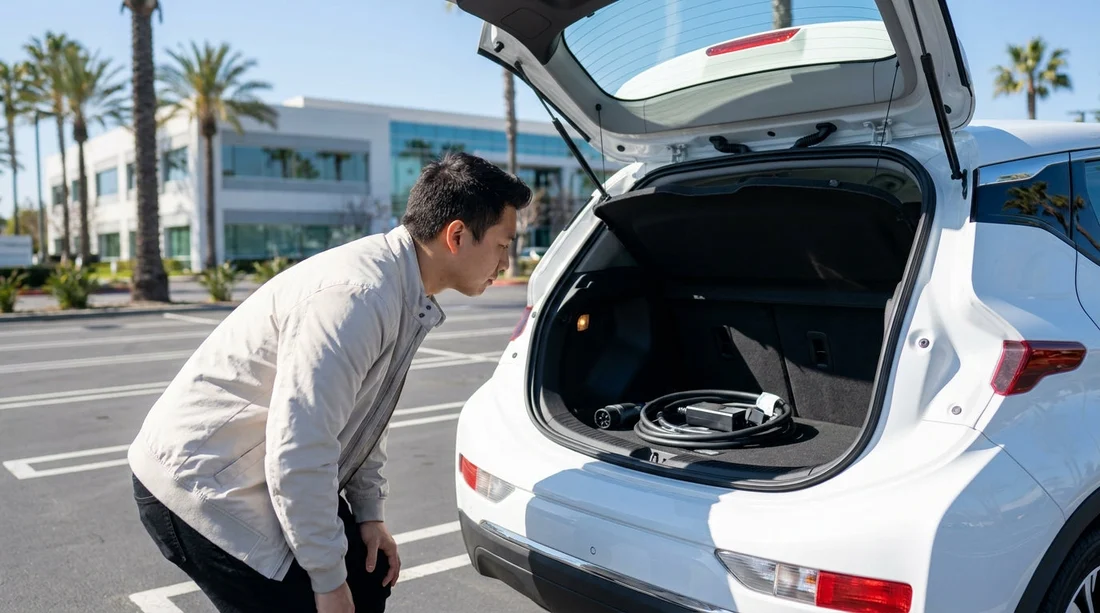
- Check the boot for the cable bag and plug head before leaving.
- Photograph equipment and confirm the return-charge policy at pick-up.
Electric car hire in California is increasingly straightforward, but the one detail that can make or break your first day is charging equipment. Some renters assume every electric car comes with a full set of cables and adaptors, ready for any public charger. In reality, what is supplied varies by vehicle type, brand, and rental location. Knowing what is usually included, what often is not, and what to verify at pick-up will help you charge confidently from the start.
If you are arranging a trip that starts at a major airport, Hola Car Rentals pages for key hubs can help you compare car hire options by location, such as car hire in California at LAX, San Francisco SFO options, or San Diego SAN vehicle choices. Equipment policies can differ between depots even within the same state, so the pick-up checklist later in this article is worth using wherever you collect the car.
What charging equipment is usually supplied with an electric rental car
In California, the most common item supplied with an electric rental car is a basic portable charging cable intended for slow charging. This is often referred to as a Level 1 cable because it plugs into a standard household outlet. The car end of the cable depends on the vehicle, but many non-Tesla EVs use a J1772 inlet for AC charging.
A portable charging cable (often Level 1), sometimes stored in a small bag, is typically kept in the boot. This cable is most useful when you have overnight access to a regular outlet at a rental property, friend’s home, or workplace parking area.
It is also common for rental EVs to be handed over without any physical adaptor kit beyond the portable cable. Rental fleets prioritise durability and low loss risk, so smaller accessories are more likely to be missing unless specifically managed at the counter.
What might not be included, and why it matters
The items people most often assume are included, but may not be, are adaptors. This matters because some chargers are restricted by connector type and network access, especially if you plan to use a wider mix of charging locations.
J1772 to Tesla adaptor (or Tesla to J1772 adaptor) may not be included. If you hire a Tesla, you may need an adaptor to use many non-Tesla Level 2 chargers that offer J1772 connectors. If you hire a non-Tesla EV, you cannot use Tesla Superchargers unless the car and station support it, and an adaptor alone may not solve access restrictions.
Multiple plug heads for the portable charger might not be present. Some portable chargers have interchangeable wall plugs for different outlet types. If yours only has a standard household plug, you may not be able to use higher-power outlets at certain properties even if they exist.
Charging network cards or paid accounts are not usually included. Many chargers can be activated by card payment or app, but some locations are easier if you already have apps installed and payment methods ready.
Connector basics for California car hire: what to look for
Before you drive away, identify what inlet your rental car actually has, and match it to the charging you expect to use.
J1772 is the common AC connector for many non-Tesla EVs and plug-in hybrids in the US. Many Level 2 public chargers have a tethered J1772 handle, so you simply plug in, and no cable from the car is required.
CCS is a fast-charging standard that looks like a J1772 inlet with two extra large pins beneath. If your car has CCS, you can use many highway fast chargers in California.
Tesla, also called NACS, is the slim connector on Teslas and some newer vehicles. Tesla Superchargers use this connector, and access for non-Tesla cars depends on whether the site supports it and whether your vehicle is authorised for that network.
What to check at pick-up so you can charge confidently
The pick-up moment is your best chance to avoid later frustration. Use a quick, practical inspection that covers equipment, charging readiness, and return expectations.
1) Confirm the charging cable is physically in the boot. Open the boot and check for the cable bag, not just an entry on paperwork. Make sure it looks intact, with no cuts, exposed pins, or damaged strain relief.
2) Check for any adaptors promised with the vehicle. If the counter staff mention an adaptor, ask them to show it to you. Small items are easy to miss.
3) Verify the car’s inlet type. Ask the agent, then look yourself. Knowing whether you have J1772, CCS, or NACS helps you choose charging stops immediately.
4) Ask about the return-charge policy. Some car hire agreements expect the EV to be returned at a similar battery level. Others allow return at any level with a fee. Clarify what “similar” means in percentage terms.
5) Check the current battery percentage and estimated range. Photograph the dashboard screen showing the percentage at pick-up. This protects you if there is a dispute and helps you plan your first charge stop.
Airport depots can be busy, so keep your checks efficient. If you are collecting near Los Angeles or Orange County, it can help to review local car hire pages in advance, for example Los Angeles LAX car hire and Santa Ana SNA vehicle hire, then confirm at the counter what charging kit is included for the specific EV category you choose.
So, does the rental include a charging cable and adaptor?
For electric car hire in California, a basic charging cable is often included, especially a portable Level 1 cable, but an adaptor is not guaranteed. The exact kit depends on the vehicle brand, the depot, and how the fleet manages accessories. Your best approach is to check the boot at pick-up, confirm the connector type, and ask for clear return-charge rules so you are not guessing later.
FAQ
Do all electric rental cars in California come with a charging cable? Many do, but not all. A portable Level 1 cable is common, yet availability can vary by depot and vehicle, so confirm at pick-up.
Is an adaptor included so I can use any public charger? Usually not. Public chargers often have their own tethered cables, but adaptors for Tesla or mixed networks are not automatically supplied.
Can I fast charge without any extra equipment? Often yes. Fast-charging stations typically have the cable attached, and you just need a compatible port such as CCS or NACS and a way to pay.
What should I photograph at the rental counter? Photograph the battery percentage, estimated range, and any charging cable or adaptor provided. This helps if equipment is later reported missing.





























































































