


Quick Summary:
- Choose a rear-facing infant seat for babies under about two years.
- Use a forward-facing toddler seat once rear-facing limits are exceeded.
- Select a booster when the harness is outgrown, often from age five.
- Confirm weight, height, and belt type before adding seats to car hire.
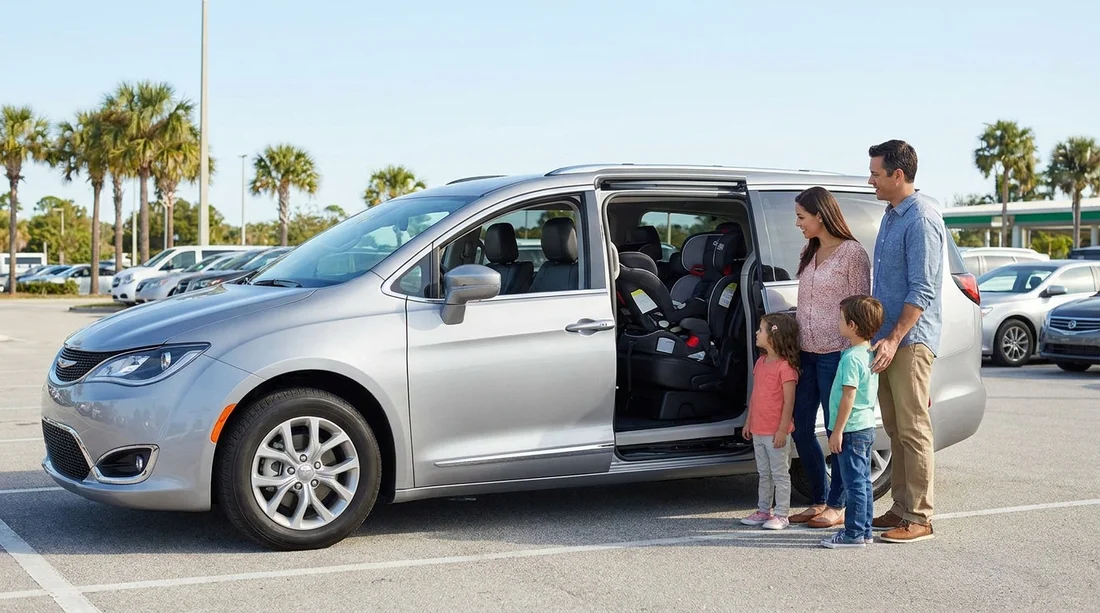
Planning family car hire in Florida often comes down to one practical question, which child seat should you add to the reservation. In the United States, rental counters and seat suppliers usually group options into three categories, infant seat, toddler seat and booster seat. The simplest way to choose is to match the seat category to your child’s current size, not only their age.
Because every manufacturer sets slightly different limits, you will get the best result by knowing your child’s weight and height in advance and then selecting the appropriate category. If you are collecting from Miami, compare vehicle options and add-ons when arranging car hire at Miami Airport (MIA). For Orlando area theme park trips, you can also review family-friendly options on Budget car rental at Disney Orlando (MCO).
How US seat categories map to infant, toddler and booster
Most Florida car hire desks use everyday labels rather than specific model names. These labels broadly map to standard child restraint stages used across the US.
Infant seat usually means a rear-facing seat designed for babies and young toddlers. In many cases, it is a carrier-style infant seat with a base, but some suppliers use convertible seats set to rear-facing. What matters is that it is installed rear-facing and suits the smallest passengers.
Toddler seat generally refers to a forward-facing seat with an internal harness. It is intended for children who have outgrown rear-facing limits but are not yet ready for a vehicle seat belt alone.
Booster seat commonly means a belt-positioning booster used with the car’s lap-and-shoulder belt. It lifts and positions the child so the belt lies safely across the pelvis and shoulder rather than the tummy and neck.
Infant seat: who it is for, and what to check
An infant seat is typically the right choice for babies and young toddlers who still fit rear-facing limits. As a rule of thumb, many families keep children rear-facing until around age 2, and often longer if they still fit the seat’s maximum height and weight.
Before you select an infant seat for car hire in Florida, check these points.
Weight and height limits: babies grow quickly, so confirm your child’s current measurements close to departure. If your child is near the upper limits, a rear-facing convertible seat may be more suitable than a smaller carrier-style model, but rental providers may still label both as “infant”.
Head position: for rear-facing use, you want the child’s head well supported and not close to the top edge of the shell. If your child looks tall for their age, consider whether they are approaching the seat’s height limit.
Where it will be installed: rear-facing seats need front-to-back space. Compact vehicles can work, but you may find a midsize car or SUV makes installation easier, especially if another adult needs legroom in front.
If your itinerary includes picking up near the airport but staying in the city, browsing options for Avis car hire in Downtown Miami can help you balance vehicle size with child-seat space.
Toddler seat: when forward-facing makes sense
A toddler seat in rental terminology is usually a forward-facing harnessed seat. It is suited to children who have outgrown rear-facing limits and can ride forward-facing within the seat’s harness limits. Many children make this transition sometime between ages 2 and 4, but size is the deciding factor.
When choosing a toddler seat for Florida car hire, focus on these practical checks.
Harness fit: the harness should sit snugly and lie flat, with no twisting. The chest clip should be at armpit level. If the harness cannot tighten adequately for a smaller child, an “infant” category seat set rear-facing may fit better.
Top tether availability: most modern US vehicles have top tether anchors, but location can vary. A top tether reduces forward head movement in a crash. If you are not familiar with tether routing, allow extra time at pickup to understand how it attaches.
Seat belt or LATCH installation: some rental seats are installed with the vehicle belt, others can use LATCH (Lower Anchors and Tethers for Children) when available. Ask which method is recommended for the specific seat supplied.
For families landing on the Gulf Coast, you can compare pickup points and vehicle types for car rental at Tampa (TPA), which can be useful if you prefer a roomier car for installing a harnessed seat.
Booster seat: the final stage before the adult belt
A booster seat is intended for children who have outgrown a forward-facing harness but are not yet tall enough for the adult seat belt to fit correctly. In practice, many children use a booster for several years, often from around age 5 or 6 until approximately 10 to 12, depending on height and vehicle seat shape.
For booster selection, focus less on age and more on belt fit.
Lap belt position: it should sit low on the hips and upper thighs, not across the abdomen.
Shoulder belt position: it should cross the middle of the shoulder and chest, not the neck or slipping off the shoulder.
High-back vs backless: rental providers may supply either. High-back boosters can help with belt positioning in vehicles where the headrest or seatback is low, and they can be useful for children who still need side support for naps. Backless boosters are simpler and can work well when the vehicle seat provides good head support and the shoulder belt sits correctly.
Because boosters rely on the vehicle belt, it is worth confirming that your chosen car has rear seating positions with lap-and-shoulder belts, not lap-only belts. Most modern Florida rentals will, but it is a sensible check if you expect to seat three across or use the middle seat.
Age, weight and height: a simple decision checklist
If you want a quick way to decide before arranging car hire, use this checklist and then align it to the supplier’s available categories.
1) Is your child under about 2, or still within rear-facing limits? Choose an infant seat category, and plan to install it rear-facing.
2) Has your child outgrown rear-facing but still fits a harness? Choose a toddler seat category, and use the forward-facing harness with a top tether if available.
3) Has your child outgrown the harness limits? Choose a booster seat category, and confirm you will use a lap-and-shoulder belt.
4) Does the adult belt fit without a booster? Many children do not get a safe belt fit until they are around 145 cm, though body proportions and vehicle seats vary. If the belt rides up on the tummy or touches the neck, keep the booster.
Practical tips for smoother pickup and safer installation
Bring your child’s measurements: having weight in pounds or kilograms and height in centimetres makes counter conversations faster and reduces the risk of being given the wrong category.
Allow time at the car: plan an extra 15 to 30 minutes at pickup for fitting and checking the seat, especially after a long flight.
Inspect the seat before you drive: check the shell for cracks, confirm the harness adjusts and buckles correctly, and make sure the labels show it is appropriate for your child’s size.
Choose a vehicle that fits your family setup: if you need extra cargo space for a pushchair and luggage, an SUV can make day-to-day loading easier. If you are staying around Doral and want a larger vehicle option, it can help to look at SUV hire in Doral (DRL).
FAQ
Do Florida laws require a child seat in a rental car? Florida requires children aged 5 and under to use a child restraint. Typically, younger children use a crash-tested child seat, and older children may use a booster until the seat belt fits correctly.
Can I rely on age alone to choose an infant, toddler or booster seat? Age is a helpful guide, but weight and height are more reliable. Children of the same age can fit very differently, and seat limits vary by model.
What if my child is between sizes, for example nearly ready for a booster? If the child still fits a forward-facing harness, that option usually provides more consistent positioning than moving up early. A booster works best when the child can sit upright for the whole drive.
Should I bring my own seat instead of adding one to car hire? Bringing your own seat can provide familiarity and known history, but it adds airport handling and baggage considerations. Adding a seat through the rental provider is convenient, especially for short trips, as long as you inspect and fit it carefully.
How do I know the booster will work with the car’s seat belts? Check that the seating position has a lap-and-shoulder belt and that the shoulder belt does not cut into the child’s neck. If belt fit is poor, try another rear seating position or consider a high-back booster.

























































































