


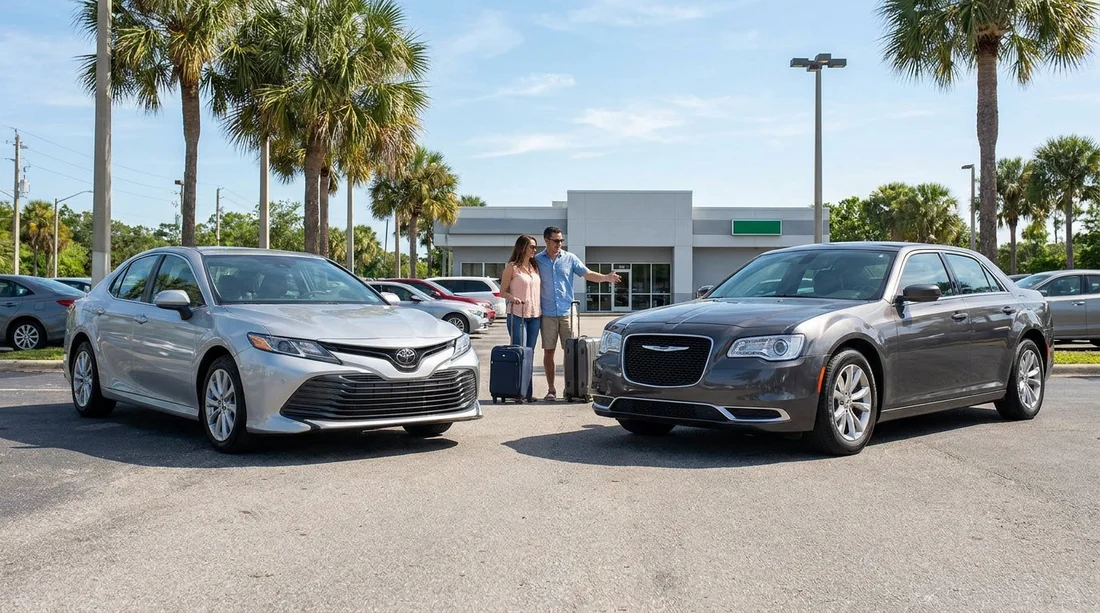
Quick Summary:
- Standard suits light luggage and easier parking, full-size adds space.
- Full-size boots usually handle more suitcases, buggies, and bulky beach gear.
- Standard can save fuel and stress on busy city routes.
- Choose full-size for long motorway days and better rear-seat comfort.
When you book car hire in Florida, “standard” and “full-size” can sound similar, but they are built for slightly different kinds of trips. Both categories typically sit above compact and mid-size cars, but full-size is generally the more spacious option with a longer wheelbase, a wider cabin, and a bit more boot capacity. The right choice depends less on the label and more on how many people you are travelling with, how much luggage you are carrying, and what your driving days look like.
Florida is a state where journeys can be short hops between beaches and neighbourhoods, or long motorway runs between airports, theme parks, and the Keys. Understanding the practical differences between these two classes helps you choose a car that feels easy from day one, rather than tight on space or unnecessarily large for your route.
What “standard” and “full-size” usually mean in Florida
Rental car classes are groupings, not exact models. A “standard” car is often a roomy sedan with seating for five on paper, though four adults are usually more comfortable on longer drives. A “full-size” car is typically a larger sedan with a noticeably more generous rear seat and a bigger boot, designed to handle adult passengers and luggage with fewer compromises.
Because fleets vary by season and location, you may receive an “or similar” model. That is why you should focus on the space and use-case rather than one specific badge.
If you are arranging pick-up near downtown, the practicalities can differ from an airport collection. For example, you might plan to collect from car hire in downtown Miami and drive mostly in urban traffic, where a slightly smaller footprint can be a real advantage.
Cabin space, legroom and seating comfort
The biggest day-to-day difference is passenger comfort. Standard cars tend to offer good front-seat space, with adequate rear legroom for adults, but the middle rear seat is often best kept for a child or short journeys. Full-size cars usually add noticeable shoulder room and rear legroom, making them better for three adults across the back for longer stretches.
Think about how many hours you will spend in the car. A quick run from Miami to Fort Lauderdale is one thing. A full day of driving with stops, toll roads, and heat outside is another. When the cabin feels open, everyone stays more comfortable, and you are less likely to play luggage “Tetris” every morning.
Boot space: suitcases, buggies and beach gear
Boot space is where the categories often diverge most clearly. A standard car generally handles two large suitcases plus a couple of smaller bags, depending on shape and how rigid the cases are. A full-size boot is more likely to swallow three large suitcases, or two large suitcases plus a folded buggy and soft bags, without blocking rear visibility.
Florida trips often include items that are bulky rather than heavy, like beach chairs, coolers, or shopping bags. If you are doing outlet shopping or carrying sports gear, the full-size class is less likely to force you to use the rear seat for storage.
If you are collecting after a flight into Orlando and finishing with shopping, you may prefer the extra room for the return. If your plans revolve around theme parks and longer drives, you can compare options around Enterprise at Orlando airport and weigh up standard versus full-size based on your party and luggage.
Driving feel in Florida: parking, roads and fuel
In Florida, roads are generally wide and well-signed, but the driving environment changes quickly between beach neighbourhoods, downtown grids, and fast motorways. Standard cars are typically a bit easier to park and manoeuvre in tighter areas, especially if you are spending time in high-density districts with smaller spaces and heavy pedestrian activity.
Full-size cars can feel more stable at speed and calmer on long motorway runs, with a planted ride that suits long distances. The trade-off is a slightly larger turning circle and potentially higher fuel use, although modern engines have narrowed that gap.
Typical features: what changes, what stays similar
Both standard and full-size rentals usually come with the essentials travellers expect, such as automatic transmission, air conditioning, and modern safety systems. The differences often appear in comfort and convenience. Full-size cars are more likely to include upgrades like a power-adjustable driver’s seat, more rear-seat vents, or a smoother ride quality. Standard cars can still be very well-equipped, especially in newer fleets, but feature sets vary.
If you know you will be driving around Miami’s business districts, comfort and ease of use may outweigh raw size. For example, travellers staying in the financial area often compare nearby pick-up points like car hire in Brickell and choose the class that best matches their parking and passenger needs.
Which should you choose for common Florida trips?
Solo travellers and couples with light luggage: Standard is usually plenty. You get comfortable front seats, a sensible boot, and easier parking.
Three to five adults: Full-size is typically the better match, particularly for longer drives. It offers more realistic comfort for adult passengers and reduces the chance you will have to store luggage on a seat.
Considering an SUV instead: If your group size and luggage are pushing the limits, an SUV can be a more practical step up than trying to squeeze into a sedan class. For travellers comparing categories, SUV rental in Florida can provide higher seating, larger cargo openings, and flexible rear space.
How to avoid surprises when selecting a class
Because “standard” and “full-size” are class names, not guarantees of one exact model, it helps to think in measurements and scenarios. Count passengers, then plan luggage space for the biggest travel day, usually arrival and departure. If you are unsure, choose the class that fits without needing to stack bags to the roofline.
Also think about where you will be driving and parking. A car that is perfect on the motorway can feel awkward in a tight multi-storey garage.
Finally, remember that the best value is the car that fits your trip. Paying slightly more for space can prevent discomfort every day.
FAQ
Is a standard rental car big enough for four adults in Florida? Often yes for short to medium trips, but full-size is usually more comfortable for four adults over longer distances, especially for rear legroom.
How many suitcases fit in a standard vs full-size boot? A standard boot commonly fits about two large suitcases plus smaller bags, while a full-size boot is more likely to handle three large suitcases, depending on their shape.
Do standard and full-size cars both come with automatic transmission? In Florida, automatic transmission is typical in both classes, but always confirm the listing details if you have a specific requirement.
Is full-size harder to park in Miami and other busy areas? Full-size cars can be slightly harder to park due to length and turning circle. If you expect tight parking, a standard car may feel more manageable.
Should I choose an SUV instead of a full-size sedan? Consider an SUV if you need a higher driving position, more flexible cargo space, or you are carrying bulky items like buggies and beach gear.

























































































