


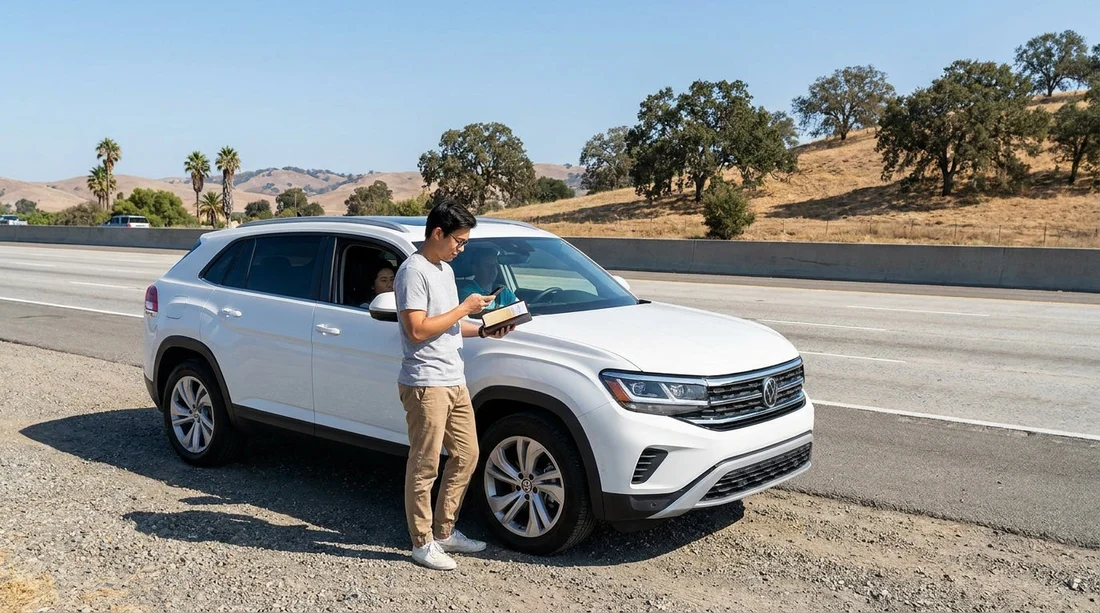
Quick Summary:
- Roadside assistance helps if the car stops running or you are stuck.
- LDW limits what you pay if the hire car is damaged.
- Neither option usually covers personal injury or belongings inside the car.
- Check exclusions for tyres, glass, towing limits, and off-road use.
When you arrange car hire in California, you will often see optional extras with similar sounding benefits. Two of the most commonly confused are roadside assistance and LDW, short for Loss Damage Waiver. They are not the same product, and they solve different problems. Understanding the difference before pick-up helps you avoid paying twice for the same risk, or missing a key gap that could leave you out of pocket.
In simple terms, roadside assistance is about getting you moving again after a breakdown-type incident. LDW is about limiting your financial responsibility if the vehicle is damaged or stolen. One is operational support, the other is damage liability protection. The details can vary by supplier and location, so always read the rental terms for your specific booking, but the typical California set-up follows the patterns below.
What roadside assistance usually covers for car hire in California
Roadside assistance is designed for situations where the vehicle is not driveable, or you cannot continue your trip safely. Depending on the provider, it commonly includes help such as towing after a mechanical breakdown, jump-starting a dead battery, unlocking the car if keys are locked inside, basic help if you have a flat tyre, or bringing fuel if you run out.
What matters is that roadside assistance is about the service call. It may cover the cost of dispatching help, labour, or a tow up to a certain distance. It does not automatically mean the underlying issue is free. For example, some plans will send someone to change a tyre, but you may still be charged for tyre replacement if the tyre is damaged. Similarly, fuel delivery may be covered as a service, but you still pay for the fuel itself.
If you are collecting near a major airport, roadside assistance may be explained in the rental terms you receive at pick-up. For travellers arriving via Northern California, the pick-up information for San Francisco SFO car rental can be a helpful reference point for what to verify in advance, such as who to call and whether there are admin fees for call-outs.
What LDW usually covers, and what it does not
LDW, or Loss Damage Waiver, is not roadside help. It is a waiver that typically reduces or removes the amount you would otherwise have to pay if the hire vehicle is damaged, vandalised, or stolen. Without LDW, you may be responsible for the full cost of repairs, loss of use while the car is off the road, and additional fees, depending on the contract. With LDW, your responsibility is usually reduced to zero or to an excess, again depending on the terms.
LDW commonly relates to collision damage and theft, but it is not a blank cheque. Exclusions frequently include damage to tyres, wheels, glass, roof, underbody, or interior, plus damage caused by prohibited use, driving under the influence, or allowing an unauthorised driver. Another frequent point is key loss or key replacement. Losing keys can trigger both a service issue and a damage liability issue, and neither roadside assistance nor LDW necessarily covers it.
For visitors flying into Southern California, rental providers at major hubs often present LDW and roadside options at the same time. If you are comparing suppliers for Los Angeles LAX car rental, make sure you separate damage waiver language from assistance language, because they address different scenarios.
How overlaps happen, and how to avoid paying twice
Overlaps usually happen because some roadside assistance plans include benefits that feel like damage cover, and some LDW packages are sold in bundles that include assistance. The easiest way to avoid duplication is to look for the specific line items in the rental terms.
1) Identify what you already have included. Some rentals include a basic breakdown number and limited towing in the base rate. If that is already included, upgrading to a premium roadside plan may only be worthwhile if you value extras like lockout service or longer towing distances.
2) Check whether LDW is already included in your rate. Some rates include LDW, while others leave it optional. If LDW is included, buying another damage waiver on top may not add much, unless the included LDW has a high excess or strict exclusions you want to reduce.
If you are planning group travel, luggage-heavy routes, or longer road trips, the vehicle choice can influence the type of incidents you are likely to face. When comparing options like minivan rental at San Francisco SFO, it is sensible to read the tyre and towing clauses closely, because those are where unexpected costs often sit.
Questions to ask at pick-up, without slowing the queue
California airport counters can be busy, so it helps to ask short, precise questions. These four are usually enough to clarify the difference and spot overlap.
Is roadside assistance included, and what exact incidents does it cover? Listen for towing limits, lockout help, and battery support.
Does LDW have an excess, and which parts of the car are excluded? Tyres, wheels, and glass are the big ones to confirm.
If the car is towed after an accident, who pays the tow and admin fees? Get the answer tied to your selected products.
What phone number do I call, and is there an admin fee for call-outs? This matters even if assistance is included.
For road trips that start in different cities, you can cross-check supplier expectations by looking at pages such as National Car Rental at San Diego SAN, especially if you are comparing how different providers describe waivers and assistance packages.
Common misconceptions that cause bill shock
“LDW means I never pay anything.” Not necessarily. Exclusions and any excess still matter. Also, charges like loss of use or admin fees can depend on the contract language.
“Roadside assistance covers accident recovery.” Some plans do, many focus on breakdown-type events. If the tow is accident-related, you need to know which product applies.
“Tyres are always covered by assistance.” Assistance may help you get moving, but tyre replacement costs are frequently excluded or capped.
Ultimately, the goal is to match the product to the risk: choose roadside assistance for the stress and cost of getting help on the road, and choose LDW for the financial exposure from damage or theft. Keep them separate in your mind, and you are far less likely to buy overlapping add-ons when arranging car hire in California.
FAQ
Is LDW the same as insurance for car hire in California? LDW is usually a waiver in the rental contract that limits what you pay for vehicle damage or theft. It is not the same as liability insurance, and it typically does not cover injuries or third-party damage.
Do I need roadside assistance if I have LDW? Possibly, because LDW deals with the cost of damage, not the practical help of getting moving again. If your rental already includes basic breakdown support, extra roadside assistance may be less important.
What typically is excluded from LDW? Many contracts exclude tyres, wheels, glass, roof, underbody, interior damage, and any loss caused by prohibited use. Always check your specific terms and any excess.
If I run out of fuel, is that covered by roadside assistance? Roadside assistance may bring fuel or arrange help, but you usually still pay for the fuel, and sometimes a service fee applies. Check whether fuel delivery is included or chargeable.
Can I decline both roadside assistance and LDW? Often yes, but you may then be responsible for more costs if the vehicle is damaged, stolen, or needs towing. Review the rental agreement carefully so you understand your financial responsibility.

























































































