


Quick Summary:
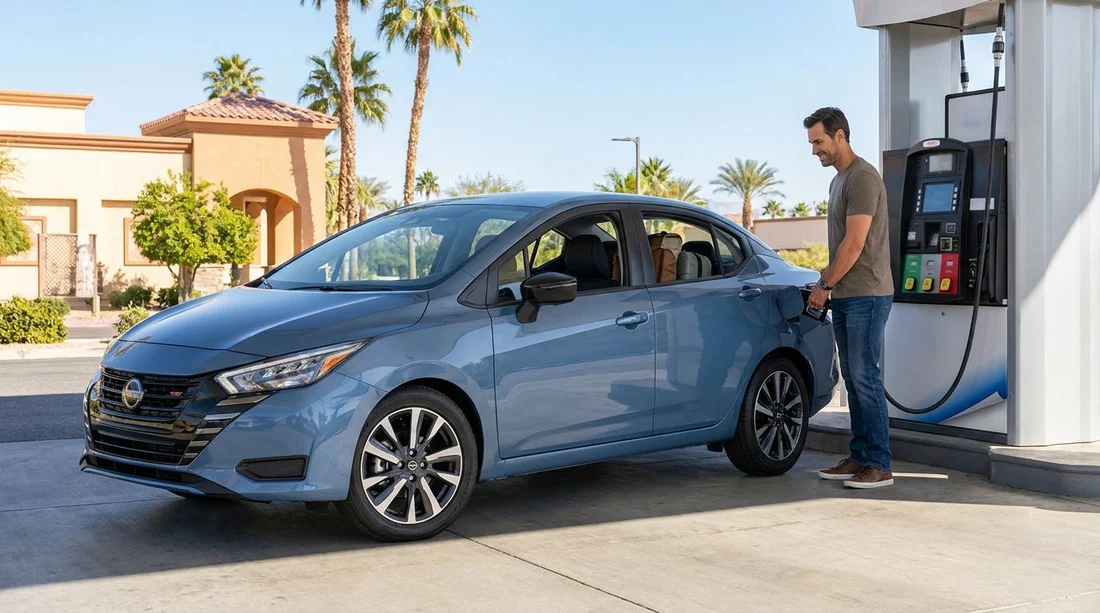
- Start with a full tank and return the car full.
- Check the contract fuel level matches the dashboard gauge.
- Refuel near the return point and keep your receipt.
- Know fees and fuel rates if you return below full.
When comparing car hire quotes in California, the fuel policy is one of the easiest lines to skim past, and one of the fastest ways to pay more than expected. “Full-to-full” is generally the simplest option, but it still has details that matter at pick-up and return. Understanding the wording on the quote and the rental agreement helps you compare costs fairly and avoid surprise fuel charges.
In plain terms, a full-to-full policy means the rental company provides the vehicle with a full tank of fuel (or extremely close to full), and you agree to bring it back full. You pay for the fuel you use by refuelling yourself at a station, rather than paying the rental company for a pre-purchased tank or for refuelling on return.
Because California is a large driving state, it is common to rack up miles quickly on airport routes, highway trips, and coastal drives. A clear full-to-full policy can make budgeting straightforward, as long as you know what “full” means in practice, how it is measured, and what happens if the gauge is not exactly on the mark.
Why full-to-full is often the fairest fuel policy
Full-to-full is popular because it keeps fuel costs transparent. You typically avoid paying the rental company’s premium per-gallon refuelling rate and any associated service fee. Instead, you choose where and when to refuel, and you can shop around for a convenient station.
It also makes quote comparisons easier across different providers. Two similar car hire deals can look close in price until you notice one is full-to-empty, or includes a fuel purchase up front. With full-to-full, the rental price is more comparable, because fuel is largely separated from the rental cost.
If you are collecting a vehicle at a busy airport, it helps to know the provider’s local processes. For instance, if you are flying into Orange County, checking the pick-up paperwork carefully at Santa Ana Airport (SNA) car rental counters can reduce misunderstandings about the starting fuel level.
What to check on the quote and contract before pick-up
Fuel policy wording varies slightly by brand and location, even when it is essentially full-to-full. Before you arrive, check the quote confirmation for the specific phrase “full-to-full” or “return same level,” plus any notes about refuelling charges. Then at the counter, confirm the same fuel policy appears on the rental agreement you sign.
Focus on these items:
1) Pick-up fuel level recording. The agreement usually includes a starting fuel gauge, for example “F” or a bar indicator. If it is not marked as full, ask why, and ensure it reflects the actual gauge. Sometimes vehicles are delivered as “full” but the gauge reads slightly under, and the contract may state “full.” If the paperwork does not match the gauge, you can be exposed to charges at return.
2) Definition of “full.” Some companies allow a small tolerance, others expect the needle exactly on full. Ask what their practice is at that location. This matters if you are returning at peak times and cannot top up perfectly.
3) Refuelling fee and fuel rate. Most contracts specify two components if you return short: a per-gallon fuel price (often higher than local stations) and a service fee. Knowing both tells you the true cost of missing the mark.
4) Local return rules. Some airport locations have specific return lanes and time constraints. If you are returning at a busy hub such as the Bay Area, planning your refuel and return route for an SUV rental at San Francisco (SFO) can help you avoid last-minute detours.
How full-to-full can still lead to unexpected charges
Even with full-to-full, there are common situations that trigger extra costs. Knowing them before pick-up makes it easier to avoid them.
Short return fuel. The most obvious scenario is returning with less than a full tank. If you are only slightly short, the charge can still be disproportionate due to the service fee. This is why topping up close to the return location usually saves money.
Mismatch between gauge and paperwork at pick-up. If the contract says “full” but the gauge is not full when you leave, you may return it to the same visual level and still be considered short. If you spot this at pick-up, request that the agent amends the starting level, or ask for a quick correction such as swapping the car.
Time pressure at return. In California, traffic can turn a simple refuel into a rush, especially near airports and urban centres. Leaving time to find a station and queue can be the difference between returning full and returning slightly short.
Practical steps to avoid fuel surprises at pick-up and return
Inspect the fuel gauge before leaving the lot. Do this while you are still at the exit, not after you have merged onto the freeway. If it is not full, take a timestamped photo of the dashboard and return to the desk or booth.
Keep your refuelling receipt. A receipt showing the time and location near the return can support your case if there is a dispute. It is particularly useful at large facilities where returns are processed quickly.
Refuel close to the drop-off location. Aim for a station within a few miles of the return point. If you are returning around San Jose, knowing your route for San Jose (SJC) car rental returns can help you choose a convenient station without backtracking.
Ask about “fuel service option” add-ons. Some counters may offer to sell you a tank at pick-up, sometimes called a fuel service option. This changes your deal away from full-to-full. If you want full-to-full, confirm you are declining pre-purchase fuel and that the agreement still states full-to-full.
Understand after-hours returns. If you drop off outside staffed hours, fuel may be checked later. That increases the value of a receipt and a dashboard photo at turn-in, because you are not present during inspection.
How to compare car hire costs fairly using fuel policy
To compare offers fairly, treat fuel policy as part of the total price, not an afterthought. A low daily rate paired with an expensive refuelling policy can cost more overall than a slightly higher rate with full-to-full.
When reviewing quotes, consider:
Your expected mileage. Longer California drives increase the chance you will need multiple refuels, which makes full-to-full more advantageous.
Airport convenience. If you are returning at a congested terminal, build in the cost of your time. A policy that charges heavily for being slightly short can be risky if you cannot reliably refuel nearby.
Vehicle type. Larger vehicles usually have larger tanks. The cost of returning short is higher in absolute terms. This is relevant for SUVs and vans, where even a small shortfall can translate into a noticeable charge.
Finally, keep in mind that policies can vary even within California depending on the specific location and operator. If you are collecting in Sacramento, for instance, details may differ across suppliers at the same airport, such as an Enterprise car rental at Sacramento (SMF). The best approach is to confirm what is written on your agreement and align your refuelling plan accordingly.
FAQ
Does full-to-full mean the tank will always be exactly full at pick-up? It should be full or extremely close, but you must verify the gauge and the contract match before leaving.
What happens if I return the car slightly under full? You are usually charged for the missing fuel at a set rate, plus a refuelling service fee, which can make small shortfalls expensive.
Should I keep a fuel receipt for full-to-full rentals? Yes, keep the final receipt from a station near the return point in case the fuel level is questioned.
Can the counter change my fuel policy from full-to-full? Sometimes optional add-ons like pre-purchase fuel alter the policy. Check the agreement wording before signing to ensure it still states full-to-full.
Is full-to-full the best option for car hire in California? For most drivers, yes, because you pay pump prices and avoid inflated refuelling charges, provided you plan a convenient top-up before return.

























































































