


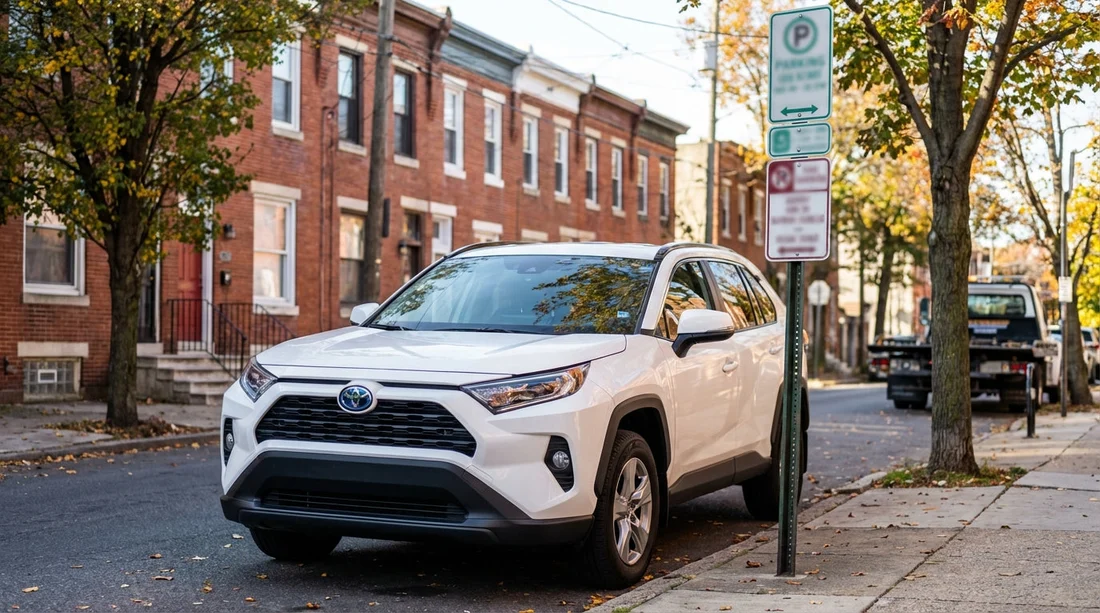
Quick Summary:
- Scan every sign on the block, not just the nearest post.
- Look for permit-zone codes and hours, then match your stay timing.
- Check arrows, street-cleaning days and pay-station rules before leaving the car.
- When unsure, choose a garage, meters, or clearly signed visitor spaces.
Driving a car hire in Philadelphia can feel straightforward until you meet resident-permit parking. In many neighbourhoods across Pennsylvania’s biggest city, the legal place to leave your car depends on the sign format, the zone letter or number, the time of day, and sometimes which side of the street you chose. The good news is that Philadelphia’s permit parking is usually visible and consistent once you know what to look for. This guide helps you spot permit restrictions quickly, interpret the most common sign layouts, and choose safer parking near hotels and attractions.
If you are collecting a car hire at the airport, it helps to set expectations early, street parking around Centre City and popular residential areas can be heavily regulated. For practical pick-up planning, see car hire at Philadelphia Airport, which is useful context for timing your arrival and first parking stop. If you are collecting in the city, car hire in Philadelphia covers local options you might compare.
Why permit parking feels tricky in Philadelphia
Philadelphia uses permit zones to protect residential streets from all-day commuter parking. That means a space can look empty and convenient, yet be off-limits to non-permit vehicles during certain hours. Enforcement can be active in high-demand areas, and towing is more likely where a car blocks restrictions that affect traffic flow or residents, for example near corners, hydrants, bus stops, driveways, or during street-cleaning windows.
Permit rules also stack with other rules. A single kerbside space might be affected by permit-only hours, metered hours, loading zones, and street cleaning on particular days. Your job is to read the entire sign cluster and apply the strictest rule for the time you plan to leave the car.
Spot permit zones fast, the five-second scan
When you pull up, do a quick scan before you switch off:
1) Look for “Permit Parking” or “Permit Only” phrasing. These words are the clearest clue that a resident zone is in play. Signs may specify a zone code, for example “Zone 1”, “Zone 2”, or a lettered area. If you do not have that permit, you cannot park during the posted restricted times, even if you are “just running in”.
2) Find the hours and days. Many permit signs apply only on weekdays and only during certain hours. Outside those hours, the same space may become legal for anyone, unless another restriction applies (street cleaning, meters, no stopping). Always match the sign’s schedule to when you will actually be parked there, not just when you arrive.
3) Check for arrows. Arrows indicate the direction the restriction applies. A sign with a left-pointing arrow may govern the spaces to the left of the post. A right-pointing arrow covers the right. If there are two arrows, it typically applies both directions until the next sign or the end of the block. If you are between two posts with different rules, assume the stricter one applies to the stretch you are in.
4) Confirm you are on the right street segment. Rules can change mid-block near schools, hospitals, loading entrances, and corners. Walk a few paces to check the nearest sign in each direction. It is common for the best-looking space to sit just inside a stricter zone.
Common Philadelphia sign formats and how to read them
Philadelphia kerbside signs are usually straightforward, but the layout can be dense. Here is how to interpret what you see.
Permit parking with time window. This is the classic residential control. If it says permit-only during specified hours, non-permit vehicles must not park then. If you are visiting a hotel, think about late checkout, dinner reservations, and morning departures. Parking at 6pm might be fine, but if the sign flips to permit-only at 8am, you will need to move before that time.
Two-hour limit plus permit exemption. Some signs allow short-term parking for anyone, but permit holders can stay longer. If you do not have a permit, treat it as a hard maximum stay. Set an alarm with a buffer because ticketing can be strict in high-turnover zones.
Metered parking plus permit rules. Near busy corridors, you may see meters or pay-station instructions alongside permit conditions. Do not assume paying the meter makes you legal during permit-only periods, payment and permit status are separate rules. Conversely, a permit does not always exempt you from paying when meters are in effect. Read both parts.
Street cleaning signs. These often specify a day and a time range. Even if you have found a space that is otherwise legal overnight, a street-cleaning restriction can turn it into a tow risk in the morning. This is one of the most common reasons visitors get caught out because it feels unrelated to permits.
Loading zones and passenger zones. These can look like convenient short stops near hotels and attractions, but they are often time-limited and can be enforced quickly. If you need to unload luggage from your car hire, do it briskly and then move to legal parking.
Neighbourhood patterns, where permit zones are most likely
You will encounter permit parking most often near dense residential areas and high-demand destinations. Around Centre City edges, university districts, and neighbourhoods with rowhomes, permit zones are common. Near tourist corridors, the kerb may switch from metered retail frontage to permit-protected side streets within a single turn.
If your hotel is in a permit-heavy area, consider planning a first stop at an off-street facility, then walking to check street options without the pressure of holding up traffic. If you are driving a larger vehicle, such as an SUV car hire, off-street can reduce stress and the risk of clipping mirrors on tight streets. For context on vehicle options, SUV rental in Philadelphia is a useful reference point when weighing street versus garage practicality.
A simple decision process for legal parking near hotels and attractions
Use this quick order of operations when choosing where to leave your car hire.
Step 1: Prefer off-street when timing is uncertain. If you will be away for hours, attending an event, or unsure when you will return, a garage or private lot reduces the chance that a time window will catch you out. It is also safer if you are arriving late and do not want to decode multiple signs in poor lighting.
Step 2: If you choose street parking, anchor to the strictest rule. Read all signs on the post, then check the next post. If any sign indicates permit-only during your planned parking time and you do not have the permit, keep searching.
Step 3: Build a buffer around changeover times. If a restriction begins at 8am, aim to move by 7:45am. Traffic, one-way streets, and school drop-offs can slow you down. A buffer matters more than you think in busy Philadelphia mornings.
Step 4: Do not gamble on “quick stops” in controlled zones. Loading, no stopping, and permit-only areas can be enforced quickly. If you are sightseeing, it is usually better to park once legally and walk or use public transport for short hops.
How to avoid towing, the high-risk mistakes
Towing is not just about permits. These are the situations that most often escalate from a ticket to a tow:
Blocking a driveway or garage. Even if there is no obvious cut kerb, look for garage doors and alley access. Philadelphia driveways can be subtle.
Too close to a corner or crosswalk. Corners are often painted, but not always. If visibility is reduced, enforcement can be stricter.
Hydrants and fire access. Give hydrants a wide berth. Fire access rules are treated seriously.
Street-cleaning windows. This is a classic tow scenario because the city needs the lane clear. If you are staying overnight, check for cleaning signs as carefully as permit signs.
Temporary restrictions. Construction, moving vans, and special events can add temporary no-parking signage. Treat temporary signs as fully enforceable.
Practical tips for visitors, especially if you are new to US signs
Take a photo of the sign cluster. If you are unsure later, a quick photo helps you confirm return times. It also keeps you honest about what you read, which matters when you are travelling.
Match the day, not just the time. Many restrictions are weekday-specific. If you park on Friday night and forget the sign becomes stricter on Saturday morning, you can get caught.
Look for multiple sign posts. Philadelphia blocks can have different rules for different segments. The nearest open space might be open for a reason, but the next car-length might be forbidden.
Plan the end of your day. If you are visiting an attraction and then heading out early the next morning, choose a spot that stays legal through your departure time. Otherwise you will start your day with a stressful re-park.
How your car hire choice can affect parking decisions
In older Philadelphia neighbourhoods, street widths and turning space can be tight. A compact car hire can be easier for kerbside manoeuvres, while a larger vehicle might push you towards garages simply for ease. If you are comparing providers and pick-up points, Hola Car Rentals pages can help you map what suits your itinerary, such as Hertz car hire in Philadelphia and Enterprise car hire in Philadelphia. Whichever provider you choose, the parking rules on-street remain the same, so factor parking into your daily route plan.
What to do if you cannot confidently interpret the signs
If you are standing there rereading the same sign, treat that as your signal to change strategy. Move to a clearly metered area with obvious pay instructions, choose a garage, or park farther out where signs are simpler and then walk or use public transport. The cost of a garage is often less than the cost and disruption of a ticket, a tow, or time lost dealing with vehicle retrieval.
Finally, remember that legality can change while you are away. A space that is legal at 7pm may become permit-only at 7am, or may be affected by street cleaning. The safest parking is the parking that stays legal for your entire planned stay.
FAQ
How can I tell if a space is resident-permit only in Philadelphia? Look for signs stating “Permit Parking” or “Permit Only” and check the listed zone and hours. If the restricted hours overlap your stay and you do not have the permit, do not park there.
If I pay a meter, can I ignore permit parking restrictions? No. Paying a meter does not override a permit-only rule. Read the full sign cluster and follow the strictest restriction that applies at that time.
What does an arrow on a parking sign mean? Arrows show the direction the rule applies from that signpost. A left arrow covers spaces to the left, a right arrow covers spaces to the right, and two arrows typically apply both ways until another sign changes the rule.
Is towing common for permit parking violations? It depends on location and the exact violation. Permit issues may lead to tickets, but towing is more likely when you also obstruct access, park in no-stopping areas, violate street cleaning, or create a safety hazard.
What is the safest way to park near Philadelphia hotels and attractions? If you will be away for several hours or overnight, off-street garages or clearly signed paid facilities are usually the lowest-risk option. If you choose street parking, confirm the space remains legal for your entire stay window.

























































































