


Quick Summary:
- Turn off AC, turn on heater, and watch the temperature gauge.
- Move safely to a shoulder, idle briefly, then shut down.
- Never open a hot radiator cap, wait until fully cooled.
- Photograph warnings, gauges, and coolant leaks, then notify the provider.
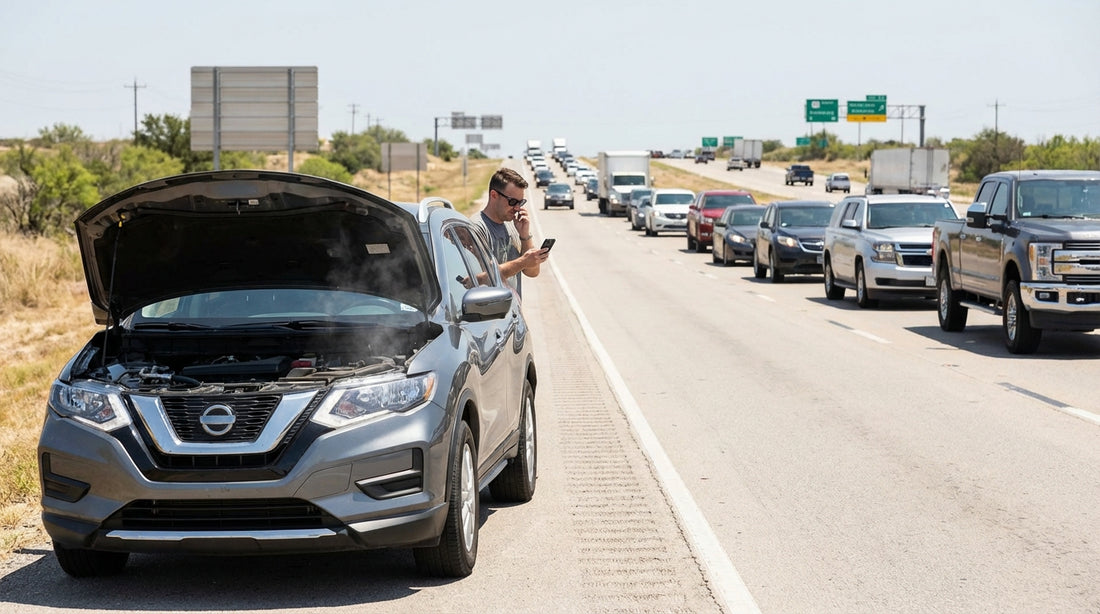
Stop-start traffic in Texas heat is a perfect stress test for any cooling system, especially if you are in a car hire that is unfamiliar to you. Overheating can be a minor airflow issue or a sign of a serious coolant loss, but your priority is the same: protect people first, then prevent engine damage, then document what happened so you are not blamed for a pre-existing fault.
The guidance below focuses on what you can do right now, without specialist tools and without making things worse. If you collected your vehicle via car hire at Houston IAH or elsewhere, the principles are identical.
1) Recognise true overheating fast
Modern dashboards can be confusing. “Hot” smells, a slight rise on the gauge, or the engine fan roaring does not always mean you must stop instantly, but you should treat these as early warnings.
Act immediately if you see any of the following:
Temperature gauge climbing into the red or a clear “ENGINE OVERHEATING” warning.
Steam from the bonnet area, especially at idle.
Coolant smell (sweet, slightly chemical) or visible puddles under the front of the car.
Loss of power, misfiring, or the engine light flashing alongside heat warnings.
If the gauge is creeping up but not yet critical, you may be able to lower temperature enough to reach a safer stopping place a short distance away, but do not push your luck in Texas stop-start conditions.
2) Immediate actions while still in traffic
These steps can bring temperature down without damaging anything:
Turn off the air conditioning. AC adds load and heat. Switching it off can reduce strain quickly.
Turn the cabin heater to hot, fan high. This sounds counterintuitive in Texas, but it pulls heat from the engine via the heater core. Crack windows for comfort.
Increase airflow if you can do so safely. If traffic briefly opens, a steady 30 to 45 mph can cool better than crawling, because airflow through the radiator improves.
Watch for warning escalation. If the warning light turns red, steam appears, or the gauge spikes, you need to stop as soon as it is safe.
Avoid hard acceleration and do not rev the engine at a standstill. Keep movements gentle and predictable.
3) Get to a safe stopping point, then shut down correctly
In Texas, stopping on a narrow shoulder can be dangerous. Aim for the safest available option in this order: a parking lot, a wide shoulder, an exit ramp shoulder, or a service station. Use hazard lights early and signal calmly.
Once stopped:
Keep the engine idling for 30 to 60 seconds if the gauge is high but not pegged. This can circulate coolant briefly. If you see steam, hear knocking, or the warning is severe, switch off immediately.
Switch off the engine. An overheated engine can warp cylinder heads or blow a head gasket if run too long. Shutting down is often the difference between inconvenience and major damage.
Stay out of traffic. Exit on the passenger side if you are on a busy roadway, and stand well away behind a barrier where possible.
Do not prop the bonnet fully open immediately. If there is steam, allow it to vent carefully. You can release the bonnet latch and open it slightly once conditions are calm, but keep your face and hands clear.
4) What not to do, to avoid burns and damage
When people panic, they often do the one thing that is most dangerous.
Never open the radiator cap or pressurised coolant reservoir while hot. Hot coolant can erupt and cause serious burns. Wait until the engine is fully cool, which can take 30 to 60 minutes in Texas heat.
Do not pour cold water onto a hot engine. Rapid temperature changes can crack components. Only add coolant or water into the correct reservoir once cooled, and only if you can confirm the right place to add it.
Do not keep driving “just a few miles”. Stop-start traffic keeps temperatures high and airflow low. If the gauge is in the danger zone, continuing can destroy the engine quickly.
5) Quick cooling checks you can do safely
Once the vehicle is safely parked and the engine has cooled enough that you can touch under-bonnet surfaces cautiously (they may still be hot), you can do a few low-risk checks.
A) Look for obvious leaks. Check the ground under the front and under the middle. Coolant is often bright green, orange, pink, or blue. Clear water may be AC condensation, which is normal, but if you were overheating, treat any fluid as relevant and photograph it.
B) Check the coolant level only when cool. Many cars have a translucent overflow reservoir with “MIN” and “MAX” lines. If it is below MIN when cool, that suggests a loss of coolant. Do not remove caps if you are unsure which is pressurised.
C) Check the engine oil level. Low oil can increase heat. Use the dipstick on level ground after the engine is off for several minutes. If it is very low, note it and photograph, but do not overfill.
D) Confirm the radiator fan is working. When the engine is hot, fans often run. If you safely restarted for a few seconds and the temperature rises rapidly without fan activity, that is useful information. Keep this brief and only if it feels safe to do so.
E) Look at the drive belt area. Without touching moving parts, check if a belt looks missing or shredded. A failed belt can stop the water pump on some vehicles. Photograph anything unusual.
If you need a replacement vehicle after collecting via Texas car hire options at IAH, the rental provider will usually want clear notes on what happened and what you observed.
6) If you must add fluid, do it carefully
Only consider adding fluid if the engine is fully cool and you can clearly identify the non-pressurised reservoir. Many rental agreements allow basic top-ups, but you should still document everything.
Use the right fluid if available. Ideally, use the correct coolant type. If you cannot, clean water is usually safer short-term than running with no coolant, but mixing coolant types can create issues later. If you add anything, record exactly what you added, how much, and where.
Add small amounts and recheck. Do not fill above MAX. Spillage on belts or electrical components is not ideal, so pour slowly.
Test gently. Start the engine and watch the gauge at idle for one to two minutes. If it heats quickly, or you see leaks, switch off. Do not rejoin traffic hoping it will hold.
7) When it is safe to drive again, and when it is not
You should not continue your journey if:
The temperature warning returns quickly after cooling.
You see steam, bubbling, or active leaking.
The cabin heater blows cold even when set to hot, which can indicate low coolant or trapped air.
The engine runs rough, you hear knocking, or you get a flashing engine light.
If the temperature stabilises after cooling, coolant is at a safe level, and there are no warnings, you may be able to drive a short distance to a safer location or service area. Keep speeds steady, avoid idling, and stop immediately if the gauge rises again.
8) Evidence that helps limit liability with a car hire
With a car hire, your goal is to show you acted responsibly, did not ignore warnings, and did not cause avoidable damage. The best time to collect evidence is right when the issue occurs.
Take photos and short videos of the temperature gauge, warning messages, and the odometer. If safe, capture steam, puddles, or leaks. Record the ambient conditions, such as heavy traffic and high outside temperature on the display.
Note the timeline. Write down the time the warning appeared, when you pulled over, and when the engine was switched off. Also note your approximate location, for example, the nearest exit number or cross street.
Keep receipts for any authorised top-ups. If you buy coolant or water, keep the receipt and photograph the product and quantity used.
Avoid unauthorised repairs. Do not approve major work without rental company guidance. Even well-meant repairs can complicate liability.
Document dashboard settings. A quick photo showing AC off and heater on can help demonstrate you used sensible cooling measures.
If you are travelling with family and luggage, noting passenger count and load can also help explain why you prioritised stopping safely.
9) Reporting the issue promptly and clearly
Notify the rental provider as soon as you are safe. Share facts rather than guesses: what you saw, what you did, and what the car is doing now. Offer your photos and the timeline. This reduces the chance of being blamed for “continuing to drive while overheating”.
If your trip involves different Texas airports, your pickup point may influence the support process. For example, arrangements can differ if your vehicle was collected via minivan rental at Dallas DFW or another location, but the same evidence and safety steps apply.
10) Prevention tips for the rest of your Texas drive
Once you are back on the road in a replacement car, or once the issue has been resolved, a few habits reduce the chance of a repeat:
Monitor the gauge when idling in queues or at long lights.
Use recirculation on the AC once the cabin is cool, it can reduce AC load.
Avoid prolonged idling in extreme heat when parked, especially with AC blasting.
Check for warning lights at start-up and report anything unusual immediately.
If your itinerary takes you through Fort Worth, you may be comparing providers and vehicle types. Hola Car Rentals pages such as Enterprise car hire in Fort Worth DFW can help you understand location-specific options and what is typically included with a car hire, like roadside assistance pathways and after-hours procedures.
FAQ
Q: Should I pull over immediately the moment the temperature rises?
A: If the gauge is entering the red, you see steam, or a red warning appears, yes, pull over as soon as safely possible. If it is only slightly above normal, reduce load, turn off AC, turn heater on, and find a safe stopping place quickly.
Q: Can I open the bonnet to help it cool?
A: You can once you are safely parked and away from traffic, but be cautious. Do not open any coolant caps while hot, and keep your face and hands away from steam. Let the engine cool naturally before touching anything.
Q: Is it okay to add water instead of coolant in a rental car?
A: In an emergency, a small amount of clean water in the correct reservoir can be better than running low, but only when the engine is fully cool. Document what you added and inform the rental provider, because incorrect mixtures are not ideal long-term.
Q: What evidence best protects me from being blamed?
A: Photos or video of the warning, temperature gauge, odometer, and any leaks, plus a written timeline showing you stopped promptly. Receipts for any fluids and records of your call or message to the provider also help.
Q: Could stop-start traffic alone cause overheating in Texas?
A: It can, especially in high heat with AC on, but a healthy cooling system should usually cope. Stop-start traffic often exposes weak points like low coolant, a failing fan, or a clogged radiator, so treat any overheating as a fault to be checked.

























































































