


Quick Summary:
- Follow signed accessible routes, using lifts and ramps from arrivals.
- Request low-floor or ramp-equipped shuttle boarding and kerbside assistance.
- Contact your car hire provider early with mobility and transfer needs.
- Allow extra time for curb cuts, wide crossings, and busy pickup zones.
Arranging step-free access to the rental car shuttle at San Francisco International Airport (SFO) is mostly about planning your path from the terminal to the shuttle stop, then confirming in advance what assistance your chosen car hire provider and shuttle operator can offer. SFO is set up with accessibility in mind, but the experience can vary depending on which terminal you arrive at, the time of day, and whether you need a ramp, a low-floor vehicle, or staff support with luggage and boarding.
This guide explains how to map a step-free route, what support is typically available, and exactly what to request ahead so you can move from arrivals to your rental counter smoothly.
Plan a step-free route from arrivals to the shuttle stop
Start by identifying where you will exit the terminal. At SFO, the main challenge is not stairs, it is distance, kerb heights, and navigating busy kerbside areas. A step-free route usually means sticking to indoor concourses where possible, using lifts rather than escalators, and choosing doors that lead to kerb ramps (curb cuts) and level pavements.
If you are travelling with a wheelchair, mobility scooter, walking frame, or simply prefer to avoid steps, aim for these practical checks before you fly:
Confirm your terminal and level: arrivals can feed onto different levels. Knowing whether you will be on Arrivals, Departures, or a connecting corridor helps you avoid unnecessary level changes.
Locate lift banks: lifts are often a short distance from the most direct exit. If the nearest exit is crowded, choosing a slightly longer indoor route can make the outdoor kerbside crossing safer and more comfortable.
Choose a kerbside point with ramps: even when pavements are generally accessible, not every section has a convenient curb cut. It is worth aiming for a clearly marked accessible crossing point so you can roll straight to the shuttle area without being forced to backtrack.
Allow extra time for wayfinding: signage can be plentiful but easy to miss when managing bags and mobility equipment. Budget extra time so you are not rushed into taking the first available route, which might include steeper kerbs or tighter turns.
If you are comparing options for car hire at SFO, it can be useful to review provider and airport-specific notes on Hola Car Rentals pages such as San Francisco Airport car hire and car rental at SFO while you plan your arrival.
What step-free shuttle boarding usually looks like at SFO
Rental car shuttles and accessible airport transport generally aim to provide step-free boarding through one of these setups:
Low-floor boarding: some shuttle buses have lower steps or kneeling capabilities that reduce the height difference at the kerb. This is helpful for travellers who can step but find high steps difficult.
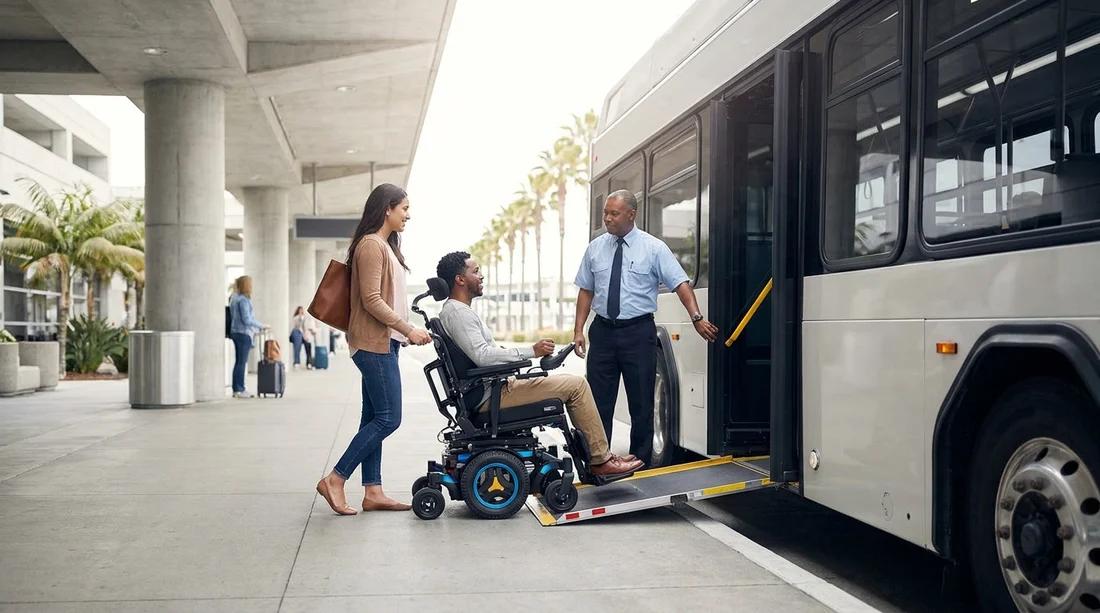
Ramp or lift equipment: accessible shuttles may have a ramp or hydraulic lift to allow wheelchair users to board. In practice, the equipment might only be on certain vehicles, which is why it matters to notify staff early.
Priority seating and securement: an accessible bus should provide priority seating and space for mobility devices, with securement points as required.
Driver assistance: drivers are often able to deploy ramps, guide boarding, and assist with safe positioning. They may not be able to lift passengers, but they can typically help with basic boarding steps and stowing mobility aids where policies permit.
If you will need a particular type of vehicle at the rental location, consider the luggage and passenger configuration too. For example, groups who need extra space for a folded wheelchair might look at minivan rental at SFO, while those who need a higher seating position may compare SUV hire at SFO to reduce strain during transfers.
What assistance is typically available, and what is not
Understanding the boundaries of assistance helps you request the right support and avoid surprises at the kerb.
Typical help you can request: guidance to the correct shuttle stop, help identifying the right queue, ramp deployment, allowing extra time to board, and reasonable assistance with baggage where staff are available. If you are travelling with a companion, they can often board first to organise seating and space.
Help that may be limited: physical lifting of passengers, transfers from a wheelchair into a seat, and handling of medical equipment beyond basic stowage. Some services can accommodate these needs, but it often requires prior arrangement and may depend on staffing levels.
Mobility aids: keep essential items and any removable parts of your mobility aid with you. If something must be stowed, ask how it will be secured and where it will be placed before you board.
What to request in advance for a smooth, step-free pickup
Advance notice is the single biggest factor in turning “possible” accessibility into “predictable” accessibility. Ideally, contact your chosen car hire provider as soon as your flight times are fixed.
When you get in touch, be specific. Useful details to share include:
Your mobility needs: manual wheelchair, powered wheelchair, walker, cane, or limited stair tolerance. Mention whether you can stand briefly, and whether you need a ramped or lift-equipped shuttle.
Transfer requirements: whether you can transfer independently, with assistance from a companion, or require staff support. If you require a specific method, describe it clearly.
Device dimensions and weight: powered mobility devices can be heavier and longer than standard wheelchairs. Providing approximate dimensions can help staff plan space and securement.
Arrival timing: your flight number and estimated terminal arrival time helps them anticipate busy periods and any shift changes.
Communication preferences: if you are hard of hearing, have low vision, or prefer text updates, ask if they can provide instructions in your preferred format.
It also helps to confirm the exact pickup point and whether there is an accessible waiting area with seating. If you will be travelling with children or additional baggage, ask where luggage should go during ramp deployment so nothing blocks the aisle.
Choosing a practical car hire setup after the shuttle
Step-free access does not end at the shuttle, it continues through the rental facility and into your vehicle. When deciding on your car hire plan, consider what will make the handover simplest:
Vehicle height and door opening: a higher seat can reduce knee bend, but too much height can make transfers harder. Wider-opening doors can help with mobility aids and caregiver support.
Boot space and lift-over height: if you need to stow a folded wheelchair, check whether you can lift it safely or whether you need a lower load floor.
Key handover and paperwork: ask if there is a step-free route to the counter, and whether any signatures or checks can be handled at an accessible desk height.
Hola Car Rentals provides SFO-specific information across its San Francisco pages, including car hire in San Francisco (SFO), which can help you compare options while keeping accessibility needs in view.
FAQ
How far in advance should I request an accessible rental car shuttle at SFO? As early as possible once flights are confirmed, ideally several days ahead. Early notice improves the chance of a ramp-equipped or low-floor shuttle being available when you arrive.
Can I get help boarding the shuttle if I travel alone? Drivers can typically deploy ramps and guide boarding, and staff may help with basic luggage handling. If you need a physical transfer, plan to travel with a companion or confirm a suitable assistance arrangement in advance.
What information should I provide to the car hire company about my wheelchair? Share whether it is manual or powered, approximate dimensions, and whether it folds. Also mention if you need securement space on the shuttle or extra time for boarding.
What should I do if the arriving shuttle is not accessible? Do not attempt unsafe boarding. Tell staff you require a step-free option and ask them to call the next accessible vehicle or direct you to an accessible boarding point.
Does choosing a larger vehicle help with accessibility after the shuttle? Often, yes. More cabin and boot space can make transfers and stowage easier, but seat height matters too, so balance space with comfortable step-free entry.

























































































