


Quick Summary:
- Turn on hazard lights, slow gradually, keep doors locked, stay calm.
- Call 911, confirm unit details and ask for a marked car.
- Drive to a well-lit, populated area, avoid stopping on bridges.
- Stop safely, keep hands visible, and follow instructions without argument.
Being signalled to stop by an unmarked vehicle can feel unsettling, especially if you are new to Florida roads or driving a car hire. Most stops are legitimate, but impersonation scams do happen, and misunderstanding can escalate quickly. The goal is to show clear compliance while taking sensible steps to verify the stop and choose a safe place to pull over.
This guide focuses on practical actions you can take in Florida if an unmarked police vehicle is behind you with lights, or lights and siren. It is written for visitors and residents alike, including anyone driving a car hire.
First, recognise what an unmarked police stop can look like in Florida
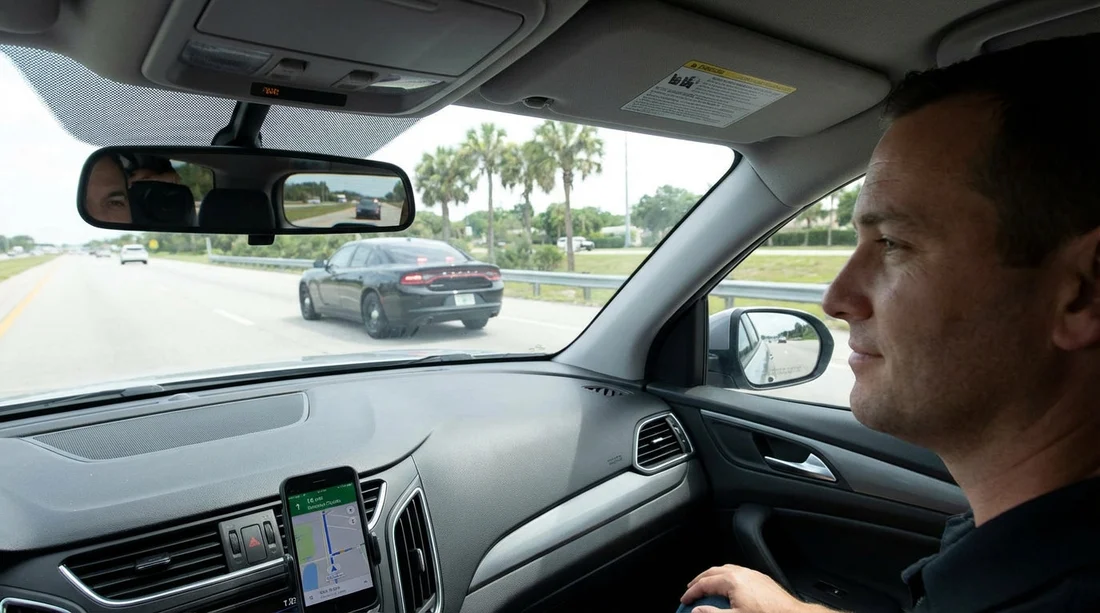
In Florida, unmarked law enforcement vehicles may be regular-looking cars, SUVs, or trucks. They can display emergency lights in the grille, windshield, or rear window. Some may briefly use a siren, but not always. You might also see a driver in uniform, but tinted windows and distance can make that hard to confirm.
What should raise your caution is not the lack of markings alone, it is unusual behaviour. For example, a vehicle that is aggressively tailgating, attempting to box you in, or directing you to a secluded location is not typical of a safe traffic stop.
Step-by-step: how to show compliance while you verify
1) Acknowledge immediately. As soon as you notice flashing lights behind you, signal that you understand. Put on your indicator to the right and switch on your hazard lights. This is a clear sign you are not trying to flee.
2) Slow down smoothly. Ease off the accelerator, maintain a steady lane position, and avoid sudden braking. If it is safe, move to the right lane. Keep your driving predictable.
3) Keep doors locked and windows up. Until you are confident the stop is legitimate and you are in a safe location, keep the vehicle secure. You can lower the window slightly later to speak.
4) Look for a safer stopping point. If you are on a dark road, an isolated stretch, or a narrow shoulder, continue at a slow speed to a well-lit, populated area such as a petrol station, a busy car park, or near an open business. Avoid stopping on bridges, in construction zones, or on tight bends where traffic visibility is poor.
5) Call 911 to verify. In Florida, you can call 911 to confirm whether the vehicle behind you is law enforcement. Tell the dispatcher your location, direction of travel, the colour and type of vehicle behind you, and any visible light colours. Ask the dispatcher to confirm it is an officer and to stay on the line while you pull over. You can also request a marked unit to meet you if you feel unsafe.
If you are driving a hire car, it can help to mention that you are in a rental vehicle and are unsure about an unmarked stop. The dispatcher may provide additional guidance.
6) If 911 confirms, pull over as directed. Once the dispatcher confirms the unit, proceed to the nearest safe pull-over point. Keep hazards on, stop fully, and place the car in park.
7) If 911 cannot confirm immediately, keep moving slowly to safety. Do not speed up. Continue at a low, steady speed with hazards on, heading to a public, well-lit place. Stay on the line with the dispatcher. Your behaviour should communicate compliance, not evasion.
Where to pull over in Florida, the safest options
In many Florida areas, roads can be fast and shoulders narrow. Prioritise a location that protects you and the officer from passing traffic and provides public visibility.
Better places to stop include: a petrol station with cameras, a busy shopping centre car park, a hotel drop-off area, or a well-lit lay-by with space between your car and traffic.
Places to avoid stopping if possible: dark isolated shoulders, underpasses with poor visibility, bridges, active intersections, or areas with no escape route.
When travelling in and around Miami and nearby areas, many visitors pick up vehicles from major hubs, so planning your first few routes can reduce stress. If you are arranging transport around the airport area, you may find it useful to read about car hire in Florida (MIA) or Florida car rental near MIA so you know the typical driving environment and pickup areas.
How to interact with the officer once stopped
Keep your hands visible. Place both hands on the steering wheel. At night, turn on the interior light so the officer can see inside the car.
Do not reach suddenly for documents. Wait until you are asked, then explain what you are doing before moving your hands. For example, say your licence is in your wallet and the registration is in the glovebox.
Open the window partially at first. You can speak through a small opening until you feel comfortable. If the officer requests you lower it further, comply unless you have a clear safety concern, in which case calmly explain you have called 911 to confirm the stop.
Stay inside the vehicle unless instructed. Many misunderstandings happen when drivers get out unprompted. If you need to step out for any reason, ask first.
Be polite and direct. If you took steps to verify, say so calmly: you switched on hazards, slowed down, called 911, and chose a safe, well-lit place to stop. This is generally understood as a safety precaution.
Signs that should make you increase caution
Some behaviours are more consistent with impersonation than routine enforcement. If any of the following occur, prioritise verification through 911 and continue to a public place while showing compliance:
Unusual commands. Being ordered to drive to a remote location, to hand over money, or to leave your phone call is a red flag.
No visible emergency lighting. A legitimate stop typically involves emergency lights. Headlight flashing alone is not the same.
Unprofessional approach. An aggressive, incoherent, or threatening approach can indicate a safety risk. Keep your doors locked until you are confident and the officer is clearly identified.
Refusal to identify. If the person will not provide identification or a badge when asked, remain calm and stay on the phone with 911.
If you are in a hire car, extra practical tips
Know where your documents are. Rental agreements and registration information are often in the glovebox. Before you start driving, locate them so you are not fumbling during a stop.
Make sure the car is set up for visibility. If you are driving at night, check headlights and interior lights work. A well-lit cabin can reduce officer concern.
Do not exit to search the boot. If the rental agreement is in your luggage, tell the officer before reaching anywhere. Sudden movements towards the boot can alarm an officer.
Let the officer know it is a rental. A car hire vehicle may have different registration paperwork than an owned car. Saying it is a rental helps explain why documents look unfamiliar.
For travellers staying around Miami and Doral, it can also help to know the local pickup areas and traffic patterns. See the Hola guides for Enterprise car rental in Doral and Dollar car rental in Downtown Miami for location context and nearby road types.
What not to do, common mistakes that escalate risk
Do not speed up to “get away”. Even if you are scared, accelerating can be interpreted as fleeing. Slow down, signal, hazards on, and head to a safe public place.
Do not stop in the travel lane. Stopping abruptly can cause crashes and increase danger for everyone. Take a moment to reach a safer shoulder or car park.
Do not argue roadside. If you believe the stop is mistaken, stay calm. You can address disputes later through proper channels.
Do not hand over your phone. If someone tries to stop you calling 911 or asks for your phone, treat that as a major warning sign.
After the stop, what to document for your own protection
If the encounter felt confusing or concerning, write down key details once you are safely on your way: time, location, vehicle description, and any identifying information provided. If the dispatcher confirmed the stop, note that too. This can be useful if you need to explain events to your rental provider, insurer, or authorities.
If you received a citation and you are unsure how it affects a hire car, check your rental agreement and follow the standard process for fines or tolls. The main point during the stop is safety and clear communication.
FAQ
Can I call 911 in Florida to verify an unmarked police stop? Yes. Tell the dispatcher your location, direction, and the vehicle details behind you. Ask them to confirm the stop and stay on the line as you pull over.
Will I get in trouble for driving to a well-lit place before stopping? If you slow down, signal, use hazard lights, and head to a nearby public, well-lit area, it is commonly seen as a safety-minded way to comply. Communicate this to 911 and the officer.
What should I do with my hands and documents when the officer approaches? Keep both hands visible on the steering wheel, turn on the interior light at night, and wait to be asked before reaching for your licence or rental documents.
What if the person behind me has no emergency lights but is trying to stop me? Continue driving calmly to a busy, well-lit location and call 911. Without proper emergency lighting and verification, treat it as suspicious and prioritise public safety.
Does being in a car hire change how I handle the stop? The safety steps are the same, but you should know where the rental agreement and registration are, tell the officer it is a rental, and avoid sudden movements to find paperwork.

























































































