


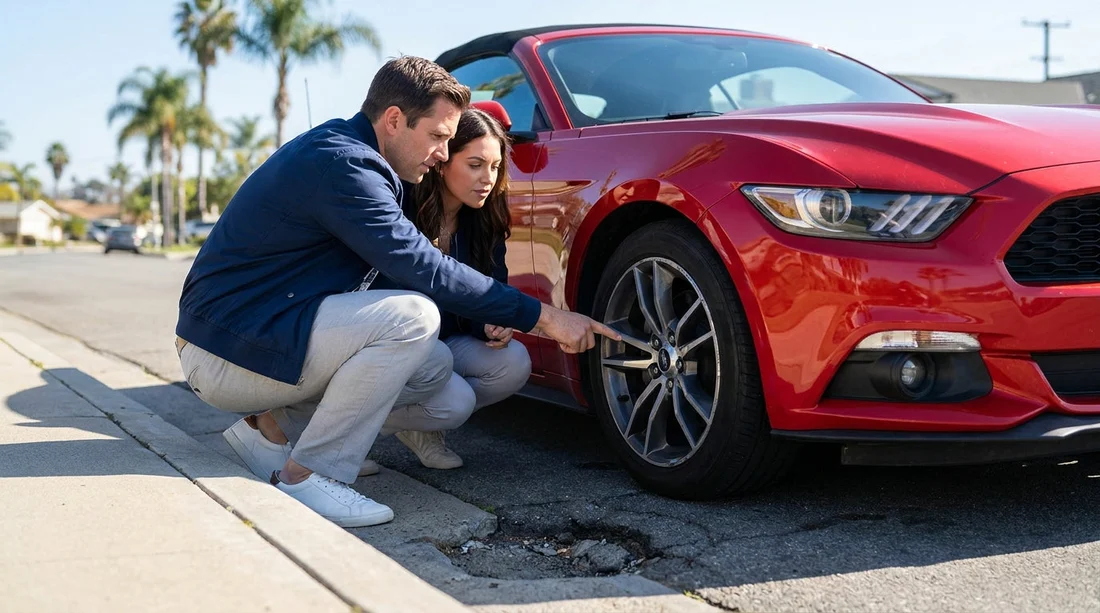
Quick Summary:
- LDW often excludes tyres, wheels and underbody damage from kerbs.
- Pothole impacts may be treated as undercarriage damage, frequently excluded.
- Check the rental agreement’s exclusions, and any tyre and wheel add-on.
- Photograph wheels and underbody notes at pick-up to avoid disputes.
When you pick up a car hire in California, Loss Damage Waiver (LDW) can feel like the simplest way to reduce financial risk. The confusion starts when damage is low down on the vehicle, such as a scraped alloy from a kerb, a sidewall bulge after a pothole, or a cracked splash shield under the engine. These are common, easy-to-miss incidents that can still lead to repair charges.
LDW is not a universal insurance product with identical terms everywhere. It is a waiver offered by the rental company that usually reduces what you owe if the vehicle is damaged or stolen, provided you followed the rental agreement. The key point for wheel, tyre and underbody incidents is that many US rental agreements treat them differently from body panels and glass.
If you are comparing cover before collecting at an airport location, it helps to understand how LDW typically works across California branches, including major pick-up points like San Diego Airport, Sacramento Airport, and Santa Ana Airport. The brand and counter agent matter less than the written contract you accept at collection.
What LDW typically covers, and why “typically” matters
In California car hire contracts, LDW generally waives or limits your responsibility for damage to the rental vehicle from a covered loss. Covered loss often includes collision damage to the bodywork, vandalism, and theft. However, LDW nearly always has conditions and exclusions, such as prohibited use, unpaved-road restrictions, or careless driving.
Even where LDW is described as covering “damage to the vehicle”, many rental companies list specific components that are excluded or only covered if you purchase an extra option. Wheels, tyres and underbody parts are frequently in that excluded category because the damage is common, expensive, and hard to attribute to a single event without inspection.
So the short answer to the title question is: LDW may not cover wheel, tyre or underbody damage from kerbs or potholes, unless your agreement explicitly includes those areas or you have additional cover that does.
Wheel and tyre damage from kerbs: what is usually excluded
Kerb rash on alloys, cracked rims, and tyre sidewall damage often appear under exclusions such as “tyres”, “wheels”, or “road damage”. A gentle scrape while parking can still create a visible gouge, and a harder strike can bend a wheel, causing vibration that requires replacement rather than refurbishment.
What you should look for in the paperwork is whether the waiver excludes:
Tyres and tubes, including punctures, sidewall bulges, and blowouts.
Wheels and rims, including cosmetic damage, bends, cracks, and missing wheel trims.
Consequential damage, meaning a tyre failure that then damages the wheel, suspension, or body.
If tyres are excluded, a pothole-induced puncture can be chargeable even when you have LDW. If wheels are excluded, a kerb strike can be chargeable even when the tyre survives. Some companies offer a separate tyre-and-wheel protection product, but you need the exact wording, not just the name of the option.
Underbody damage from potholes: why it is often treated differently
Underbody or “undercarriage” damage can include dents to the oil pan, damage to the exhaust, broken plastic undertrays, cracked bumpers underneath, and damage to suspension components. Potholes, road debris, steep driveway ramps, and scraping on parking stops are common causes.
Many LDW terms exclude underbody damage because it is less visible at return, can be hard to assess without a lift, and can be associated with off-road use. Even if you never leave paved roads, a pothole impact may still fall under an undercarriage exclusion if the contract is written broadly.
A practical way to think about it is this: standard LDW is often strongest for obvious, above-the-line panel damage after a collision, and weaker for wear-and-tear adjacent areas like tyres and the underside. That is not a rule in law, but it is a common pattern in rental agreements.
How excess, deductibles, and “damage charges” can still apply
Even when LDW applies, you may still have an excess or deductible, which is the amount you pay before the waiver covers the rest. You may also see administrative fees, loss of use, towing, or diminished value referenced in some agreements. Whether those apply depends on the contract and local business practices.
For wheel, tyre and underbody incidents, the bigger issue is often not the excess, it is whether the event is excluded entirely. If it is excluded, you can be charged the full cost of repair, plus related fees the agreement allows.
That is why it is worth taking a moment at the counter to locate the exclusions section. If you are hiring through a partner brand, such as at Alamo in California LAX, the same principle applies: rely on the signed terms rather than assumptions about what LDW “normally” means.
What to check before you drive away
To choose cover confidently, focus on five checks that directly relate to kerbs and potholes:
1) Definitions. Does the agreement define “damage” and list tyres, wheels, glass, roof, and undercarriage separately?
2) Exclusions wording. Look for phrases like “tyres, wheels, and undercarriage are not covered”, “road damage”, or “damage to the underside”. If it is excluded, ask whether an additional waiver can include it, and what exactly it covers.
3) Permitted use. Some contracts prohibit gravel roads, beaches, or certain mountain routes. If underbody damage happens while using a prohibited road, LDW may be void even if underbody is not explicitly excluded.
4) Inspection notes. If the vehicle has existing wheel scuffs or tyre marks, have them recorded before leaving. It is easier to document at the start than to debate at the end.
5) Reporting requirements. For pothole impacts that cause a slow leak or warning lights, the contract may require prompt notification. Late reporting can complicate cover decisions.
How to reduce wheel and underbody risk on California roads
California driving includes everything from well-maintained urban streets to rougher sections near construction, coastal routes, and mountain passes. You cannot eliminate potholes or abrupt kerbs, but you can reduce exposure:
Approach kerbs slowly and square-on only when necessary, avoiding scraping at an angle. Give yourself extra space in tight parking structures, where concrete edges are unforgiving. If you feel a heavy pothole hit, pull over safely, check tyre pressure warnings, and visually inspect the tyre sidewalls and rim lip. If anything looks wrong, contact the rental provider for guidance before continuing.
Vehicle choice can help too. A higher-clearance vehicle may reduce scraping risk on steep driveways, and if that is a priority for your trip you might compare options like SUV hire in Sacramento. Clearance does not prevent tyre damage, but it can lower the chance of undertray contact.
How personal insurance and credit cards interact with LDW
Some renters rely on personal auto policies, travel insurance, or credit card benefits instead of purchasing LDW. These can sometimes cover collision damage to a rental car, but coverage for tyres, wheels, and underbody varies widely, and many benefits have exclusions similar to rental agreements.
Also, third-party cover does not change the rental company’s process. The rental company may still charge you first under the contract, then you seek reimbursement from your insurer or card provider. For kerb or pothole events that are excluded by the rental agreement, reimbursement may be difficult if your policy also excludes tyres or undercarriage.
The most reliable approach is to align three things: what the rental contract makes you responsible for, what LDW waives, and what any external cover reimburses. If there is a gap for tyres, wheels, or underbody, decide whether you are comfortable carrying that risk.
FAQ
Does LDW automatically cover kerb rash on alloy wheels in California? Not automatically. Many rental agreements exclude wheels or treat cosmetic wheel damage as non-covered, so you need to check the exclusions section of your specific contract.
If I hit a pothole and get a puncture, will LDW pay for the tyre? Often no, because tyres are commonly excluded from standard LDW. Some providers offer separate tyre-and-wheel protection, but it depends on the wording you accept at pick-up.
What counts as underbody or undercarriage damage on a rental car? It usually includes damage underneath the car, such as undertrays, oil pan, exhaust components, and suspension parts, even if the exterior body panels look fine.
Can LDW be voided if I drive on a prohibited road? Yes. If the contract restricts certain roads or off-road use, damage occurring during prohibited use can invalidate the waiver, including wheel and underbody claims.
What should I do right after a kerb strike or pothole impact? Stop somewhere safe, check for warning lights and visible tyre or wheel damage, and report the incident as required by the rental agreement. Taking clear photos can help document what happened.

























































































