


Quick Summary:
- LDW usually covers collision damage, not lost keys or lockouts.
- Ask if key replacement, programming, towing, and locksmith costs are excluded.
- Confirm whether roadside assistance, not LDW, handles lockout call-outs.
- Check your rental agreement for caps, admin fees, and exclusions.
LDW, short for Loss Damage Waiver, is one of the most misunderstood items on a US car hire agreement, especially in a busy, high-cost market like New York. Many travellers assume “damage waiver” also covers anything that goes wrong with the vehicle, including lost or stolen keys, lockouts, and the costs of getting back on the road. In reality, LDW is typically focused on physical damage and theft of the vehicle itself, and keys and lockouts are often treated as separate, chargeable incidents.
This matters because modern car keys are not simple metal cut keys. Most current vehicles use transponder keys, remote fobs, proximity “smart” keys, or integrated alarm immobiliser systems. Replacing them can involve parts, security checks, coding, and sometimes towing the car to a dealer. In New York, those costs can add up quickly, so it is worth clarifying before you sign.
What LDW is designed to cover on US car hire
On most US car hire agreements, LDW is a contractual waiver offered by the rental company that reduces or removes your financial responsibility for certain types of loss or damage to the rental vehicle. It commonly addresses collision damage and sometimes theft of the vehicle, subject to the agreement’s exclusions.
Because LDW is aimed at the vehicle itself, it often excludes items that are not viewed as collision damage. Rental companies may treat keys, key fobs, and any security device as accessories, or as customer-caused loss unrelated to a collision. That is why “LDW included” does not automatically mean “keys included”.
If you are arranging New York pick-up, it can help to review location-specific terms early. For example, travellers flying in often compare options at New York JFK car rental and understand what is included before arriving at the counter.
Does LDW cover lost or stolen keys in New York?
Typically, no. On many US agreements, LDW does not cover lost, misplaced, or stolen keys, including remote fobs and smart keys. Even when LDW covers theft of the vehicle, theft of keys alone may be excluded.
Common charges you may see when keys are lost or stolen include replacement key cost, transponder or immobiliser programming, and administrative fees. If the vehicle must be recovered because you cannot operate it, towing or recovery costs may be added. Some agreements also charge for replacement of locks or rekeying, particularly if the keys were stolen and the vehicle is considered at risk.
In New York, the practical impact is that a single lost key can become an expensive incident, especially with late-model vehicles. The best protection is not assuming LDW applies, and instead checking whether the supplier offers a separate key protection add-on or routes key incidents through a roadside assistance product.
Are lockout fees covered by LDW?
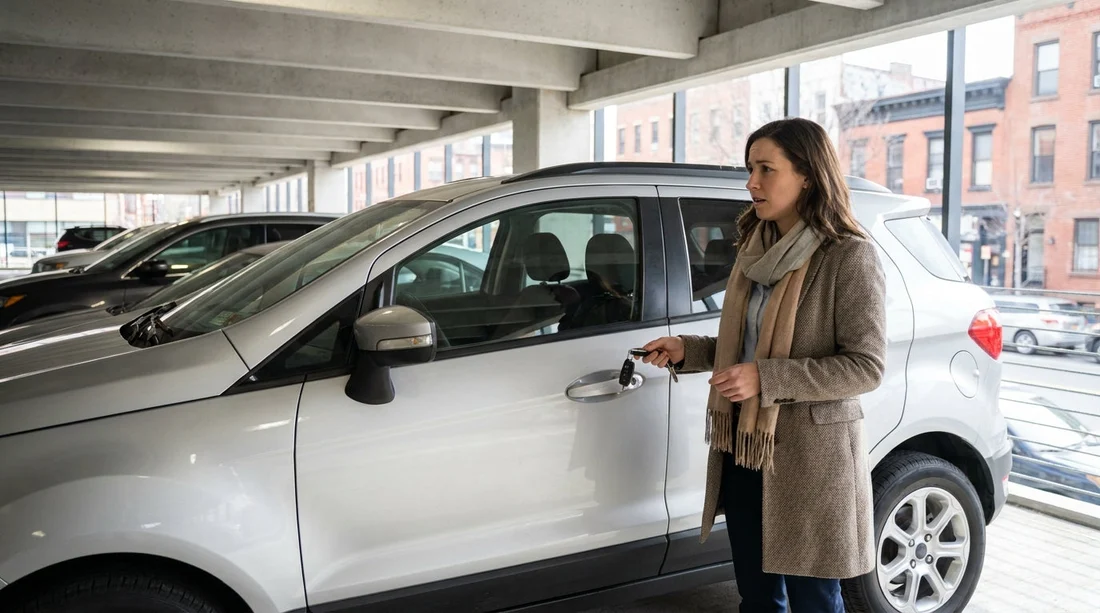
Again, usually not. A lockout, meaning you cannot access the vehicle because the keys are inside, missing, or the fob battery is flat, is generally treated as a service issue rather than vehicle damage. LDW is unlikely to waive the cost of a locksmith, a call-out, or a roadside dispatch.
Lockout support is more commonly handled under roadside assistance terms. Some rentals include basic roadside assistance, while others offer it for an extra daily fee. Ask whether lockout call-outs are included, and if included, whether there is a limit on the number of events or a cap on the value per incident.
If you are picking up around the New York area, you may see options split across JFK and nearby New Jersey airports. Looking at New Jersey EWR airport car rental listings can help you compare like-for-like inclusions, particularly if you are choosing between similar vehicles with different protection packages.
Key and lockout exclusions to look for before signing
Focus on the sections labelled exclusions, customer responsibility, prohibited use, and roadside assistance. Watch for wording that makes you responsible for keys, key fobs, remote transmitters, and service calls such as lockouts.
Key questions to confirm with the rental agent, and to verify in writing, include whether key replacement and programming are charged at cost or at a set fee, whether towing applies if the car cannot be moved, and whether there are administrative fees on top. Also check whether you should call the rental company first rather than arranging your own locksmith.
Some suppliers have different approaches and fee structures. If you are comparing suppliers serving EWR, it can be useful to look at options like Avis car hire at Newark EWR and confirm what the desk will and will not waive for keys and lockouts.
What to confirm on the rental agreement, line by line
Before you sign, take a minute to confirm five practical points that directly affect lost keys and lockouts.
First, find the LDW section and check what “loss” means. Second, check exclusions for keys, key fobs, and remote devices. Third, locate roadside assistance terms and look for lockout service, towing, and dispatch fees. Fourth, check for caps or excess amounts on any waiver, and whether key incidents are excluded from caps. Fifth, confirm administrative and “loss of use” charges, as some agreements allow the company to charge for time the vehicle is out of service.
If you are hiring a larger vehicle for a group, keep in mind that replacement keys for higher-spec models can be pricier. When reviewing people-carrier options such as minivan rental at New York JFK, it is worth asking how many keys are provided, whether a spare key is available, and what the process is if all keys are lost.
Practical steps to avoid key and lockout charges in New York
New York travel can involve tight schedules, crowded pavements, and lots of short stops. Keep the key on your person, not in a cup holder or door pocket, and avoid leaving it in a bag that can be set down. If you are sharing driving, decide who holds the key when parked.
If a lockout happens, call the rental company number listed in your agreement first. Using a random locksmith without authorisation can lead to reimbursement disputes, or even damage charges if the vehicle is forced open. If keys are lost, report it immediately and ask for the documented fee schedule.
Bottom line for New York car hire: LDW and keys are usually separate
For most New York car hire scenarios, assume LDW does not cover lost or stolen keys or lockout fees unless the agreement explicitly says it does. Treat keys and lockouts as their own risk category, typically managed by roadside assistance products, key protection add-ons, or careful prevention. The most reliable way to avoid surprises is to confirm in writing what happens if the keys are lost, what a lockout call-out costs, and whether towing and admin fees apply.
FAQ
Does LDW cover a stolen key if the car is not stolen? Usually not. Many agreements treat stolen or lost keys as an excluded item, even when LDW covers theft of the vehicle.
If I lock the keys in the car in New York, who do I call? Call the rental company’s roadside number shown on your agreement. They can dispatch help under their terms, which may be chargeable.
Can I be charged for towing if I lose the keys? Yes. If the car cannot be driven, towing or recovery to a branch or dealer is commonly billed to the renter.
Are replacement key costs fixed, or do they vary? They vary by vehicle and supplier. Smart keys often require programming, which increases the total cost.
What should I check before signing for car hire at JFK or EWR? Confirm whether keys are excluded from LDW, whether lockouts are covered by roadside assistance, and any admin fees or caps for key incidents.

























































































