


Quick Summary:
- Most New York toll roads charge your rental via plate-based tolling.
- Ask whether the car has E-ZPass, and how admin fees apply.
- Congestion charging may apply in Manhattan, confirm current programme rules.
- Keep receipts and review your final statement for delayed toll invoices.
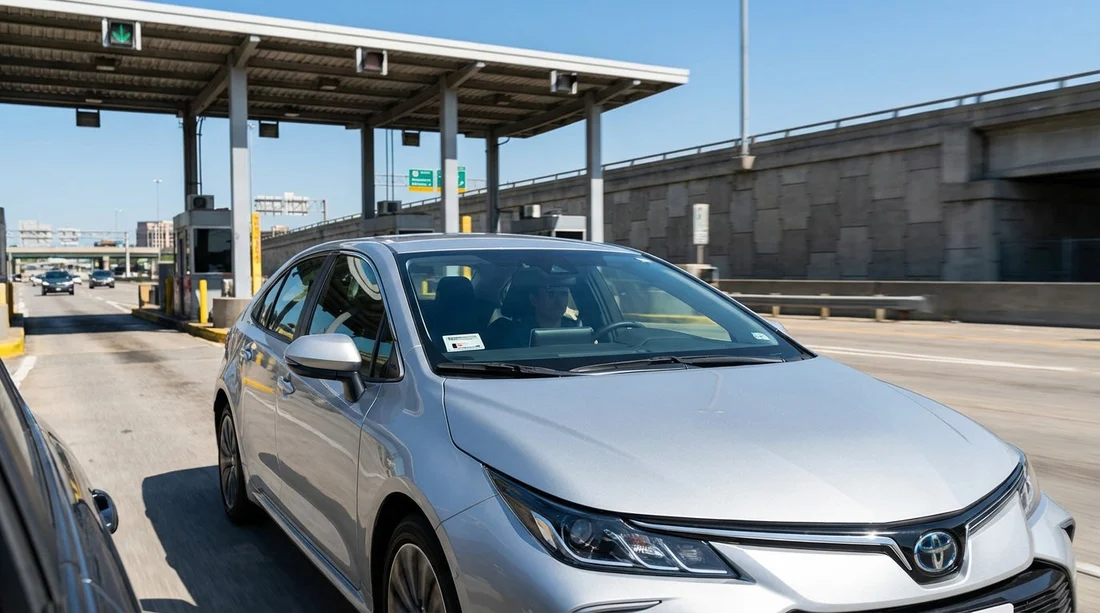
Hiring a car in New York can feel straightforward until you hit your first toll gantry, or drive into an area that may have congestion charging. The key point is simple, tolls and any congestion charges are not automatically “included” just because you paid for car hire. In most cases you, as the driver, pay them, but the way you pay is often indirect because rental vehicles are usually set up for electronic, plate-based toll collection.
This guide explains what charges you might face around New York, how rental toll billing commonly works, and what to ask at the desk before you pull out of the car park. It is informational, and policies can vary by rental company, vehicle class, and pick-up location.
What counts as a toll or a congestion charge in New York?
A toll is a fee for using specific roads, bridges, tunnels, or managed lanes. In and around New York City, that includes major crossings and turnpikes where payment is typically cashless, captured by transponder (E-ZPass) or by photographing the number plate (toll-by-mail).
A congestion charge is different. It is a fee for driving in a defined zone, usually designed to reduce traffic in busy areas. Whether you will pay a congestion charge in New York depends on the rules in force at the time you travel, the exact zone boundaries, and any exemptions. Because programmes and timelines can change, you should treat congestion charging as “possible” rather than guaranteed, and confirm current details before your trip and again at pick-up.
Do you have to pay these charges when you hire a rental car?
In most situations, yes. If you drive on a tolled facility, you are responsible for the toll. If a congestion charge applies to a zone you enter, you are responsible for that charge as well. The difference with a rental vehicle is that you usually will not stop at a booth and pay immediately, because many New York facilities are cashless.
Instead, the toll authority records the event and bills the registered vehicle owner. For a rental car, the registered owner is the rental company, which then passes the charge to you under the rental agreement, often with an administrative fee. That is why two drivers can take the same route and pay the same toll amount, but the final cost can differ depending on rental toll programme terms.
If you are comparing pick-up options, it is worth reading the location page details for your arrival point. For instance, if you are collecting near Newark, you may be looking at New Jersey-based counters and vehicles, even if you plan to drive into New York City. See options like car rental at Newark Airport and how that ties into regional driving patterns.
How toll billing usually works with rental vehicles
Most rental fleets in the New York and New Jersey area use some form of electronic tolling. There are three common models, and your rental may use one or a combination:
1) Built-in transponder (E-ZPass) linked to a rental toll programme. You drive normally through E-ZPass lanes. Tolls post to the rental company account, then get charged to you later. Depending on the programme, you may also pay a daily fee for days when you incur tolls, or a flat service charge per rental, or administrative fees per toll.
2) Plate-based tolling without a transponder. The facility reads the number plate and bills the vehicle owner. The rental company then bills you. This can be convenient, but you should ask how soon charges appear and what fees apply.
3) Customer adds their own transponder (less common, but possible). Some drivers bring their own E-ZPass account and transponder. This can work, but it can also lead to double billing if the car already has a rental programme device or if the plate is still linked to the rental company account. Always ask before you assume you can use your own device.
Because the billing often happens after the rental ends, you might not see toll charges at the counter return. They can post days or even weeks later, depending on how quickly the toll authority processes transactions and how the rental company batches billing.
Typical toll hotspots for New York drivers
Many visitors are surprised by how easy it is to incur multiple tolls in a short time. Around New York City, common scenarios include:
Crossing between New Jersey and Manhattan via tunnels, using major bridges, or taking tolled sections of highways. If you are arriving through Newark and planning day trips into the city, this is especially relevant.
Using airport approach roads and regional parkways that connect to toll facilities. If you fly into JFK and then drive into Manhattan, you may encounter tolls depending on route and crossings.
Taking certain express lanes or managed lanes where pricing varies by time of day or congestion level.
Even if you intend to “avoid tolls,” navigation apps can reroute due to traffic and inadvertently send you through a toll crossing. If you are trying to minimise charges, set your navigation preferences accordingly and check the route summary before departing.
What about Manhattan congestion charging?
Congestion charging has been widely discussed for Manhattan, and travellers often ask if they will need to pay it with car hire. The practical answer is, treat it like any other road user charge: if a programme is active and you enter the zone, it may be billed to the vehicle owner and then passed to you.
Because rules can change, the best protection is to ask the rental desk how such charges are handled under their toll programme, and whether they have seen congestion-zone billing come through as toll-like transactions or as separate charges. Also ask how long after the rental you might see these charges appear.
If you are choosing between airport pick-up points, bear in mind that policies can differ by brand and location. Hola Car Rentals surfaces options across providers, such as Hertz car hire at New York JFK and Newark-based providers, which can help you compare what you are likely to be offered at the counter.
What to ask at the desk before you drive away
To avoid unexpected fees, ask direct questions and get clear answers. You do not need to negotiate, just confirm how the system works for the specific vehicle you are receiving.
Ask whether the vehicle has an E-ZPass transponder, and if it is active. Some cars have a device present but it might be set to a particular mode. Ask what happens when you drive through an E-ZPass lane.
Ask what toll programme applies and how fees are calculated. Clarify whether there is a daily fee on days you use tolls, a per-toll admin fee, or both. Also ask if there is a cap.
Ask whether you can opt out. In some cases, you can decline the toll programme, but you may still be billed via plate-based tolling if you use a cashless facility, and the rental company may still pass that through with fees. Knowing the opt-out consequences matters.
Ask how long billing can take after return. This helps you spot legitimate charges and reduces the risk of assuming a later charge is incorrect.
Ask what happens if you bring your own E-ZPass. If you plan to use one, confirm the correct steps to avoid duplicate tolling, such as shielding a built-in device or ensuring the plate is not billed to the rental account for your trip.
If you are picking up in New Jersey, you can also compare region-specific pages like car rental in New Jersey (EWR) and vehicle categories, because larger vehicles can influence route choices and therefore where you might encounter tolls.
How tolls and fees show up on your final bill
With car hire, toll-related charges usually appear in one of three places:
At the counter on return. This is less common for cashless tolls, but it can happen if transactions post quickly.
As a post-rental charge to your payment card. This is very common. You may receive an itemised statement showing toll amounts and separate service fees.
As an email invoice later. Some companies send a separate toll statement, especially when a third-party toll service processes it.
Keep your rental agreement and any toll programme leaflet, and take a photo of it if you receive paper terms. If a charge looks unfamiliar, check the date and time, then cross-reference your journey. Disputes are easier when you have your pick-up and drop-off times and the vehicle details to hand.
Ways to manage costs without getting caught out
You cannot always avoid tolls in the New York area without adding time and complexity, but you can manage costs sensibly:
Plan your routes. If you are doing day trips, check whether toll-free alternatives add significant time. Sometimes paying a single toll is more efficient than burning fuel and time on detours.
Decide whether driving into Manhattan is necessary. For some itineraries, parking and potential charges can outweigh convenience. You might drive to an outer area and use public transport onward.
Choose the right vehicle for your plan. While toll rates are usually based on axle count and vehicle class, most standard passenger cars and SUVs fall into common categories. If you need space for family travel, compare options like minivan rental near EWR, but be mindful that larger vehicles can make city driving and parking more challenging, which can influence your route decisions.
Review your payment card statements after travel. Because toll billing can be delayed, it is wise to keep an eye on charges for a few weeks after you return home.
Cross-state driving, New York versus New Jersey considerations
Many travellers land at Newark and spend time in both New Jersey and New York. That is normal, but it can affect toll exposure. New Jersey turnpikes and parkways have their own toll points, and crossings into New York City can add more. The main takeaway is that “New York trip” driving often includes New Jersey toll facilities too, depending on where you collect and where you stay.
Provider and location can also influence how toll programmes are presented at the counter. If you are comparing brands at Newark, it may help to look at a specific supplier page such as Alamo car hire at Newark EWR and then confirm toll billing details directly when you pick up.
Common misconceptions that lead to surprise charges
“I did not see a toll booth, so it must be free.” In this region, many toll points are cashless and you will not stop.
“I avoided toll roads in my sat nav.” You can still encounter tolled bridges or tunnels, and rerouting can override preferences.
“I will just pay toll-by-mail myself.” With a rental vehicle, the mail goes to the rental company, not you, so billing routes through them.
“Congestion charging is the same as a toll.” It might be billed in a similar way, but it can be governed by different rules and exemptions.
FAQ
Do I pay tolls myself when using car hire in New York? Usually yes, but you typically pay indirectly. The toll is billed to the rental company first, then charged to you later with any applicable service fees.
Will tolls show up immediately when I return the car? Not always. Many tolls post after the rental ends, so you may see charges on your card days or weeks later.
Can I bring my own E-ZPass and avoid rental toll fees? Sometimes, but you must confirm the car is not also enrolled in a rental toll programme that could trigger duplicate billing. Ask the desk for the correct process.
How do I know if Manhattan congestion charging will apply? Check the latest official rules before travel, then ask the rental desk how any congestion-zone charges are billed under their system for that vehicle.
What should I do if a toll charge looks wrong after my rental? Review your rental agreement and travel timeline, then contact the rental company with the date, time, and amount. Keep any programme terms you were given at pick-up.

























































































