


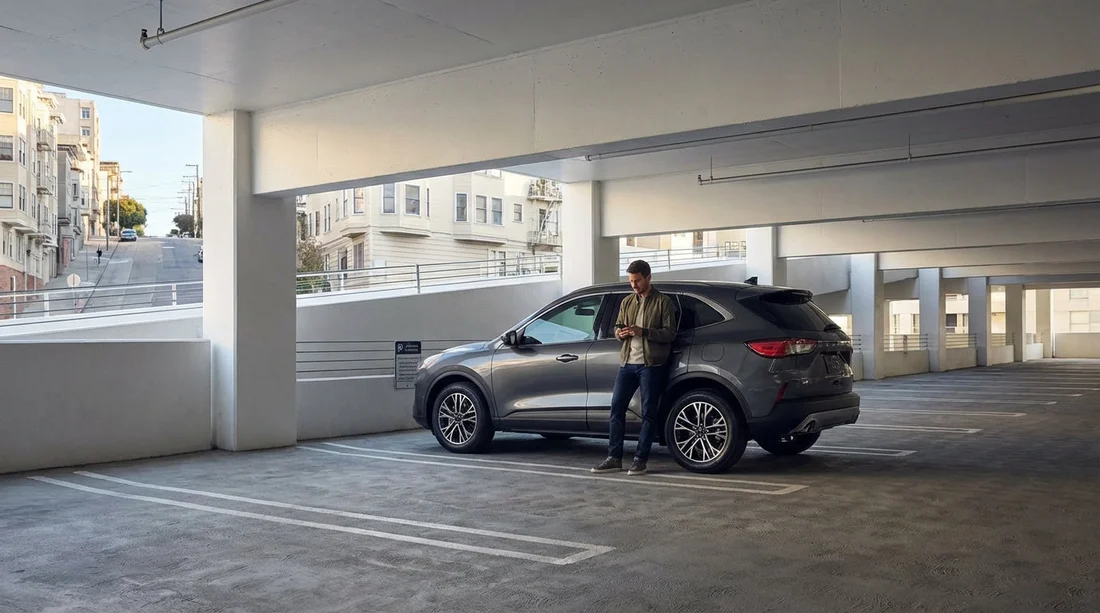
Quick Summary:
- Confirm the garage’s closing time and whether overnight access is permitted.
- Check how you will re-enter, ticket, app, fob, or staffed kiosk.
- Verify key drop, validation, and ANPR rules to avoid re-entry issues.
- Review your car hire contract for after-hours fees and extra-day triggers.
It is easy to assume that a multi-storey or hotel garage in San Francisco will be accessible at any hour. Many are not. Some close their public entrances overnight, switch to residents-only entry, or require a specific ticket type to re-enter. If you park your car hire and cannot get back in until morning, you can lose time, miss a return window, and sometimes trigger extra-day charges if the rental is returned late.
The fix is a quick checklist done before you walk away from the vehicle. This article focuses on practical checks for overnight closures: operating hours, after-hours access, ticket and validation rules, automatic number plate recognition (ANPR) re-entry, and how these interact with typical car hire timelines in San Francisco.
If you are collecting or returning via the airport, it also helps to understand the local rental flow and cut-off times. Hola Car Rentals publishes location guides like San Francisco SFO car rental and, if your trip begins in the South Bay, San Jose SJC car rental, which can help you plan timing around overnight parking.
1) Confirm the car park’s “real” overnight status, not just daytime hours
Start with the basics, but check them in the right place. Many garages list hours like “6am to 10pm”, yet still allow overnight parking. Others accept overnight parking but do not allow overnight access, meaning you can leave the car there, but you cannot get to it.
Before you commit, confirm three separate items:
Entry hours: when vehicles are allowed to enter. Some stop entry late evening even if cars can remain.
Exit hours: when vehicles are allowed to leave. A few “closed” garages still allow exit via automated gates.
Pedestrian access hours: when you can walk in to reach the car. This is the most common cause of lockouts.
If a garage closes its pedestrian doors overnight, ask if there is a 24-hour side entrance, an intercom, or a security desk that can open the door. If you are told “exit only after 10pm”, clarify whether that means you can retrieve the vehicle but not return to the same space, which matters if you planned to pop out for a late meal and return.
2) Ask exactly how after-hours re-entry works
In San Francisco, overnight access can be controlled in several ways. The key is to understand what you will physically need in your hand when you come back at 1am.
Common re-entry methods include:
Ticket in, ticket out: you must keep a paper ticket. If you lose it, “lost ticket” rates can be high and sometimes charged as a full day.
Tap card or QR code: some garages issue a barcode at entry or within an app. If the barcode lives in an email, ensure you have mobile data or have saved a screenshot.
Intercom to security: works fine until it does not. Ask whether security is staffed all night and whether they will open for short-term customers or residents only.
Hotel validation + room key access: if you are not a hotel guest, you might not be able to access lifts or corridors after hours.
Do not rely on “it should be fine”. Ask the attendant: “If I return after midnight, which door do I use, and what do I show or scan?”
3) Check whether ANPR or licence-plate recognition is used, and what could block it
Some garages use ANPR to open gates automatically when your plate is recognised. That sounds convenient, but it can cause issues for car hire, because the system may expect a pre-registered plate.
ANPR can fail or be blocked by:
Plate not registered: a garage linked to a hotel booking might register only guest vehicles.
Different plate formats: a rental car’s plate is standard, but the garage database might be wrong if manually entered.
Dirty plates or glare: rain, fog, and reflective glare can reduce recognition. San Francisco’s microclimates make this more common than you would think.
One-way rules: some systems recognise entry only, and after a certain hour the lane becomes exit-only.
If ANPR is in play, ask whether they can add your vehicle temporarily, and what the fallback process is if recognition fails. Ideally you should have a ticket, QR code, or staffed intercom option as backup.
4) Understand validation rules before you leave the car
Validation is another frequent problem. Some garages require validation to be done at a shop, hotel front desk, or kiosk before the doors lock. If you leave the garage and later realise you were supposed to validate inside, you can get stuck paying a much higher rate, or you might not be able to exit without staff.
Before you park overnight, confirm:
Where validation happens: inside the garage kiosk, a nearby business, or online.
When validation must be completed: at entry, before exit, or before a set hour.
What happens if you do not validate: full daily rate, lost-ticket rate, or a fee at exit.
This matters for car hire budgets, because an unexpected “lost ticket” or non-validated overnight rate can be similar to a fuel tank or a toll bill.
5) Match parking timing to your car hire return window and after-hours policies
Even if you can access the garage, the bigger risk is time. Many car hire agreements treat late returns strictly, and some locations have limited staffing after hours. If you get locked out until 6am, a planned early return can become a late one.
Practical checks to make:
Your planned return time: build in buffer time for garage doors, queues at pay stations, and traffic leaving downtown.
Extra-day triggers: many rentals have a grace period, but it can be short. If you miss it, you may be charged an additional day.
After-hours vehicle return: some returns rely on a key drop and a specific parking bay. If you cannot reach the vehicle, you cannot complete the return properly.
Fuel plan timing: if you must refuel before return, an overnight lockout can prevent you from reaching a petrol station in time.
If your trip includes larger vehicles, note that manoeuvring and garage hours become even more important. A higher-clearance vehicle might be needed for comfort, while a longer wheelbase may be harder in tight city garages. Comparing options like van rental at SFO can help you anticipate where you can realistically park overnight.
6) Confirm key and document rules, especially if you are not retrieving the car until morning
For most city parking, you keep the keys. However, some valet-style garages, hotel car parks, or private lots may hold keys to move cars for stacking. If the office closes overnight, you may not be able to retrieve your keys even if the building is accessible.
Ask these questions before you hand anything over:
Do you keep the keys? If not, what is the overnight process to retrieve them?
Do they need the rental agreement? Some attendants may ask for proof of permission to collect the vehicle, which is harder if your documents are locked in the glovebox.
Is there a key tag with personal data? Keep any tag out of sight when walking around at night.
Also, do a quick security check: remove visible items, ensure doors lock, and take a photo of the bay number and level. If the garage is multi-level and the lifts close overnight, you will want to know which stairwell leads to your level.
7) Check height, width, and street access restrictions for your vehicle type
San Francisco garages often have tight ramps and low ceilings. If you are driving an SUV or a van, you can be physically unable to enter, or you might scrape on internal ramps. If the garage closes overnight, staff might not be present to guide you, and reversing out on a narrow ramp at night is not ideal.
Before entry, check:
Posted clearance: compare it to your vehicle. If you are unsure, do not guess, find another garage.
Lane width and turning angles: older garages can be tight, especially around Union Square and the Financial District.
Neighbourhood restrictions: some streets near garages have peak-hour turn restrictions. If you return early morning, you may be forced into a longer route.
If you picked up in the South Bay and drove up for the evening, your vehicle may be larger than typical city compact cars. Guides such as SUV rental at SJC are useful for understanding what you might be driving and why clearance checks matter.
8) Know the difference between “overnight parking” and “overnight access” at hotels and apartments
Hotel garages can be tempting because they feel safer and staffed, but the after-hours rules can be strict. You might need a room key to operate the lift, access the stairwell, or open the pedestrian door from the street. Apartment garages may only allow entry via resident fobs after a certain time.
If you are not a registered guest or resident, confirm that you can:
Walk in from the street after closing: not just drive in.
Reach your parking level: lifts may require credentials.
Pay and exit without a desk open: payment machines can be inside the lobby, which may be closed.
Where possible, choose a garage with independent 24-hour pedestrian access and a pay station that is always available.
9) Do a two-minute “before I walk away” checklist
Right after you park, run through this short routine. It prevents most overnight lockouts and late-return issues.
Photograph details: entrance sign with hours, your bay number, level, and the nearest pedestrian door.
Test the route back: walk from the car to the street exit and confirm it opens as expected.
Confirm you have what you need: ticket, QR code, app login, and any PIN for the intercom.
Set an alarm: for the morning, with enough time to deal with a closed door and still make your return.
Note the help number: if there is a posted overnight support line, save it.
These small steps matter most when your schedule is tight, especially for airport returns where counter or shuttle hours may be limited. If you are comparing providers for your trip, you may also find it helpful to review specific location pages like Payless car rental at SFO to understand typical airport timing patterns you might be working around.
FAQ
Q: If a San Francisco garage closes overnight, can I still leave my car inside?
A: Often yes, but that does not guarantee you can access it. Confirm pedestrian access and the process for re-entry after hours.
Q: What should I do if I think ANPR will not recognise my rental car’s plate?
A: Ask for a backup method before you park, such as a ticket, QR code, or intercom support. Do not rely solely on plate recognition.
Q: Can an overnight lockout make me pay an extra day on my car hire?
A: It can, if it delays your return beyond the grace period or you miss a staffed return window. Build in buffer time and avoid garages with restricted morning access.
Q: Is it safer to park in a hotel garage overnight?
A: It can be, but access rules may be stricter. Non-guests may be unable to enter the lobby or use lifts after a certain hour.
Q: What is the quickest way to avoid problems when parking overnight?
A: Confirm closing times, test the pedestrian exit, keep the ticket or QR code secure, and photograph the hours and your bay location.

























































































