


Quick Summary:
- Adding a toll pass can raise the authorisation hold at pick-up.
- Some toll options bill later, but still require a valid card.
- Ask for the toll option’s maximum exposure and any extra deposit.
- Decline toll products if you plan to avoid toll roads.
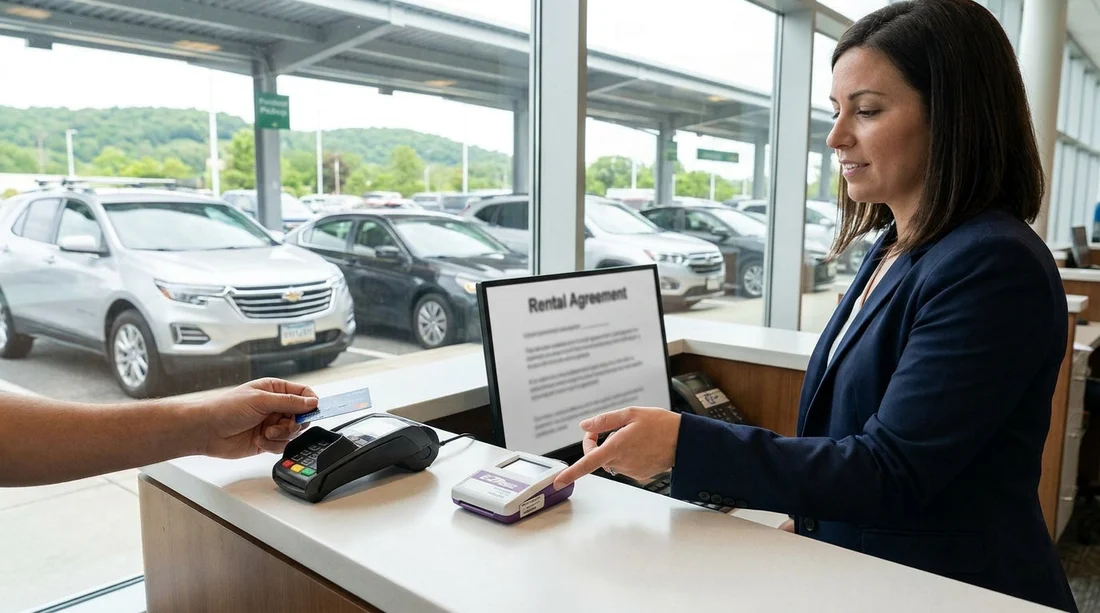
When you pick up car hire in Pennsylvania, the rental counter will usually place a temporary authorisation on your credit card. That authorisation commonly covers the security deposit plus estimated rental charges, and sometimes additional items you choose at the desk. A toll pass, toll programme, or “toll product” is one of those add-ons that can affect what is authorised upfront.
The short, practical answer to the title question is: it can increase the credit-card deposit hold, but not always, and the size of any increase depends on the type of toll product, the rental company’s policy, and how they calculate your maximum possible toll exposure.
This matters in Pennsylvania because toll facilities are widespread, from the Pennsylvania Turnpike to tolled bridges and tunnels. If you are collecting at Philadelphia International Airport or in the city, it is easy to end up on tolled routes without planning, which is why toll products are commonly discussed at the counter. For Philadelphia pick-ups, travellers often compare policies while arranging car rental at Philadelphia Airport (PHL) or reviewing options for car rental in Philadelphia (PHL).
What a credit-card “hold” actually is
An authorisation hold is not a charge, it is a temporary block against your available credit limit. The rental company requests an authorisation amount, your card issuer approves it, and that amount is set aside until the rental is closed or the authorisation expires. The final bill may be lower, higher, or split into multiple charges, depending on extras and post-rental items.
For car hire, the hold is designed to protect the rental company against unpaid rental days, fuel, damage excess, and other fees that could arise. Toll charges are unusual because they can arrive after the vehicle is returned. That timing difference is the reason toll products sometimes affect the initial authorisation.
How toll products are authorised at the counter
In Pennsylvania, rental firms typically offer one of three broad approaches. The name differs by brand, but the mechanics are similar.
1) Daily toll pass or unlimited toll plan. You pay a daily fee for the days you use toll roads, and tolls are covered or billed in a simplified way. Because the pricing is known, some companies do not need to increase the deposit hold much, beyond ensuring your card is valid. Others still add a small buffer because toll use can be disputed or because the plan has limits.
2) Pay-per-toll with admin or convenience fees. The vehicle has a transponder or plate-based billing, and you are charged for the tolls you actually incur, plus a per-toll and/or per-day admin fee. Because the number and value of tolls is unknown at pick-up, the rental company may increase the authorisation hold to cover a reasonable maximum exposure, particularly on longer rentals.
3) No toll product, you pay tolls yourself. This can mean using cash lanes where available, paying at booths, or avoiding toll routes. In practice, some toll roads are fully electronic, so paying yourself may require your own compatible transponder or later payment through the toll authority’s process. If you decline the rental company’s toll product but still use electronic tolling, you may be billed later with additional fees, and the initial deposit may not rise, but the post-rental total cost can.
When adding a toll pass is most likely to increase the hold
A toll pass is most likely to increase the hold when the rental company treats tolls as a variable post-rental charge and wants additional headroom. Common triggers include:
Longer rental durations. A week of driving could include many toll events, so the projected maximum exposure grows.
One-way trips. If your plan involves crossing state lines, toll authorities and rates vary, and the rental firm may assume higher toll usage.
Lower vehicle classes or budget brands with tighter deposit rules. Some budget products have a strict base deposit, and add-ons may push the authorisation above that base. If you are comparing value-focused options, review terms on pages like budget car rental in Philadelphia (PHL) or Dollar car rental in Philadelphia (PHL).
Debit-card use or limited credit. Even though the question is about credit cards, the practical risk is your available limit. If the hold plus other travel holds (hotel, petrol station preauthorisations) exceed your limit, the counter may decline the rental or require changes.
What may be held upfront, and what may appear later
To avoid surprises, separate “what is held” from “what is ultimately charged”.
Upfront authorisation may include: base rental cost estimate, the standard security deposit, chosen extras (including toll products), and an additional buffer amount for variable charges. That buffer can be a flat figure or linked to rental length.
After-return charges may include: actual tolls incurred, administrative fees, and adjustments if toll data arrives after the contract is closed. This is why a toll option can matter even if it does not increase the initial hold. You could see toll-related charges days or weeks later.
Some travellers assume that “I added a toll pass, so everything is settled at pick-up”. That is not always true. A daily plan might cover tolls, but a pay-per-use programme is fundamentally a later-billed product. The counter agent should be able to tell you which one you are accepting and how it is billed.
Questions to ask at pick-up to get a precise answer
Because policies vary by supplier and location, the most reliable way to know whether your hold will increase is to ask targeted questions and get the numbers before you sign. These questions keep the conversation concrete:
“If I add the toll product, what will my authorisation hold be today?” Ask for the amount in dollars, not just “a bit more”.
“Is this an unlimited plan, or pay-per-toll with admin fees?” The billing model determines whether later charges are expected.
“Is there a maximum toll exposure or cap per day?” If there is no cap, you need to assume the hold could be higher or the later bill could be substantial.
“If I decline, how are electronic tolls handled for this vehicle?” This clarifies whether you are likely to be billed later anyway.
“Can you show the toll programme terms on the rental agreement?” Ensure the option you chose is the one printed on the contract.
How to avoid surprises with tolls during car hire in Pennsylvania
Plan your routes before you arrive. If you will stay within central Philadelphia and nearby suburbs, you may be able to avoid toll facilities. If you plan to use the Pennsylvania Turnpike or cross tolled bridges, a toll programme may be more convenient, but confirm the deposit effect first.
Keep available credit higher than the expected hold. Even if the toll product only adds a small buffer, the combination of rental deposit, hotel holds, and incidental spending can push you close to the limit. Using a credit card with a healthy limit helps avoid counter declines.
Use one card consistently for rental and incidentals. Switching cards mid-rental can complicate later toll billing. If tolls post after return, the rental company generally charges the card on file.
Consider your vehicle type and passenger load. Larger vehicles can mean different driving patterns and parking choices, which affects toll exposure. If you need space for family travel, check terms for minivan rental in Philadelphia (PHL), and still ask how toll products impact the hold for that class.
Read the fee language, not just the daily price. A low daily toll fee can still come with per-toll admin charges, or fees on days the vehicle is driven, even if toll roads are not used. The agent should explain how “toll days” are defined.
FAQ
Will a toll pass always increase the deposit hold for car hire in Pennsylvania? No. Some toll plans are priced predictably and may not change the hold, while pay-per-toll programmes often add a buffer or lead to later charges.
Is the toll pass charge taken immediately or only after the rental? It depends on the programme. A daily toll plan may be charged during the rental, while toll transactions and admin fees often post after return once toll data is received.
Can I avoid toll charges by declining the rental company’s toll product? Sometimes, if you avoid toll roads or can pay directly where available. However, fully electronic toll routes may still bill the rental company, and you may receive a later charge plus fees.
What should I check on the rental agreement before leaving the counter? Confirm the toll option selected, how fees are calculated, and the authorisation hold amount shown or stated for your card.
How can I reduce the risk of a declined card at pick-up? Keep sufficient available credit, minimise other travel preauthorisations, and ask the desk to confirm the total hold including any toll product before you sign.





























































































