


Quick Summary:
- Walk around twice, photograph every panel, wheel, and any existing scratches clearly.
- Check tyre tread, pressure warning lights, and confirm the spare kit exists.
- Test lights, wipers, horn, indicators, and reverse camera before leaving.
- Document fuel level, mileage, and dashboard warnings at the rental counter.
Picking up a car hire in San Francisco can feel like a rush, especially at busy locations and multi-storey car parks. A calm, repeatable departure routine helps you avoid disputes about pre-existing damage, prevents safety issues on steep streets, and ensures you understand the tech before merging into Bay Area traffic. The goal is simple: test what matters, photograph what proves condition, and note anything that needs correcting before you drive away.
If you are collecting at the airport, expect low light in parking structures, tight lanes, and plenty of distractions. Allow an extra ten minutes to complete this checklist, then you can focus on navigating hills, one-way streets, and bridge approaches rather than fiddling with settings on the move. For pickup context, see San Francisco SFO airport car rental and compare with San Francisco car rental options.
Before you reach the car, confirm the paperwork matches
Start at the counter or kiosk, because the best photos in the world do not help if the agreement is wrong. Check the vehicle make, model, registration details, and the fuel policy shown on the agreement. Confirm whether it is full-to-full, pre-purchase, or return-as-received. Photograph the agreement page that shows fuel policy, mileage policy, and any damage diagram, then keep it accessible.
Next, check the key details that often cause confusion later: the return time and location, any one-way fees, and whether toll solutions are pre-registered. In the Bay Area, bridges may involve tolls and many routes use cashless systems, so you want clarity on how charges are handled. If you are uncertain, ask for the rules in writing, then take a photo of the printed explanation or the screen.
Car-park walkaround: what to photograph, in what order
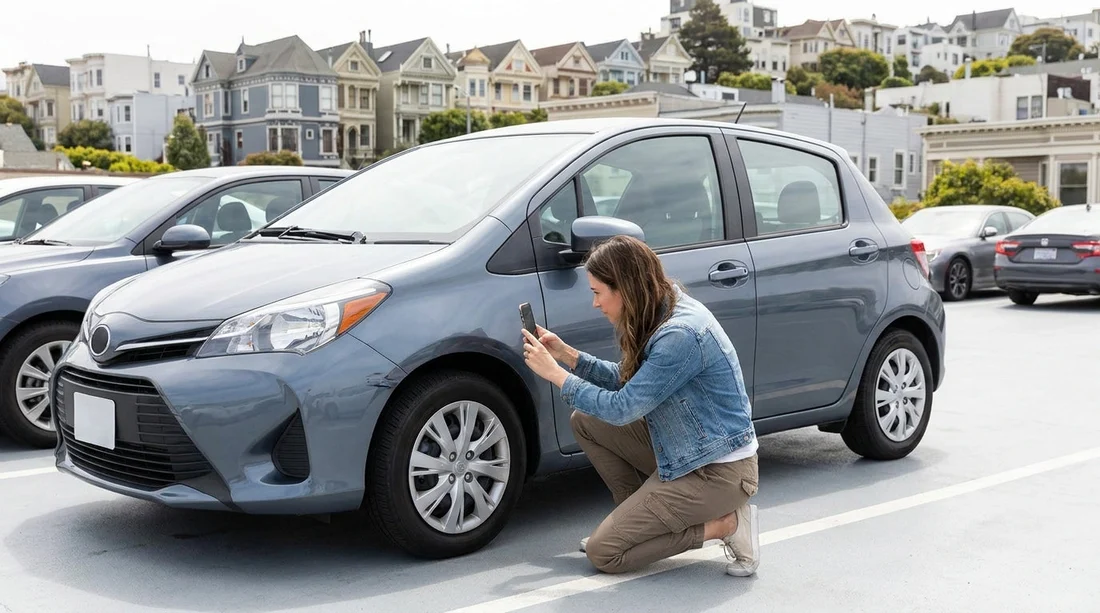
Do a slow walkaround twice. The first pass is for wide shots that prove overall condition and context. The second pass is for close-ups of anything you could be blamed for later. Set your phone to record the date and time if available, and ensure flash or night mode is on in dim garages.
Pass one, wide shots: Photograph the front, both front corners, both sides, both rear corners, and the rear, keeping the whole car in frame. Include the number plate in at least one shot. Then photograph the windscreen and rear window at an angle so chips and cracks show.
Pass two, close-ups: Photograph each wheel and tyre, then move panel by panel. Pay special attention to bumpers, door edges, lower sills, and the roofline if accessible. In San Francisco, kerbs and steep driveways increase scuffs under the front bumper, so crouch and capture the underside edge if you can safely do so.
Do not forget mirrors and glass. Mirror caps and edges chip easily, and small glass cracks can spread quickly. If you see a chip in the windscreen, photograph it with a finger or key for scale, then a wider shot showing its position relative to the steering wheel.
Tyres and wheels: quick checks that matter on hills
Tyres are your main safety interface, and San Francisco hills make tyre grip, braking, and steering feel more pronounced. First, visually check tread depth across the tyre. Uneven wear can suggest alignment issues. Next, look for sidewall bulges, cuts, or cords. Photograph any defects clearly.
Then check the tyre pressure monitoring system status on the dash after starting the car, it should not show a warning. If it does, return to the counter before leaving the garage. Also confirm you have the wheel lock key if the car uses locking nuts, and that the spare tyre or repair kit is present.
Lights, indicators, and visibility essentials
Run a quick light test before moving. Switch on headlights, then hazards, then indicators left and right. In a garage you can see reflections off walls, but also step out and verify front and rear. Ask a companion to confirm, or use your phone video placed behind the car to capture brake lights and indicators.
Test wipers and washers, because coastal fog and spray can appear unexpectedly. Check the windscreen is clean enough for night driving, and look for smears that make headlights glare worse. Finally, test the horn, you may need it for safety in dense traffic or when visibility is limited.
Fuel level, mileage, and dashboard warning lights
Before rolling even a metre, photograph the instrument cluster showing fuel level, odometer, and any warning lights. Take one photo with ignition on and another with the engine running, because some warnings clear after start-up and you want a record of anything persistent.
Confirm the fuel type shown inside the fuel door or in the manual. Misfuelling is costly, and in a hurry it is easy to grab the wrong nozzle. If the agreement says full-to-full but the gauge is not full, photograph the gauge and return to the desk immediately for correction or written acknowledgement.
In-car tech and controls: test now, not at the kerb
Modern car hire vehicles often have unfamiliar interfaces. Spend two minutes parked to avoid distraction later. Pair your phone only if you are comfortable doing so, and delete the connection at return. Check Bluetooth audio, navigation display, and the charging ports you will actually use. Photograph the screen if it shows error messages or missing features you paid for.
Test the reverse camera and parking sensors, they are valuable in tight San Francisco parking spaces and garages. Put the car in reverse with your foot on the brake and confirm the camera image is clear and guidelines appear. Then check the handbrake or parking brake behaviour. On steep streets, you want confidence that the parking brake holds firmly.
Finally, set mirrors, adjust the seat, and set your route before you reach public roads. San Francisco junctions can be busy, and getting organised early helps you avoid sudden lane changes.
How to store and share your evidence
Create a single album on your phone titled with the pickup date, location, and registration number. Include a short video walkaround as well as still photos, video captures reflections and depth better in low light. If you are travelling with others, share the album so there is a backup. Keep the photos until your final receipt is settled.
If you are choosing providers at SFO, it can help to know what to expect at different desks and garages, for example Avis at San Francisco SFO and Alamo at San Francisco SFO. If your trip extends south, you may also compare Bay Area pickup points such as car hire at San Jose SJC.
FAQ
How many photos should I take when picking up a rental car in San Francisco? Aim for 20 to 40 clear photos, plus a 30 to 60 second walkaround video. Prioritise bumpers, wheels, glass, and any marks you notice.
What if I notice damage but the counter is busy? Photograph it clearly, then report it before leaving the facility. Ask for written acknowledgement on the agreement or a digital note attached to the booking.
Should I photograph the fuel gauge and odometer even if they look normal? Yes. A simple cluster photo proves starting fuel level and mileage, and it captures any warning lights that might appear later.
Do I need to test the reverse camera and parking sensors before driving off? You should. These features are most useful in tight city parking, and discovering a fault later is harder to document convincingly.
What is the single most overlooked check in a multi-storey car park? The underside of the front bumper and the wheel rims. Low kerbs and steep ramps can hide scuffs that are easy to miss in dim lighting.





























































































