


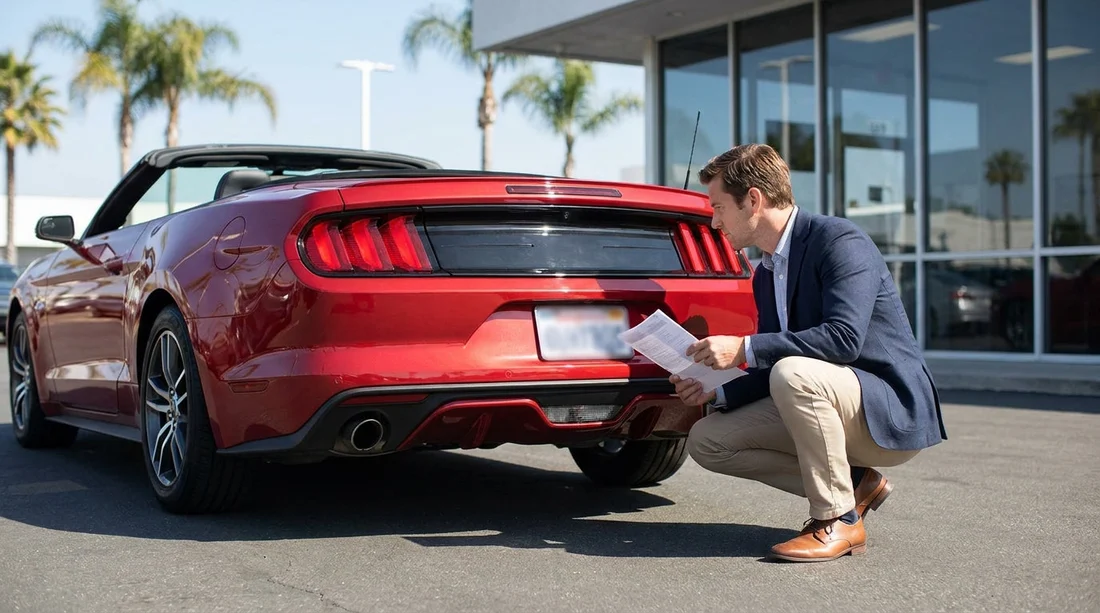
Quick Summary:
- Confirm the vehicle registration card is present, current, and fully legible.
- Check front and rear plates match each other and the paperwork.
- Verify month and year stickers are on the rear plate, unaltered.
- Match the VIN on the dashboard to the agreement before exiting.
When you pick up a car hire in California, a two minute check of documents and number plates can prevent delays later. If you are stopped, involved in a collision, or need roadside help, you want confidence that the car is correctly registered, properly plated, and the paperwork in the glovebox matches the vehicle you are driving.
This practical checklist focuses on what you can verify quickly and calmly, without needing specialist knowledge. It is not legal advice, but it aligns with what drivers typically need to show or reference when using a rental car on public roads in California.
1) Find the registration documents before you move the car
Start by locating the vehicle registration document, often kept in the glovebox, centre console, or a document wallet. In California, the important point is that proof of registration is in the vehicle and relates to that specific vehicle. If you cannot find any registration paperwork, go back to the counter before leaving the premises.
Legibility and completeness. You should be able to read the essential details without guesswork. Torn, water damaged, or missing pages are a red flag because you may not be able to show proof if asked.
Current registration. Registration has an expiry. Even if the car seems fine, you do not want to discover an expired registration during a roadside stop. If you see an expiry date that has passed, or looks inconsistent, ask the agent to confirm the vehicle is in-date.
Vehicle identifiers. The registration should list key identifiers like the plate number and the vehicle identification number (VIN) or portions of it. You will match these to the physical car in the next steps.
If you are collecting from a major airport location, time pressure is common. Allow a few minutes for this check, whether you are starting at Los Angeles LAX or heading out from Sacramento SMF.
2) Confirm the number plates are present, secure, and matching
California vehicles generally display a plate at the front and the rear. Walk around the car and confirm both plates are present. Missing plates are not something to sort out later, because you can be stopped quickly once you join traffic.
Front and rear plates match. It sounds obvious, but mismatched plates can happen after a plate replacement, bodywork, or a vehicle swap. The alphanumeric sequence should be identical on both ends.
Plates are securely mounted. Gently check the plate is not hanging loose or held on with temporary fasteners that look unreliable. A plate that falls off on the motorway can create safety issues and administrative problems.
Plates are readable. They should not be obscured by a cover, frame, mud, or damage. If a frame blocks any text, ask for it to be adjusted, because it can cause avoidable attention during a stop.
3) Check the registration stickers on the rear plate
In California, the rear number plate typically carries registration stickers indicating the month and year. These stickers are a quick visual signal that registration is current. When you collect your car hire, look closely at the rear plate.
Both month and year stickers are present. If one is missing, torn, or looks peeled back, flag it to staff.
Stickers look authentic and unaltered. You are not expected to authenticate security features, but obvious tampering, misalignment, or layering over older stickers is worth querying.
Stickers align with the registration paperwork. If the paperwork shows one expiry but the sticker suggests another, the rental desk should confirm the correct status. Do not assume the sticker is wrong or that you will never be asked about it.
This is especially helpful if you are picking up in busy areas like San Jose SJC, where you may be eager to leave the garage quickly, but a mismatch is far easier to solve on-site.
4) Match the plate number and VIN to your rental agreement
Your rental agreement or rental jacket should identify the exact vehicle assigned to you. Before you exit the car park, match the paperwork to the car in two ways.
Plate number. Find the plate number on the agreement and compare it to the physical plates. A single wrong character is enough to cause issues if tolls, parking citations, or incident reports are later associated with your contract.
VIN (Vehicle Identification Number). The VIN is usually visible through the windscreen on the driver’s side dashboard, and also on a door jamb label. Compare the VIN on the vehicle to the VIN shown on your paperwork. You do not need to memorise it, just confirm the last several characters match exactly.
If the agreement lists a different plate or VIN, do not drive away. A contract mismatch can create administrative complications if something happens during your rental, and it can also affect toll billing.
5) Look for temporary tags or out-of-state plates, and confirm they are documented
Not every rental car will have standard California plates. Some fleet vehicles may have plates from another state, or may use temporary tags during certain administrative windows. That can still be legitimate, but it increases the importance of ensuring the paperwork supports what you see.
If plates are out-of-state, confirm the registration document and agreement reflect that same plate and jurisdiction.
If a temporary tag is displayed, confirm it is properly positioned and readable. Ask the staff member to explain where the permanent registration proof is kept, and how long the temp tag is valid.
If anything looks improvised, such as handwritten numbers, missing dates, or a tag that is hard to read, request a vehicle swap. You want a car you can drive without wondering whether the documents will satisfy a routine stop.
6) Check the insurance and roadside information pack is present
This is not a number plate item, but it is part of the same pre-departure document check that saves time later. In many rental cars, the glovebox wallet includes accident guidance, an insurance card where applicable, and roadside assistance details.
Accident and incident steps. A simple instruction sheet can be invaluable under stress. Read it briefly so you know what the rental company expects you to do if there is damage.
Roadside assistance contact details. Save the number on your phone before leaving the car park, because mobile signal can be patchy in underground structures.
If you are travelling with larger luggage or a group, you may prefer a van. The same document and plate checks apply when collecting from San Francisco SFO, because larger vehicles can be harder to inspect once you are in busy traffic.
7) What to do if something does not match
If any document is missing, the registration looks expired, the stickers look wrong, or the plate and VIN do not match the agreement, pause and resolve it immediately. Do not rely on verbal reassurance alone.
A corrected agreement, printed or reissued digitally, showing the exact plate and VIN of the vehicle you are taking.
A vehicle swap, if the current car’s documents or plates cannot be confirmed quickly.
Written confirmation, if the situation is unusual, such as a temporary tag or out-of-state plate, so you have a record of what you were told.
FAQ
Do rental cars in California always need a front number plate? Generally, California requires both front and rear plates on vehicles. If your rental lacks a front plate, ask the rental location to confirm and remedy it before departure.
Where should the registration document be in a rental car? It is commonly stored in the glovebox or a document wallet in the cabin. If you cannot find proof of registration quickly, return to the desk and ask staff to locate it.
What if the plate number on my agreement is different to the car? Do not drive away. Ask for the contract to be corrected or for a different vehicle, because a mismatch can affect tolls, tickets, and incident reporting.
Are out-of-state plates on a California rental car a problem? Not necessarily. The key is that the registration paperwork and your agreement match the actual plates and VIN, and that any temporary tags are valid and readable.
Should I photograph the plates and VIN when I pick up my car hire? It is a sensible record, especially in busy car parks. Photos of both plates, the sticker area, and the VIN can help resolve later questions about the vehicle you were issued.





























































































