


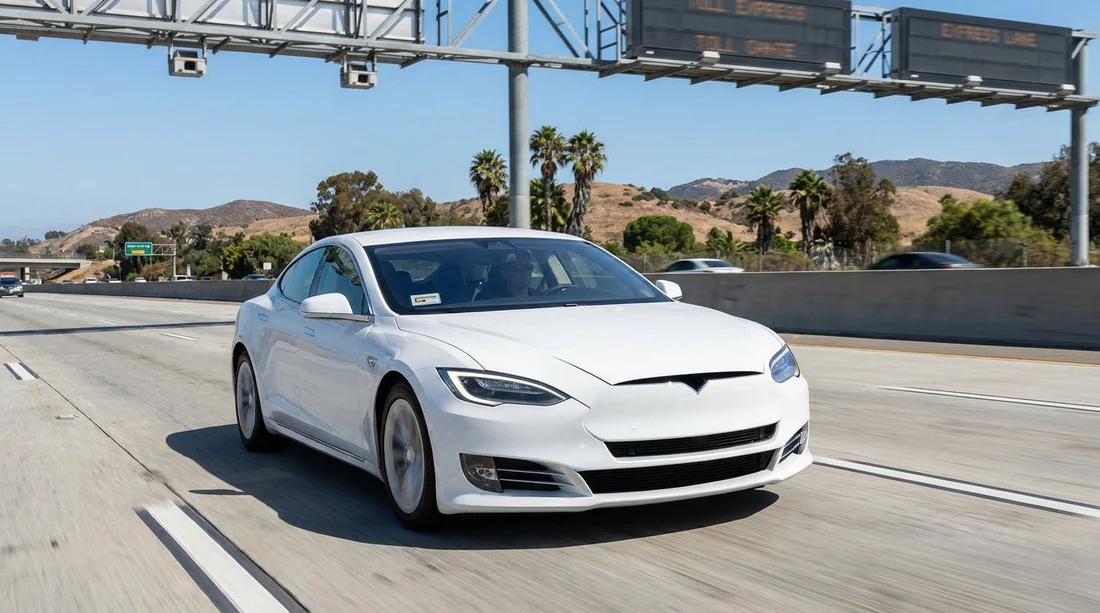
Quick Summary:
- Use HOV lanes only when your vehicle meets posted occupancy.
- Express lanes usually require FasTrak, even if you have passengers.
- Confirm your rental’s toll programme, transponder status, and admin fees.
- Check whether your route needs HOV decals or a switchable tag.
If you are planning a California road trip with a car hire, it helps to understand two different systems that often sit side by side on the motorway: HOV (carpool) lanes and express lanes. They look similar, but the rules, payment requirements, and enforcement can be very different. Getting it wrong can mean a toll bill you did not expect, or a ticket that is far more expensive than the time you saved.
California uses HOV lanes to encourage carpooling and reduce congestion. Express lanes, by contrast, are managed lanes that charge variable tolls to keep traffic flowing. Some express lanes also offer free or discounted travel for carpools, but only if you follow the specific rules for that corridor and have the right FasTrak equipment set correctly.
This matters most when you pick up a rental at busy gateways like Los Angeles LAX or after a flight into San Francisco SFO, where both HOV and express facilities are common on routes into the city and beyond. A minute of checking at the counter can prevent headaches later.
What counts as an HOV or carpool lane in California?
HOV lanes are typically marked with a white diamond symbol on signs and on the road. You will see them labelled as “Carpool”, “HOV”, or “HOV 2+” or “HOV 3+”. The number refers to how many occupants must be in the vehicle, including the driver, to use the lane during the posted hours.
Common requirements include:
HOV 2+ means at least two people in the vehicle. HOV 3+ means at least three. Hours of operation vary, so an HOV lane may be restricted during rush hour and open to all other times.
Motorcycles are generally allowed in HOV lanes, even with a single rider, but this is not usually relevant for standard car hire. Buses and qualifying clean-air vehicles may also be permitted under certain programmes, but those permissions do not automatically carry over to a standard rental car.
HOV basics: who can use them in a rental car?
For most travellers, the rule is straightforward: you can use an HOV lane in California in your rental if you meet the posted occupancy requirement at that time. The vehicle being a rental does not change the occupancy rule.
What can trip people up is assuming that any “faster lane” is an HOV lane. In many places, the faster lane is an express lane, which may still display a diamond symbol yet require FasTrak and may charge tolls depending on your occupancy declaration.
Also remember that HOV access is not guaranteed all day. Always check the sign for the hours and the required number of occupants. Entering during restricted hours with too few people is a violation, and enforcement can include patrols and spot checks around entry points.
How express lanes differ from HOV lanes
Express lanes are managed lanes designed to keep traffic moving by limiting access and, typically, charging tolls that rise and fall with congestion. In California, many express lanes use FasTrak. Even if you qualify for a free or reduced rate as a carpool, you often still need an active FasTrak transponder or account, and sometimes you need a switchable transponder to declare 1, 2, or 3+ occupants.
Key differences to remember:
HOV lane: generally free if you meet occupancy, no toll equipment required. Express lane:
Some corridors are “Express Lanes” that allow solo drivers to pay, while carpools may travel free or at a discount. Others are “HOT” lanes (high-occupancy toll) with similar concepts. The posted signs on that specific motorway segment are what matter, not what you experienced in another city.
Do you need FasTrak in a rental car?
Many express lanes and some toll roads in California require FasTrak. With a rental car, you usually have three possible scenarios:
1) The rental car has a built-in toll tag or transponder. The tolls are billed through the rental company’s toll programme, often with additional daily or per-usage fees.
2) The rental car does not have a transponder, but plate-based tolling applies. Cameras read the number plate, and charges are processed. Rental companies may still add admin fees.
3) You bring your own FasTrak (where permitted). This can be useful if you already have one, but you must ensure it is correctly linked to the vehicle’s number plate and that your rental agreement allows it. If both your personal account and the rental programme charge for the same trip, it can be messy to sort out.
If you are collecting a vehicle in Southern California, such as via San Diego or near Orange County through Santa Ana, ask specifically how the car is set up for tolling and express lanes. Different operators handle this differently, even within the same airport.
What to check before you leave the counter
Before you drive away, take two minutes to confirm the details that affect HOV and express-lane use. This is especially important if your itinerary includes peak commuting times around Los Angeles, the Bay Area, or major interstates.
Ask or verify these items:
Toll programme enrolment:
Transponder type:
Plate billing:
Local restrictions:
Vehicle eligibility claims:car hire probably does not have it.
Common mistakes that lead to tickets or surprise charges
Confusing express lanes for HOV lanes.
Not setting the transponder correctly.
Assuming children or infants do not count.
Crossing solid lines.
Forgetting operating hours.
Practical route planning tips for visitors
When planning your day, decide whether time savings are worth potential toll charges. Express lanes can be excellent for keeping your schedule on track, but costs can add up quickly during peak congestion. If you are travelling as a group, you may benefit from HOV rules, but only where the lane is truly HOV and not an express facility with additional requirements.
For families renting a larger vehicle, it can help to know that SUVs are common choices for comfort and luggage. If that is your plan, you might compare options like SUV rental in Santa Ana, then confirm toll and transponder details in the same way you would for any other vehicle class. Lane eligibility is about rules and equipment, not vehicle size.
Finally, keep an eye on roadside electronic signs. Express lane prices change in real time, and the sign will usually show the toll to key destinations. If you are unsure, stay in the general-purpose lanes until you have confidence that your rental’s toll setup and your occupancy status match the posted requirements.
FAQ
Can I drive in California HOV lanes with a rental car? Yes, as long as you meet the posted occupancy requirement and follow the lane’s operating hours. The fact it is a rental does not change the basic HOV rule.
Do express lanes in California require FasTrak for rental cars? Often, yes. Many express lanes are FasTrak-only, even if carpools can receive free or discounted travel when properly declared.
Will my rental car automatically have a transponder? Not always. Some rentals have a built-in toll tag, others rely on number-plate billing. Confirm the toll programme, device type, and fees at pick-up.
Are carpools always free in express lanes? No. Some corridors require a switchable transponder set to the correct occupancy, and rules vary by region and facility. If you cannot declare occupancy properly, you may be charged.
What should I do if I accidentally used an express lane? Keep your rental paperwork and check how tolls are billed. Charges may appear later through the rental company’s toll programme, sometimes with admin fees.





























































































