


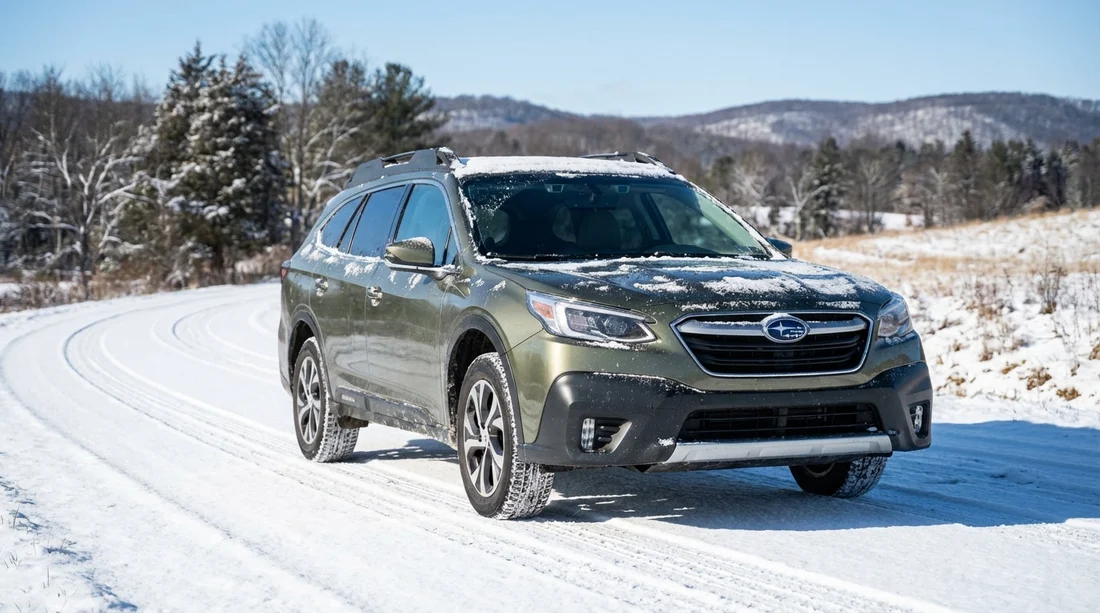
Quick Summary:
- Pick AWD for ploughed highways, mixed driving, and predictable winter stability.
- Choose 4x4 for steep rural roads, deeper snow, and controlled low-speed traction.
- Expect higher costs and fewer choices in AWD or 4x4 categories.
- Confirm tyres, ground clearance, and drive modes before collecting in winter.
Winter travel in Pennsylvania can swing from dry interstates to sudden lake-effect snow, mountain ice, and slushy city streets. If you are comparing car hire options, the choice between AWD and 4x4 often looks like a simple upgrade. In practice, it is about matching the drivetrain to where you will drive, how conditions change through the day, and what vehicle classes are realistically available at your pickup point.
This guide breaks down the difference between AWD and 4x4, when it matters most in Pennsylvania, and how it can influence vehicle category, price, and availability. It is also a useful checklist for comparing listings that use vague labels like “SUV” or “4WD/AWD”.
AWD vs 4x4, the practical difference
AWD (All-Wheel Drive) typically sends power to all four wheels automatically, with computers adjusting the split when slip is detected. Most AWD systems are designed for normal roads and higher-speed stability, helping you pull away smoothly on snow-dusted streets and stay composed in rain, slush, and light snow. Many AWD vehicles are crossovers, which can be comfortable and efficient for longer motorway runs.
4x4 (often called 4WD) is usually a more heavy-duty setup found on body-on-frame SUVs and trucks. Many 4x4 systems let the driver select modes, commonly including 2H, 4H, and 4L (low range). Low range is the standout feature, it multiplies torque at low speeds for steep inclines, deeper snow, or situations where you need controlled crawling traction. Some modern 4x4s also have automatic modes that behave like AWD until conditions worsen.
The key takeaway is not that one is “better” in all winter situations. AWD is optimised for traction and stability on roads you still plan to drive at normal speeds. 4x4 is optimised for getting moving and keeping moving when conditions are worse, speeds are lower, and clearance matters more.
When AWD is the smarter choice in Pennsylvania
AWD suits many winter trips in Pennsylvania because a lot of the state’s main routes are ploughed and treated quickly. If your driving is mostly on major roads and urban corridors, AWD tends to deliver the most benefit for the least compromise.
Philadelphia and suburbs, plus day trips. City streets can be slushy, parking ramps can ice over, and suburban hills can be slick. AWD helps with pull-away traction at junctions and stable cornering when the surface is inconsistent. If you are arriving by plane, comparing options at Philadelphia Airport car rental can show how often AWD appears in crossover categories versus true 4x4.
Interstate-heavy routes. I-76, I-95, and the Pennsylvania Turnpike are priority corridors. In these conditions, the biggest risk is sudden changes in grip from wet to icy patches, or wind-blown snow. AWD can support smoother corrections and reduce wheelspin when changing lanes or climbing treated but slick grades.
One important note: AWD helps you move and maintain traction, but it does not shorten braking distances. For winter safety, tyres and speed matter more than drivetrain once you are already moving.
When 4x4 matters, and when it is worth the upgrade
4x4 becomes the better option when you expect deeper snow, unploughed roads, steep gradients, or the need for low-speed control. Pennsylvania has several regions where that can be a realistic scenario, especially during storms or in areas that are slower to clear.
Mountain and high-elevation driving. Parts of the Alleghenies, the Laurel Highlands, and routes around ski areas can become challenging during snowfall. Steeper access roads, tighter bends, and snowdrifts are where 4x4 with a proper low-range option can help you maintain momentum safely at low speed.
Rural backroads and driveways. If your accommodation is down untreated lanes, or you will be visiting family in less serviced areas, 4x4 can be the difference between getting in and getting stuck. Ground clearance often accompanies 4x4-equipped models, which also helps when snow is deeper than the tyre sidewall.
That said, 4x4 is not a licence to drive faster in winter. It helps you move, not stop. Also, some 4x4 vehicles have heavier steering feel and longer stopping distances, especially if they are fitted with all-season tyres.
Vehicle class, cost, and availability, what to expect
Drivetrain choice affects what category you end up in. In winter, that can influence both comfort and cost.
Vehicle class: AWD is commonly available in compact and midsize SUVs, crossovers, and some premium saloons. 4x4 is more common in larger SUVs and certain pickup-based models. If your aim is a manageable size for city parking but you want extra traction, AWD crossovers are often the sweet spot.
Cost: AWD and 4x4 vehicles usually sit in higher categories than standard compact cars, so daily rates tend to be higher. If you are comparing value-focused categories, options such as budget car rental in Philadelphia can help you see whether an SUV upgrade is worth it for your exact dates.
Availability: In peak winter weekends, AWD and 4x4 can be limited. Fleets are finite, and demand spikes during storms, school breaks, and ski travel. Browsing suppliers through Enterprise car rental in Philadelphia can give you a feel for category breadth, but always interpret category names carefully.
Listing wording: Many listings group the feature as “AWD/4WD”, especially in SUV categories. Treat that as “you may get either”. If 4x4 with low range is essential for your route, choose a category that strongly implies it, and confirm at collection what drive modes the vehicle actually has.
What matters more than AWD or 4x4 in real winter conditions
Drivers often overestimate drivetrain and underestimate tyres. For winter travel in Pennsylvania, tyres and speed matter more than drivetrain once you are already moving.
Tyres: Many rental vehicles run all-season tyres. They can be acceptable on treated roads but may struggle on ice and packed snow. If severe weather is forecast, adjust plans and drive conservatively.
Ground clearance: Clearance can matter as much as traction when snow piles up. A low-slung AWD saloon may still be limited by snow depth, while a modest SUV might pass easily.
Choosing the right drivetrain for common Pennsylvania winter itineraries
Philadelphia to Harrisburg to Pittsburgh on major roads: AWD is usually sufficient, provided you delay travel during the worst of a storm. Interstates are often cleared quickly, and stability in slush is the main advantage.
Philadelphia to the Poconos for a winter weekend: AWD works for most travellers when roads are cleared, but 4x4 becomes more valuable if your accommodation is remote, you expect heavy snowfall, or you will drive early before ploughing is complete. If you want to compare categories easily, car hire in Philadelphia listings can help you spot which SUV classes typically include AWD.
Family travel with luggage in winter: Space and stability matter. A larger vehicle may be chosen for practicality, and drivetrain becomes secondary. For people prioritising seating, minivan hire in Philadelphia can be a useful comparison, though many minivans are two-wheel drive, so plan routes accordingly during storms.
Decision checklist before you finalise car hire
Use these questions to decide whether AWD or 4x4 is worth prioritising.
1) Where will I drive after dark or early morning? Untreated surfaces are more likely then, which favours 4x4 or at least AWD.
2) Do I have steep access roads or driveways? If yes, 4x4 and clearance may matter most.
3) Am I comfortable selecting drive modes? AWD is usually “set and forget”. Traditional 4x4 may require you to choose 4H or 4L appropriately.
4) Is my schedule flexible? If you can postpone travel during the worst conditions, AWD can be enough for many itineraries.
FAQ
Is AWD always better than 4x4 for winter road trips in Pennsylvania? No. AWD is excellent on treated roads and in changing conditions, but 4x4 can be better for deep snow, steep rural routes, and low-speed control.
Does AWD or 4x4 reduce braking distances on ice? Neither significantly reduces braking distance. Braking is mainly limited by tyre grip and speed, so leave larger gaps and slow down earlier.
Will my car hire definitely include AWD if I select an SUV category? Not always. Some categories are labelled “AWD/4WD” and may supply either. If AWD is important, choose a category that typically includes it and confirm at pickup.
Is 4x4 only useful if it has low range? Low range is the distinctive advantage of traditional 4x4 for steep climbs and deep snow. Some modern systems behave like AWD and may not include low range, so check the vehicle’s drive modes.
What is the best all-round choice for winter driving in Pennsylvania? For most travellers staying on ploughed roads, an AWD crossover is a strong balance of traction, comfort, and manageable size, while 4x4 suits more remote or mountainous routes.





























































































