


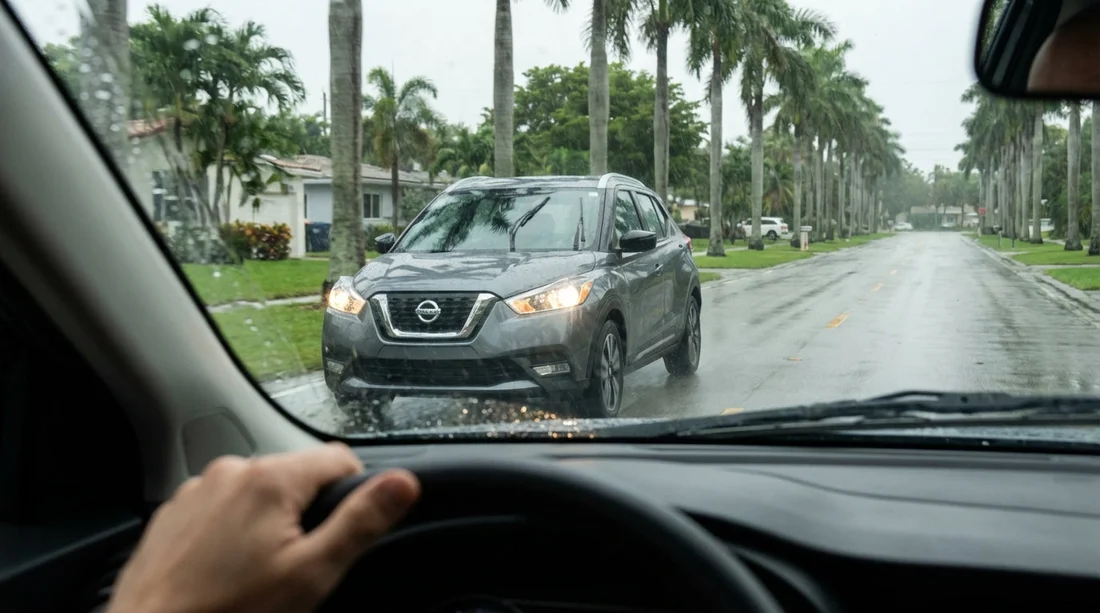
Quick Summary:
- In Florida, use headlights whenever windscreen wipers are on.
- Use dipped headlights in rain, avoid high beams in heavy spray.
- Penalties are typically a non-criminal traffic infraction plus court costs.
- Slow down, increase following distance, and avoid cruise control in downpours.
Miami weather is famous for sudden, intense rain, especially in the warmer months. One moment the road is bright and dry, the next you are driving through a sheet of water with standing puddles and heavy spray from other vehicles. If you are using a car hire in Miami, it helps to know exactly what Florida expects from drivers in rainstorms, how the so-called “wipers on, lights on” approach works in practice, and what could happen if you ignore it.
This guide covers when you must use dipped headlights, what to do during sudden downpours, and how fines and stop outcomes usually work for lighting violations. It also includes practical, Miami-specific driving risk reductions for wet roads, motorway-like expressways, and busy city streets.
Florida’s “wipers on, lights on” expectation in plain English
Florida law requires drivers to use headlights in certain visibility conditions. The rule most visitors remember is simple: if your windscreen wipers are on because of rain, you should have your headlights on too. It is not just about helping you see, it is mainly about making your vehicle easier for others to see in grey skies, heavy spray, and sudden low visibility.
In real-world driving, officers and courts look for an obvious trigger: rain heavy enough that you are operating the wipers. If you need intermittent wipes for a few drops, you are still safer with lights on, and it keeps you aligned with the spirit of the requirement. During Miami cloudbursts, most drivers run continuous wipers, which makes the headlights expectation unambiguous.
If you are collecting a vehicle near the airport, take two minutes in the car park to identify the light controls. Some cars have an “Auto” setting that switches headlights based on ambient light, but auto mode does not always activate in daytime rain. The safest approach in a storm is to manually switch on dipped headlights.
If you are arranging a rental around the airport area, these local pages can help you compare pickup points and vehicle options: Alamo car hire Florida MIA and car hire airport Doral.
Do I need headlights on in Florida rainstorms?
In most Miami rainstorms, yes. If rain is falling and you are using your wipers, switch on your headlights. The key aim is visibility for other road users. Daytime rain can be deceptively dark under storm clouds, and spray from vehicles can create a white mist that hides grey and silver cars.
Also remember that headlights do not just project forward. Tail lights typically illuminate when headlights are on, which is crucial in heavy spray. If your car is difficult to see from behind, you are at higher risk of being hit in stop-and-go traffic or on fast roads like I-95, the Dolphin Expressway (SR 836), or the Palmetto Expressway (SR 826).
What kind of headlights should you use, dipped or high beam?
Use dipped headlights (low beams) in rain. High beams can reflect off rain and spray, creating glare that reduces your own visibility and makes it harder for other drivers to judge distance. High beams are also more likely to dazzle oncoming traffic in poor visibility.
Fog lights, if fitted, can help in very heavy spray, but use them appropriately and turn them off when conditions improve. If you are unsure which switch controls what, pull into a safe place and check the dashboard icons. Do not try to learn the controls while driving through a downpour.
When are lights required beyond rain?
Florida also requires headlights between sunset and sunrise, and in situations with limited visibility, such as smoke, fog, or dust. A practical rule is that if you cannot clearly see other vehicles at a normal distance, turn lights on. Miami can also see visibility problems from sea fog near the coast, or smoke from brush fires further inland during dry spells.
Another helpful habit is the “if you need wipers, you need lights” routine even when rain is light. It reduces decision fatigue and makes you more consistent, which matters when you are learning local roads in a car hire.
What fines apply if you do not use headlights in rain?
Not using required headlights is generally treated as a non-criminal traffic infraction in Florida. The total cost can vary by county and by how the citation is processed, because it often involves a base fine plus court costs and administrative fees. In practice, drivers can see totals that feel higher than the headline “fine” figure.
Another impact is time and inconvenience. If you are stopped, the delay can be significant in storm conditions. There can also be insurance implications if a collision occurs and it is determined you were not using required lighting, even if the fine itself is relatively modest compared with an accident claim.
Because amounts and outcomes can vary, treat the fine as a warning sign rather than the main issue. The true risk is a crash caused by low visibility, hydroplaning, or sudden braking on slick roads.
Miami rainstorms, why they feel more dangerous than you expect
Miami downpours can be intense and localised. A storm cell might drench one neighbourhood while another stays sunny. That creates uneven road conditions and catches drivers out, especially when traffic is moving quickly and suddenly hits standing water.
Common Miami rain hazards include:
- Short, heavy bursts that overwhelm drainage and create large puddles.
- Oil and debris floating up in the first minutes of rain, reducing grip.
- Spray from large vehicles obscuring lane markings and mirrors.
- Sudden braking waves on expressways as visibility drops.
Headlights are part of the solution, but safe speed, spacing, and smooth control inputs matter just as much.
How to reduce crash risk in sudden downpours
These steps help most drivers immediately, whether you are in Downtown, Brickell, Miami Beach, or driving west towards Doral:
1) Slow down early, before you reach standing water. Hydroplaning risk rises quickly with speed. If you hit a deep puddle at motorway speeds, tyres can lose contact with the road and steering becomes ineffective.
2) Increase following distance. Wet roads need longer stopping distances. Add extra space to account for the spray cloud that hides brake lights ahead.
3) Avoid cruise control in wet conditions. If you hydroplane, cruise control can worsen instability by keeping the wheels driving when they need to regain grip.
4) Use smooth steering and gentle braking. Sudden inputs can break traction. Brake earlier and more lightly, and avoid sharp lane changes.
5) Aim your vision further ahead. In rain, the immediate area is visually noisy from drops and reflections. Looking further down the road helps you anticipate slowdowns.
6) If visibility becomes very poor, find a safe place to wait. If you cannot see lane markings or the car ahead reliably, it may be safer to pull off into a well-lit car park or service area until the heaviest burst passes.
What to do if your Miami hire car hydroplanes
If the steering suddenly feels light and the engine revs rise without the car accelerating normally, you may be hydroplaning. Stay calm, ease off the accelerator, and keep the steering pointed where you want to go. Avoid slamming on the brakes. As the tyres regain grip, you can gently adjust and slow down further.
If your car has ABS (most modern rentals do), firm steady braking is safer than pumping the brakes, but only once you have traction. The best approach is prevention: slower speeds, good tyre tread, and avoiding standing water.
Visibility tips: lights, glass, and wipers
Headlights alone cannot fix poor visibility if your glass is fogged or smeared. Before setting off, especially after a humid day, check these basics:
- Clean the inside of the windscreen to reduce haze and glare.
- Ensure wiper blades clear water cleanly without streaking.
- Use demist or air conditioning to stop interior fogging.
- Top up washer fluid, road spray can be grimy.
In Miami humidity, your windscreen can fog quickly when rain cools the glass. Use the front demist setting early rather than waiting for the windscreen to cloud up.
How this affects your route planning around Miami
Rain changes journey times. A 20 minute drive can double when heavy rain hits during rush hour, especially near major interchanges. If you are travelling to or from pickup locations, build in buffer time so you are not pressured into driving faster than conditions allow.
If you are starting from Downtown, you can review options for central collection at Dollar car rental Downtown Miami or compare another provider at National car hire Downtown Miami.
Common mistakes visitors make in Florida rain
Relying on daytime running lights. Many vehicles have front daytime lights without rear tail lights. In heavy rain that means drivers behind you may not see you clearly. Manually turning on headlights usually activates tail lights.
Using hazard lights while moving. Some drivers turn hazards on in heavy rain. This can confuse other drivers because indicators are harder to read. Use hazard lights only if you are stopped or moving unusually slowly due to an emergency, and follow local practice.
Following too closely behind lorries. Spray can become a complete whiteout. Increase distance or pass only when safe and legal.
Driving into deep water. If you cannot judge the depth, do not enter. Water can hide potholes and can stall a vehicle. Choose a different route or wait for water to drain.
What to check when picking up a car hire in Miami
A quick, safety-focused check at pickup reduces stress later when the rain hits:
- Locate the headlight control and confirm dipped headlights turn on.
- Test wipers at different speeds, confirm no severe smearing.
- Check tyre condition visually, especially if rain is forecast.
- Adjust mirrors for best rear visibility in spray.
If you notice worn wiper blades or other issues before you leave, ask for assistance or a different vehicle. That is easier than discovering a problem mid-storm on a fast road.
FAQ
Do I have to turn on headlights in Florida whenever it rains? If rain makes you use your windscreen wipers, you should turn headlights on as well. It improves visibility and aligns with Florida’s wipers-on, lights-on requirement.
Should I use dipped headlights or full beam in a Miami downpour? Use dipped headlights (low beams). Full beam can create glare in rain and spray, and can dazzle other drivers, making the situation less safe.
What is the fine for not using headlights in rain in Florida? It is typically treated as a non-criminal traffic infraction, with a fine plus court-related costs that can vary by county and processing.
Are daytime running lights enough in heavy rain? Often not. Daytime running lights may not switch on rear tail lights, so you can be hard to see from behind. Turn on full headlights to ensure tail lights illuminate.
What should I do if visibility is near zero during a sudden storm? Reduce speed smoothly, increase following distance, and if you still cannot see safely, pull off to a safe, well-lit place and wait for the heaviest rain to pass.





























































































