


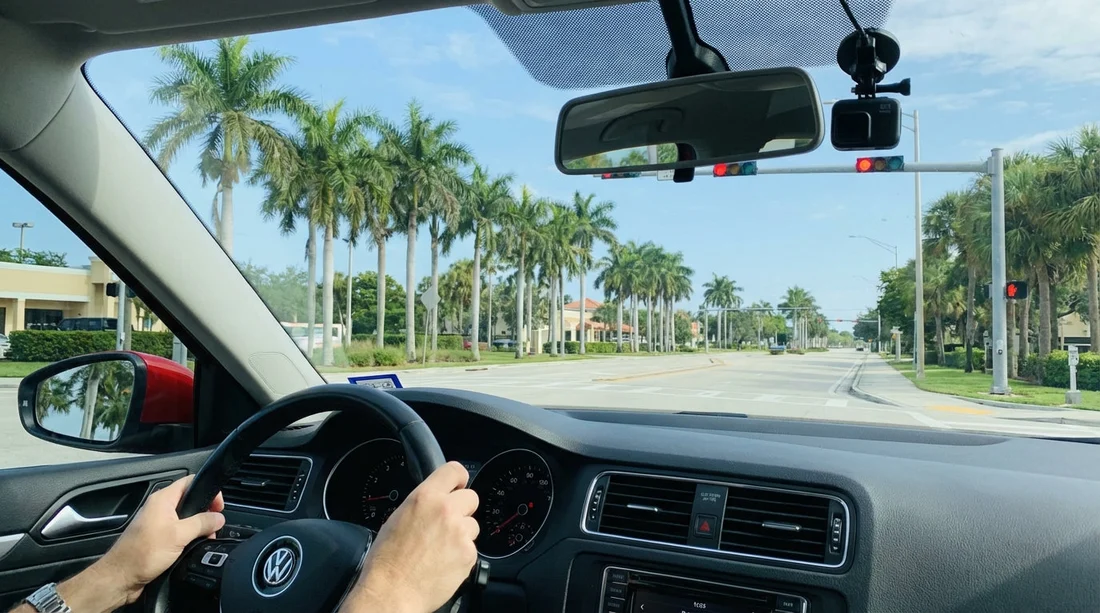
Quick Summary:
- Look for red-light camera signs and camera boxes near signal poles.
- Stop fully on red, including before right turns on red.
- Avoid crossing the stop line after red, even briefly.
- If a notice arrives later, check dates, evidence, and deadlines.
Driving in Miami Beach can feel relaxed, until you meet a camera-controlled junction. Red-light cameras are designed to capture vehicles that enter an intersection after the signal turns red, and they can surprise visitors using car hire who are unfamiliar with local rules, signage, and how citations are issued. The good news is that most tickets are avoidable with a few habits: recognising enforced intersections, understanding what the camera measures, and approaching right turns on red carefully.
This guide focuses on Miami Beach and greater Miami. It explains what triggers a citation, how to spot camera equipment and warning signs, and what to do if a notice arrives after you have returned home.
How red-light cameras work in Miami Beach
A red-light camera system typically combines high-resolution cameras with sensors that detect vehicle movement at the stop line. When the traffic signal turns red, the system monitors whether a vehicle crosses the stop line and proceeds into the intersection. If it does, the system records evidence, usually including still images and a short video clip, plus time stamps and the signal phase.
While exact hardware varies by location, the principle is the same: the camera is not judging your intent or your braking effort, it is measuring position relative to the stop line and the timing of the red signal. That means “I was nearly stopped” or “I rolled forward a little” can still result in a citation if the system determines the stop line was crossed after red.
Miami visitors often pick up a vehicle at or near the airport and drive towards the beach. If you are arranging car hire from Miami Airport or Downtown, it is worth treating the first day as a calibration day: take extra care at signals, especially when navigation prompts late lane changes or sudden turns.
How to spot camera-controlled junctions
In Florida, intersections with red-light cameras are commonly marked with signage warning that photo enforcement is in use. In practice, you should use a combination of cues rather than relying on any single sign.
1) Warning signs on the approach
Look for signs that mention photo enforcement or red-light camera enforcement before the junction. They are usually placed ahead of the stop line, sometimes on the median or roadside, and may appear in advance of multiple intersections along a corridor.
2) Camera housings and flashes
Cameras may be mounted on poles near the traffic lights, or on separate poles at the roadside. You might see box-shaped camera housings aimed at the stop line and into the intersection. Some systems use an infrared flash that is not obvious in daylight, so do not depend on “seeing a flash” as confirmation.
3) Pavement markings and sensor clues
Some enforced junctions have visible cut lines in the tarmac near the stop line where sensors are installed. Not every system uses visible loops, and some use radar or video detection, so absence of markings does not guarantee there is no enforcement.
4) Intersection design that encourages rolling stops
Camera enforcement is often used at locations with frequent right turns, wide multi-lane approaches, or heavy pedestrian activity. In Miami Beach, busy areas with frequent crossings can increase enforcement risk because drivers roll forward to improve visibility.
What triggers a citation, including right turns
Most red-light camera citations are triggered by a vehicle entering the intersection after the signal turns red. The critical moment is typically when your vehicle crosses the stop line. The details below are where visitors using car hire most often get caught out.
Entering after red, even by a fraction
If you cross the stop line after the light is red, you are at risk. It does not matter whether you were already braking or whether the junction was clear. If you are unsure, treat a late amber as a prompt to stop safely rather than trying to “make it”.
Rolling through the stop line, then stopping
A common scenario is creeping forward beyond the stop line to improve sight lines, then stopping again. If the signal is red and your front wheels pass the stop line, the system may record it. If you need a better view for a right turn, stop behind the line first, then inch forward only if permitted and safe, and only as much as necessary without entering the crosswalk.
Right turn on red without a complete stop
Florida generally allows right turns on red after a complete stop, unless a sign prohibits it. The “complete stop” requirement matters. If you roll through at 2 to 5 mph, you may still be recorded as failing to stop. Make a clear, deliberate stop behind the stop line, pause long enough to show the stop on video, then proceed only when the way is clear.
Right turn on red where prohibited
Some intersections post “No Turn on Red”. If you turn anyway, it can be enforced separately by officers, and some camera locations may capture the movement. Always check for prohibitive signage, especially in pedestrian-heavy areas.
Stopping in the crosswalk
Even if you stop, creeping too far can put your bumper in the crosswalk. This is a safety issue for pedestrians and can attract attention. The safest practice is to stop with your front bumper behind the stop line, then proceed appropriately.
Following an emergency vehicle or another car
If you enter on red because the car in front went, you can still be cited. The camera captures your vehicle, not the behaviour of the driver ahead.
If you are travelling with family or luggage and choose a larger vehicle, extra stopping distance helps reduce last-second decisions. When comparing options like van hire in Florida, consider how vehicle size affects braking and your comfort stopping smoothly at busy lights.
Habits that help you avoid fines
Commit to the stop line
As you approach, identify the stop line early and plan to stop behind it. In rain, glare, or heavy traffic, lines can be less visible, so use the crosswalk edge and signal pole as backup cues.
Right turn routine: stop, scan, then go
Build a repeatable routine for right turns on red: stop completely, scan left for traffic, scan for pedestrians and cyclists crossing, check for “No Turn on Red”, then go. Avoid turning your wheels while stopped, as it can pull you forward unintentionally.
Give yourself more time than navigation suggests
Late turns cause late braking. If your sat nav calls for a turn, change lanes early. That reduces abrupt stops at the line and reduces the temptation to “catch the green”.
Assume enforcement at unfamiliar junctions
Even if you do not see a sign, treat complex intersections as potentially enforced. This mindset keeps your approach consistent.
Share the driving rules with everyone in the car
If a passenger calls out “go, go” on amber, it raises pressure. Agree in advance that you will stop on late amber unless it would be unsafe to do so.
If you plan to drive outside the beach area, you may encounter a different mix of enforcement and road layouts. It can help to review your pick-up location and typical routes before you set off, whether you arranged car rental in Florida or collected nearer business districts such as car hire in Doral.
What happens if you are captured by a red-light camera
Camera systems record the event, then the evidence is reviewed before a notice is issued. In many cases, the notice is mailed to the registered owner of the vehicle. With car hire, that often means the rental company receives the notice first, then it is forwarded or the driver details are requested, depending on the agreement and local process.
Because the notice can take time to reach you, it is common for travellers to receive it after returning home. That delay does not automatically invalidate it, but it does mean you should keep your trip documents organised.
If a notice arrives after your trip, what to do next
1) Do not ignore deadlines
Notices typically include a response or payment deadline. Missing it can increase costs or escalate the matter. If you have moved address since travelling, check any forwarded mail promptly.
2) Confirm the key details
Check the date, time, and location against your itinerary and rental paperwork. Ensure the vehicle details match what you drove. If you had multiple drivers, identify who was driving at the time.
3) Review the evidence carefully
Notices often provide access to photos or video. Look for the stop line, your vehicle position, and the signal phase shown in the evidence. Pay particular attention to right turns on red, where the question is often whether a complete stop occurred before crossing the line.
4) Check for common mix-ups
Sometimes the picture shows a vehicle in a different lane, or the plate is unclear. If anything looks incorrect, follow the dispute instructions on the notice. Keep copies of everything you send.
5) Understand rental-company administration fees
If the rental company had to process the notice, you may see an administrative fee in addition to any citation amount, depending on the rental terms. This is separate from the fine itself and relates to handling the paperwork. Review your rental agreement for how they handle violations and notifications.
6) If you want to contest it, be organised
Contesting usually requires timely action and clear evidence. Save screenshots of any video, keep copies of the notice, and provide a concise explanation tied to the facts shown. If you genuinely did stop fully before turning right on red, the video may support you, but you still need to follow the official process stated on the notice.
Miami Beach driving tips that reduce camera risk
Expect pedestrians at every corner
Miami Beach has heavy foot traffic. Drivers often roll forward to see around parked cars, but that can push you over the line. Stop first, then creep only if necessary and lawful, and remain alert for crossings.
Watch for multilane right turns
Multi-lane approaches can tempt drivers to cut in late. Choose your lane early so you can stop smoothly behind the line. Sudden lane changes near the junction increase the chance of entering late.
Be cautious at night
Glare from headlights and reflections off wet roads can make signals and lines harder to read. Increase following distance so you can brake gently.
Do not assume locals know best
Seeing another driver go on late amber does not mean it is safe or legal. Keep your approach consistent and conservative.
FAQ
Do red-light cameras in Miami Beach flash?
Sometimes, but you should not rely on a visible flash. Many systems use infrared or are hard to notice in daylight, so the safest approach is to assume enforcement and stop correctly.
Can I get a ticket for turning right on red?
Yes. If you do not come to a complete stop before the stop line, or if there is a posted “No Turn on Red” sign, a right turn can still lead to a citation or enforcement action.
What if I stopped, but my bumper crossed the stop line?
If any part of the vehicle crosses the stop line after the light is red, the system may treat it as a violation, even if you then stopped again. Aim to stop with your front bumper clearly behind the line.
Why did the notice arrive after I got home from Miami?
With car hire, notices often go to the vehicle owner first, then get forwarded or processed. Mailing and administration time can mean you receive it weeks later.
What should I do first if I receive a red-light camera notice?
Check the deadline, confirm the details match your trip and vehicle, and review the photos or video evidence. If something looks wrong, follow the formal dispute steps on the notice.





























































































