


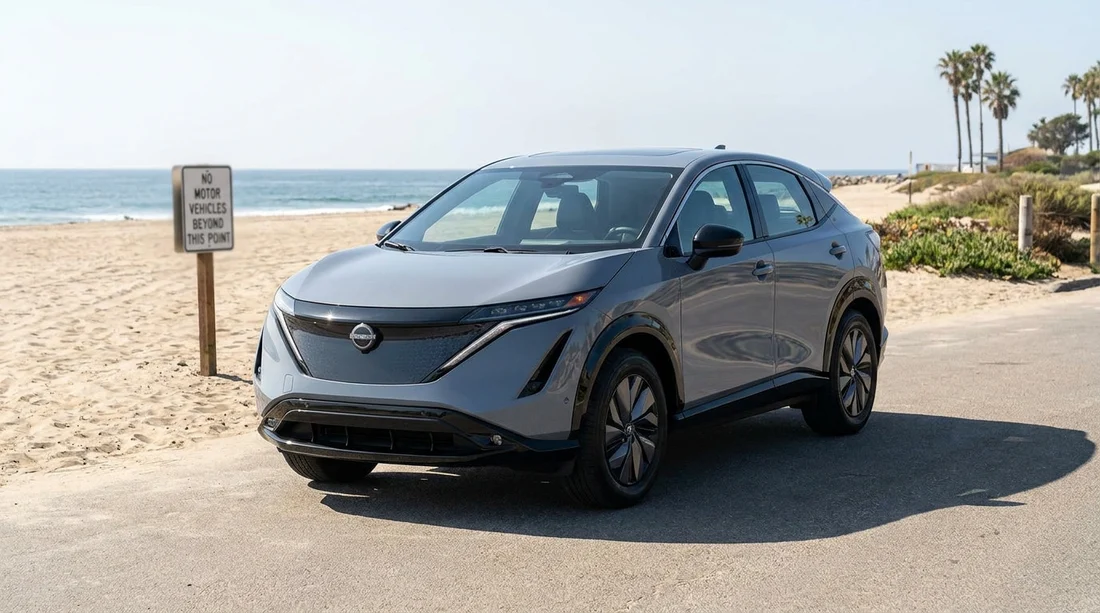
Quick Summary:
- Most car hire contracts treat beaches as off-road use and prohibit it.
- Driving on sand can void damage cover and roadside assistance.
- Confirm rules for beach driving and unsealed roads before leaving.
- Photograph tyres and underbody, and keep a copy of terms.
Beach driving looks straightforward, but under typical car hire terms in California it is often treated the same as off-road use. Many rental agreements restrict travel to paved, maintained public roads. Sand, dunes, and access tracks to the shoreline can fall outside that definition, even when you see other vehicles on the beach.
The practical answer is that beach driving is sometimes legally permitted in certain areas, but still prohibited by many rental contracts. That difference matters, because breaking a contract condition can limit or void cover for damage, recovery, and even third-party claims depending on the wording. Before you drive onto sand, you need to check both local rules and your rental’s specific restrictions.
If you are collecting near major gateways, you can compare options and terms via Hola Car Rentals pages like Thrifty car rental Los Angeles LAX, car hire San Diego, van rental San Francisco SFO, or car hire San Jose SJC. The key is not the location you pick up from, but what your agreement classifies as permitted driving surfaces.
Why beaches are commonly excluded in rental agreements
Rental companies manage risk, and sand is a high-risk environment for vehicles. Even a short drive onto a firm-looking beach can lead to loss of traction, saltwater exposure, and hidden hazards. Because of this, contracts frequently include exclusions such as “off-road”, “unsealed roads”, “beach driving”, “sand”, “dunes”, or “any area not regularly maintained by a public authority”. If any of those appear, the company may treat beach driving as a breach of terms.
Even when a beach is open to vehicles under local regulations, a rental agreement can still prohibit it. In other words, legality does not equal permission under the contract. This is why the title question is best answered as “usually not under typical car hire terms, unless explicitly allowed in writing”.
What “off-road” and “unsealed” typically mean for car hire
People often assume “off-road” means rocky trails or backcountry routes. In rental wording, it is often broader. Beaches, dirt parking areas, access ramps, and unpaved tracks can be included. Some agreements also prohibit driving on any “unsealed” road, meaning any surface that is not tarmac or concrete. A firm sand beach is obviously not sealed, so it can fall squarely within this exclusion.
There is also a grey area with short stretches, for example a brief unpaved entrance to a lookout or a hard-packed parking area. Some companies allow “well-maintained” unsealed roads to reach hotels or campsites, while still banning sand and beaches. Because terms vary, you should not rely on assumptions or what other drivers are doing.
How beach driving can affect cover, excess and assistance
The main consequence of prohibited use is that protection products can stop applying. Depending on the contract and the protection you selected, the following may be affected if you drive on sand against the terms:
Damage cover and excess reduction: If the vehicle is damaged, the supplier may decline the benefit of any collision coverage or reduce it, leaving you liable up to the full value of the vehicle.
Tyres, wheels and underbody: Many rentals exclude tyres, wheels, and underbody as standard. Sand driving increases the likelihood of tyre damage, impacts with debris, and underbody scraping. If those areas are excluded anyway, you could be paying out of pocket even if beach driving were allowed.
Towing and recovery: Getting stuck is common on sand. Contracts and roadside programmes often exclude recovery from “non-public roads” or “off-road locations”. Even if the car is undamaged, you may be responsible for specialist recovery costs.
Saltwater and corrosion: Driving close to surf can introduce saltwater spray into brakes and components. If the vehicle is exposed to water, suppliers may treat it as misuse.
These issues are not theoretical, they are frequent causes of disputed charges after return. The cheapest mistake is usually the one avoided by confirming the permitted-use section before you leave the counter.
What to confirm at the counter, and how to phrase it
When you pick up your vehicle, ask direct questions in plain terms. You are aiming to get clarity on whether beach driving is allowed, and if so, under what conditions. Useful questions include:
“Does this agreement permit driving on beaches or on sand?” Ask for a yes or no, not a vague response.
“Are unsealed roads allowed, and does that include sand access tracks?” Some staff may say unsealed is fine, but they mean graded gravel, not beaches.
“If the car gets stuck on sand, is towing or recovery covered?” This quickly reveals whether the supplier treats sand as excluded terrain.
“Are tyres, wheels, glass and underbody covered under my selected protection?” These are common exclusions, and beach conditions increase exposure.
“Can you note any permission or restriction on my agreement?” If an exception is allowed, you want it documented.
If the answer is “no beach driving”, take it literally. Do not assume that a short drive, a firm beach, or driving at low tide will be acceptable. Contract restrictions typically do not include a “reasonable” exception.
California-specific reality: legal access varies, but contracts still rule
California has locations where driving on the beach is permitted in designated areas, and other places where it is prohibited. Conditions can change with tides, weather, seasonal closures, and local enforcement. Even where driving is permitted by local authorities, you still need to comply with your rental agreement.
It is also common for travellers to underestimate how quickly conditions shift. A beach that looks compact can soften without warning. If you stop, turn sharply, or drive too close to the waterline, you can bog down. Recovery delays can be long, and the cost can escalate if specialised equipment is required.
Safer alternatives that keep you within typical terms
If your goal is a coastal experience without risking a contract breach, choose alternatives that are normally compatible with car hire terms:
Use paved coastal roads and scenic pull-offs. California’s coastal routes offer plenty of viewpoints accessible from maintained roads.
Park in designated lots and walk onto the sand. This removes the major contractual risk while still giving you the beach day you want.
Check for paved access to boat ramps or harbours instead of beach entry points. These are more likely to qualify as maintained surfaces, although you should still drive cautiously.
If you need sand access for a specific activity, consider a specialist provider. Traditional rentals are seldom designed for sand use, and the agreement will often reflect that.
How to read the agreement quickly, without missing the key lines
If you only have a few minutes, focus on sections titled “Prohibited Use”, “Use of Vehicle”, “Restrictions”, “Geographic limitations”, and “Road Conditions”. Look for exact terms including “beach”, “sand”, “dunes”, “off-road”, “unsealed”, “non-public roads”, “underbody”, and “recovery”. If the agreement references a separate booklet or supplier terms, ask for it on the spot.
Also check whether your chosen vehicle category changes the permitted use. Larger vehicles can feel more capable, but the contract may be identical across categories. Do not assume that an SUV label means off-road permission.
Bottom line: is beach driving permitted?
Under typical car hire terms in California, beach driving is often not permitted and is frequently treated as off-road use. The safest approach is to assume it is prohibited unless the agreement explicitly allows it. Confirm the rule at pickup, get any exception in writing, and understand how exclusions affect damage cover and recovery before you put tyres on sand.
FAQ
Is it ever allowed to drive a rental car on a California beach? Sometimes, but it depends on the supplier’s contract and local rules. Many agreements prohibit sand and beaches even where driving is legally allowed.
Does “no off-road driving” usually include sand? Yes. In many car hire agreements, sand, dunes, and beach entry tracks are treated as off-road or unsealed surfaces.
If I get stuck on sand, will roadside assistance recover the car? Often not. Recovery from beaches or non-maintained areas is commonly excluded, meaning you may pay towing and recovery costs yourself.
Will damage cover still apply if I drove on the beach? It may be reduced or declined if beach driving breaches the contract. Tyres, wheels and underbody are frequently excluded regardless.
What should I ask at pickup to avoid disputes? Ask whether beach driving or unsealed roads are permitted, whether towing from sand is covered, and request any permission or restriction to be noted in writing.





























































































