


Quick Summary:
- Leaving the boot open can reduce smash-and-grab temptation, but increases access.
- Only consider it briefly in daylight, never overnight or in isolated areas.
- Best practice is an empty car, boot open when you arrive, then close.
- Use safer parking, valet rules, and photos to avoid dispute later.
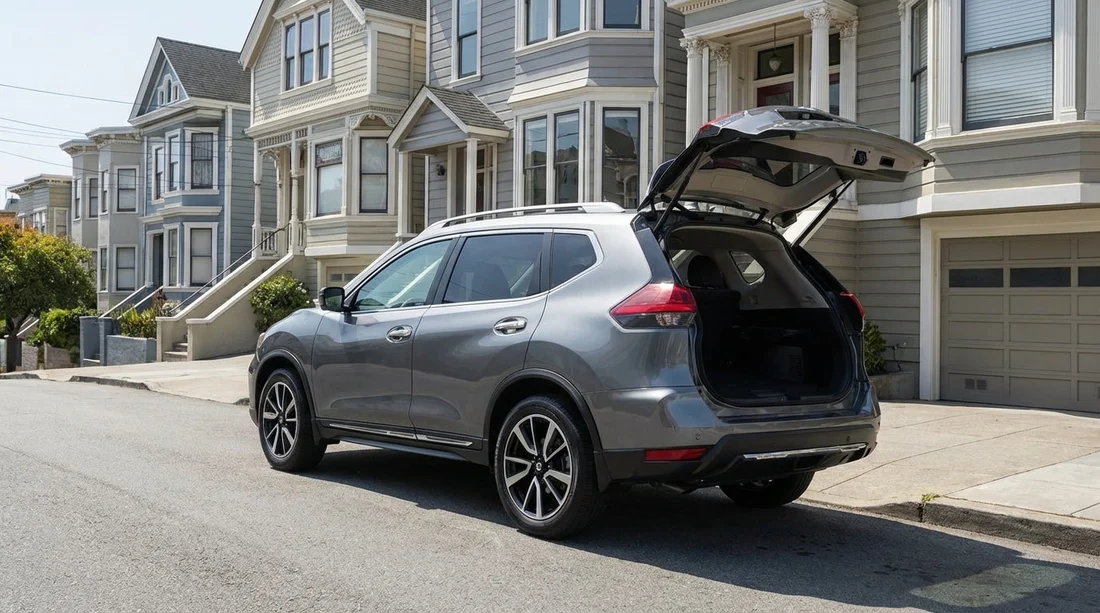
San Francisco has a well-known issue with opportunistic vehicle break-ins, particularly smash-and-grab thefts targeting luggage and electronics. Visitors collecting a car hire at the airport often hear advice to leave the boot open when parked, to show there is nothing inside and discourage a broken window. It can sometimes help, but it is not a universal solution and it can create new problems, including easier access to the cabin and potential liability under your rental terms.
The realistic answer is this, leaving the boot open can reduce the incentive for a thief to smash glass to check the boot, but it can also signal that the car is unattended, allow anyone to rummage, and increase the chance of tampering. A safety-first approach focuses on making the car uninteresting, choosing parking well, and using simple documentation habits that protect you if a dispute arises.
If you are arranging a car hire for San Francisco airport pick-up, starting with the right vehicle and provider helps, but your day-to-day habits matter more than the badge on the key. For travellers comparing airport options, see car rental at San Francisco SFO and the UK-facing page for car hire San Francisco SFO.
Does leaving the boot open actually deter break-ins?
Sometimes, yes. Many break-ins are not targeted, they are quick searches for bags. If the boot is clearly empty and visible, you remove a common reason for a thief to break a rear quarter window or side window to pop the boot release. In that narrow scenario, a visibly empty boot can reduce the temptation to “check what’s inside”.
But there are limits. First, the boot being open does not prove the cabin is empty. Second, an open boot can make it easier to access the rear seats, fold them down, or pull items into reach. Third, it can attract attention from people who would not otherwise have approached your vehicle. Finally, if you misjudge the area or timing, an open boot can become an invitation to steal anything left inside, including paperwork, charging cables, sunglasses, coins, and the rental documents themselves.
Think of the boot-open tactic as a last-resort visibility trick, not a security measure. The safest plan is still to keep nothing in the car and reduce the time it sits unattended.
Where this tactic is most risky in San Francisco
Leaving the boot open increases risk when the surroundings make you slower to notice interference or more likely to be challenged for obstructing a space. Avoid doing it in these situations.
Overnight parking or long dwell times. The longer a vehicle sits, the more opportunities there are for someone to rummage, vandalise, or attempt to sleep in it. Overnight also makes it harder to spot tampering quickly.
Quiet streets, dead ends, and dim corners. Lower foot traffic can reduce witnesses, and thieves have more time to work. If you cannot see the car from where you are, the open-boot approach is usually a bad trade-off.
When you have any property at all in the cabin. Even an empty bag, charging lead, jacket, or sunglasses can spark a window smash. An open boot does not prevent someone from breaking a window because they see something on a seat.
In tight kerbside spaces. An open boot may obstruct pavement space, annoy passers-by, or invite someone to slam it shut aggressively. You also risk damage from another car edging into the spot.
During fog, rain, or heavy wind. Weather can soak upholstery, damage paperwork, or blow debris into the boot. If the boot lid is buffeted, hinges and struts can be stressed.
A safety-first checklist for deciding what to do
Use this checklist each time you park. It is designed for a hire car, where you also want to reduce damage disputes later.
1) Start by assuming the boot stays closed. Default to closed and locked. Only deviate if you have a clear, specific reason.
2) Make the car empty before you arrive. Do not reorganise luggage at the kerb. If you need to move items, do it at your accommodation or a secure garage, not in public. The most common trigger is seeing a traveller move bags into the boot, which signals there may be more inside.
3) If you want visibility, use the “open on arrival, close on departure” approach. Park, open the boot briefly to show it is empty, then close and lock it. This reduces the chance of someone breaking glass to check, without leaving the vehicle accessible for long.
4) Remove all cues from the cabin. No phone mounts, no charging cables, no coins, no shopping bags, no jackets. Even a USB cable can suggest a device is nearby.
5) Choose parking for surveillance, not convenience. Prefer attended garages, hotel garages, or well-lit lots with staff. If street parking is your only option, pick busy blocks with constant foot traffic and good lighting.
6) Consider your vehicle type and boot design. Hatchbacks and SUVs often expose the cargo area through the rear glass, which can encourage break-ins. If your trip involves more luggage, a vehicle with a separate, enclosed boot can help. Families sometimes prefer a larger option, but remember, bigger vehicles can also signal more luggage. If you are comparing vehicle sizes, see minivan rental at San Francisco SFO for an idea of capacity planning.
7) Take time-stamped photos that protect you. Photograph the exterior, windows, and boot area when you park in higher-risk places, and again when you return. Also photograph that the boot is empty. This is not about preventing theft, it is about avoiding arguments later if damage occurs.
8) Keep the key and documents separate. Do not leave the rental agreement, address lists, or spare keys in the vehicle. If someone accesses the glovebox, they can learn where you are staying.
Better alternatives than leaving the boot open
There are safer, more consistent strategies than leaving the boot open, and they work across neighbourhoods and time of day.
Use “boot-empty proof” photos. Before you head out, take a quick photo of the empty boot and empty back seats. If you have to park in an area you are unsure about, repeat the photo at the kerb. It takes seconds and encourages you to keep the car truly empty.
Keep luggage out of the vehicle entirely. The most important rule in San Francisco is to never leave luggage in the car, even for a short stop. If you are between hotel check-out and a late flight, ask your hotel to store bags, use a staffed left-luggage service, or plan stops around bag storage. A thief can break a window in seconds.
Park where attendants and cameras exist, but do not rely on them. Garages reduce random scanning and provide some deterrence, yet break-ins can still occur. The aim is to reduce probability, not to assume a guarantee.
Covering items is not a fix. A jacket over a bag can make things worse because it signals you are hiding something. A parcel shelf can help if it is always empty, but if anyone ever sees you load items, the shelf becomes a reason to break in.
Time your stops to reduce dwell time. If you must park on the street, keep the stop short, choose busy hours, and avoid leaving the car while you go to a viewpoint for an hour.
Valet parking rules and what to do at hotels
Valet can be safer than street parking because the vehicle is moved into a controlled area quickly. However, valet also means other people handle your car hire, so use a simple routine that prevents misunderstandings.
Tell the valet there are no valuables and ask about boot access. Some valets prefer the boot closed and will not accept a vehicle with an open boot. Others may open it for inspection. Keep your explanation simple and factual.
Remove everything you can before handing over. Take all bags, devices, and paperwork. If you must leave something due to space, reconsider the plan, it is almost always better to carry it or store it at the hotel.
Photograph condition at handover. Take a quick walk-around photo set before you give the keys, and a quick set when you retrieve the car. Include wheels and glass. This habit is useful anywhere, but especially with high turnover parking operations.
Do not leave the boot open in valet queues. Queues often sit near public pavements. An open boot can be accessed while you are checking in.
Parking choices that reduce risk around common visitor routes
There is no single “safe” map square, but your parking choices can shift the odds. Prioritise attended garages near attractions and avoid leaving a vehicle full stop while you explore on foot for long periods.
If your itinerary includes driving beyond San Francisco, you may find it easier to store luggage securely once and use the car mainly for out-of-town legs. Travellers doing a Bay Area loop sometimes pick up in one airport and return at another. If your route takes you through the South Bay, review options such as car hire San Jose SJC as a comparison point for planning where you spend the most driving and parking time.
Provider policies also matter. Different operators may have different guidance on unattended vehicles, damage reporting, and what counts as negligence. If you are comparing brands for airport collection, see Enterprise car hire at San Francisco SFO for one example of an operator page where you can review inclusions and terms via Hola Car Rentals.
So, should you leave the boot open in San Francisco?
As a general rule, no. Leaving a hire car’s boot open is not a reliable deterrent and it can increase access, weather exposure, and unwanted attention. The more dependable approach is to keep the vehicle completely empty, remove all visual cues, choose parking with oversight, and minimise unattended time.
If you still want to use the tactic, keep it brief and controlled, open the boot only long enough to confirm it is empty, then close and lock it. Combine that with photos, sensible valet habits, and parking choices that prioritise lighting and activity over convenience.
FAQ
Is it legal to leave a car boot open while parked in San Francisco? It is not typically illegal by itself, but it can create issues if it obstructs the pavement, a space, or draws complaints. More importantly, it can increase theft risk and may complicate responsibility under your rental agreement.
Will an open boot stop someone smashing a window? Not necessarily. Some thieves break windows to access the cabin, check the glovebox, or fold seats down. An open boot may reduce curiosity about hidden luggage, but it does not make the car secure.
What is the safest way to handle luggage with a car hire? Avoid leaving luggage in the car at any time. Arrange bag storage at your hotel, plan pick-ups after check-in, and keep the cabin and boot empty when parked.
Should I leave the parcel shelf open so thieves can see nothing is underneath? It can help only if there is genuinely nothing in the rear area and you do not draw attention while parking. If anyone sees you load items earlier, a visible shelf can still invite a break-in to confirm what is hidden.
What photos should I take to protect myself with a hire car? Take clear photos of all sides, wheels, and glass at pick-up, plus an empty boot photo. If parking in higher-risk areas, take a quick set when you leave the car and again when you return.





























































































