


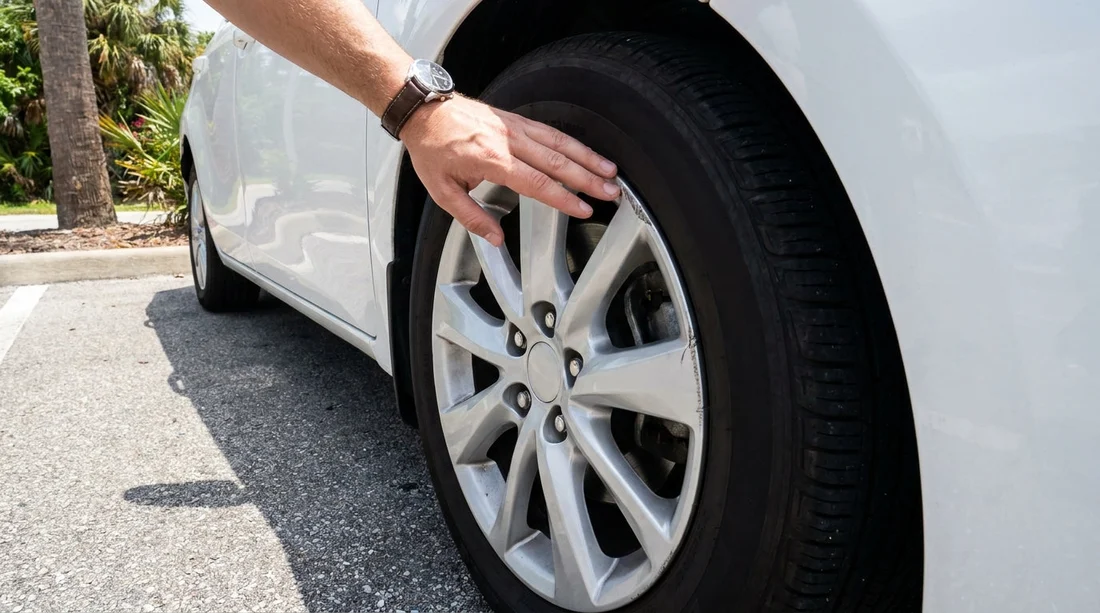
Quick Summary:
- LDW often limits wheel, rim and hubcap cover, check wording carefully.
- Look for exclusions covering tyres, wheels, underbody, roadside incidents, and negligence.
- At pick-up, ask staff to confirm wheel and hubcap cover in writing.
- Photograph every wheel and hubcap before leaving, and again on return.
When arranging car hire in Florida, Loss Damage Waiver (LDW) can look like a simple yes or no decision. The detail that surprises many drivers is that wheels, rims and hubcaps are sometimes treated differently from “bodywork”. A kerbed alloy, a cracked rim from a pothole, or a missing hubcap can be charged even when you thought LDW covered “damage”.
LDW is not a universal legal standard, it is a rental company product and the exact terms vary by supplier, vehicle category, and sometimes by state or branch. In Florida, where you might encounter tight parking, kerbs, toll roads, and sudden rainstorms that hide standing water or potholes, wheel and hubcap damage is a common grey area. The safest approach is to read the agreement wording and confirm what the desk will apply before you sign.
If you are comparing suppliers and locations, you can review options and local pick-up points via Hola Car Rentals pages such as car rental Fort Lauderdale (FLL), car rental Miami Beach, car hire Airport Brickell, or minivan rental Tampa (TPA). The key is still the same, match the LDW language to the type of damage you are trying to avoid paying for.
What LDW typically covers, and why wheels can be different
LDW is generally designed to limit your financial responsibility if the rental vehicle is damaged or stolen. It often removes or reduces the excess (also called deductible) you would otherwise owe. However, LDW commonly focuses on the vehicle’s main body panels, glazing, and sometimes theft related losses. Wheels, tyres, hubcaps and the underbody are frequently handled as separate items with separate exclusions.
Why? Because wheel and rim damage is often linked to driving conditions and impact events that are easy for the supplier to classify as avoidable, such as kerbing, striking debris, or driving into a pothole at speed. Hubcaps can be dislodged by contact or can go missing entirely. Some agreements therefore exclude these parts unless you purchase an additional protection product or unless your specific LDW explicitly lists them.
Wheel, rim and hubcap damage, how it is usually defined
Rental suppliers may separate “wheel” issues into different categories. Understanding the categories helps you ask the right questions at the counter.
Wheel and rim damage commonly includes scuffs and gouges from kerbing, bends or cracks from potholes, and deformation from impacts. Even if the tyre still holds air, a rim repair or replacement can be charged.
Tyre damage includes punctures, sidewall bulges, cuts, and blowouts. Tyres are very often excluded from standard LDW, even when rims are included, so confirm both.
Hubcaps and wheel trims include cosmetic covers on steel wheels, and sometimes centre caps on alloys. Agreements may treat missing hubcaps as “loss” rather than “damage”, which can change how LDW applies.
Two-wheel incidents can trigger exclusions. If the agreement mentions “off-road”, “negligence” or “reckless use”, wheel damage can be linked to those terms even on paved roads, for example if you drive through a construction area marked as closed.
What to confirm at the counter before signing
Because LDW language varies, the most useful approach is to ask short, specific questions and get the answers recorded on the agreement or provided in the printed terms you are given.
Ask whether LDW covers wheel rims and hubcaps. Use those exact words. If the agent says “yes, it is covered”, follow up with, “Is that written in my contract, or is wheel damage excluded?” If it is included, ask where it is stated.
Confirm tyres separately. Even if rims are covered, tyres may not be. Ask, “If I get a puncture or sidewall damage, what would I pay?” This matters for Florida motorways where debris can appear.
Confirm the excess for wheel related claims. If wheels are covered, there may still be an excess. Make sure you understand the maximum you could owe for a rim repair or wheel replacement.
Ask about roadside assistance charges. Wheel and tyre issues often involve towing or call-out fees. Even when damage is waived, assistance fees may still apply.
Inspection tips that reduce wheel and hubcap disputes
A careful inspection is one of the most effective ways to avoid unexpected charges related to wheels and trims.
Photograph each wheel close-up. Take clear photos of all four wheels and hubcaps, including existing scuffs. Make sure the images show the number plate or a wider shot for context.
Check the inner rim edge. Kerb damage is usually on the outer face, but cracks and bends can be inside. If the design allows, angle your camera to capture the inner lip.
Confirm the damage report is updated. If you find marks, ask the agent to note them. If the branch uses digital check-out, ensure the marks are recorded in the system, not just verbally acknowledged.
Repeat on return. Take the same photos at drop-off. If you return after hours, your time-stamped photos become even more important.
FAQ
Does LDW usually include wheel and hubcap damage on Florida car hire? Not always. Many suppliers exclude wheels, rims, tyres or hubcaps from standard LDW, so you must check the written terms for your specific rental.
If my hubcap falls off without an accident, is it covered? Often it is treated as a lost part, not damage. Some waivers exclude loss of parts, so confirm in writing how missing hubcaps are handled.
Is kerb rash on alloy wheels considered damage? Yes, it is typically classed as damage and may be chargeable. Some policies may waive it, but many exclude wheel cosmetic damage, so ask specifically.
Can a tyre puncture be covered under LDW? Frequently no. Tyres are commonly excluded even when other damage is covered, and you may also be charged for roadside assistance or towing.





























































































