Quick Summary:
- LDW may cover accident-related towing, but often excludes breakdown-related tows.
- Check the rental agreement for negligence, off-road use, and exclusions.
- Roadside assistance can help with flats, lockouts, jump starts, and towing.
- Report issues quickly, keep receipts, and use approved towing providers.
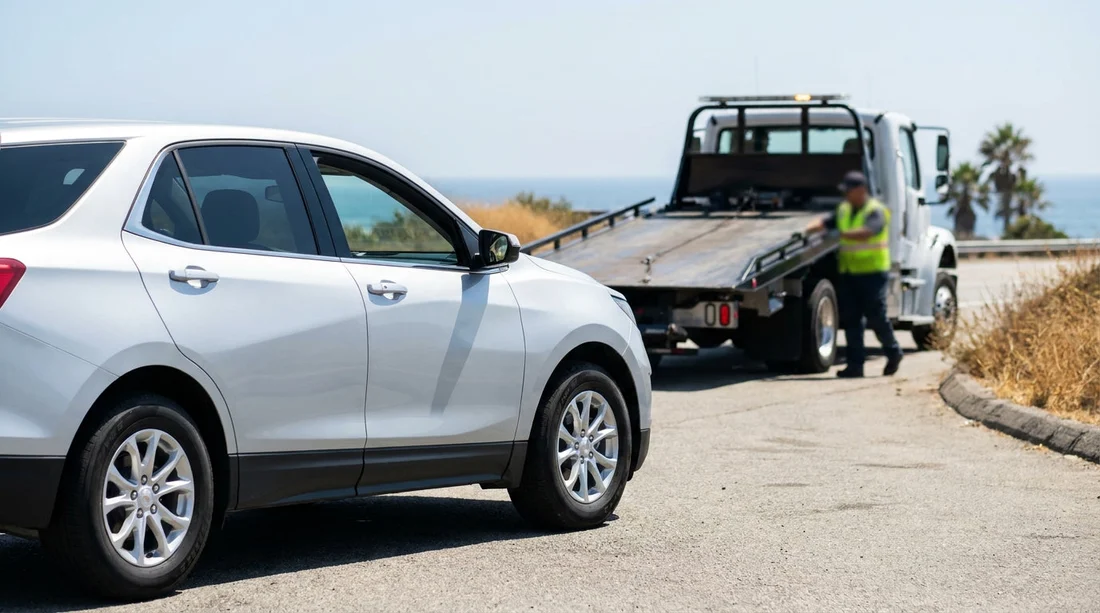
When you arrange car hire in California, it is easy to assume Loss Damage Waiver (LDW) pays for anything that happens to the vehicle, including towing. In practice, towing and recovery charges sit in a grey area. LDW is designed to reduce your financial responsibility for loss of or damage to the rental car, but towing is sometimes treated as a separate service, especially when no collision damage exists.
This article explains the common ways rental companies and waiver providers handle towing and recovery, what is typically excluded, and how optional roadside assistance can fill the gaps before you pick up the keys.
What LDW usually does, and does not, do
LDW is not a single, universal insurance product. It is a waiver offered by the rental company, and its terms vary by brand, location, and even the rate you booked. Generally, LDW addresses costs linked to damage, theft, vandalism, and loss of use while the vehicle is being repaired. The key point is that towing and recovery is only sometimes considered part of “damage-related” costs.
A common rule of thumb in California car hire agreements is this: if the car is towed because it is not drivable after a covered accident, LDW may cover the towing invoice as part of the overall claim. If the car is towed because of a mechanical breakdown, a flat battery, a lost key, or you ran out of fuel, towing is often excluded from LDW and becomes your responsibility unless you have roadside assistance.
If you are collecting a vehicle at a major hub such as Los Angeles LAX or Santa Ana SNA, ask at the counter which number to call for accidents and after-hours towing. Using the correct process can be as important as the waiver itself.
Towing vs recovery, and why the distinction matters
People often use “towing” and “recovery” interchangeably, but rental documentation may separate them. Towing usually means transporting a vehicle from one place to another using a tow truck. Recovery can mean specialised extraction, for example pulling a vehicle out of sand, mud, snow, a ditch, or a slope before it can be towed. Recovery tends to be more expensive and is more frequently excluded, even when LDW applies to collision damage.
In California, common recovery scenarios include getting stuck in beach sand, pulling off into a soft shoulder on a desert road, or sliding on a mountain route in winter conditions. Even if you have LDW, extraction fees may be treated as avoidable misuse or outside normal operation.
Common exclusions that can make towing your bill
Even with LDW, certain circumstances can shift towing and recovery charges back to you. These exclusions are common in California car hire contracts.
Unauthorised use or negligence. If the car is used in a way the contract prohibits, LDW can be voided and you may become responsible for all costs, including towing. Examples include driving on certain unpaved roads, ignoring warning lights, or continuing to drive after damage occurs.
Off-road and beach driving. Many rental agreements prohibit off-road use. Getting stuck in sand or on trails frequently triggers an exclusion that applies to extraction and any subsequent tow.
Tyre, key, fuel, and battery incidents. Running out of fuel, losing keys, locking them inside, or needing a jump start may not be “damage” in the LDW sense. Towing or call-out fees can therefore be chargeable.
Improper refuelling. Misfuelling can cause mechanical damage. Even when LDW would otherwise apply, contracts may treat misfuelling as negligence and decline associated costs, including towing.
Why roadside assistance can be worth adding before pick-up
Roadside assistance is usually a separate option from LDW. It is designed to cover service events rather than accident damage. In California, where long distances and varied terrain are common, roadside assistance can be valuable if your trip involves remote stretches or you expect heavy stop-start driving in cities.
If your itinerary includes long drives from Los Angeles, Orange County, or the Bay Area, consider the risk profile rather than the price alone. For instance, travellers picking up near San Jose SJC for a road trip may face a different set of risks than someone staying entirely within a city grid.
What to do if you need a tow in California
If the vehicle is damaged or disabled, prioritise safety first, move to a safe location if possible, and follow local laws regarding hazard lights and roadside stops. Then use the rental company’s incident process. Many contracts require prompt notification, and some require you to use a specific roadside number.
Do not arrange a tow independently unless the rental company instructs you to, because unauthorised towing can lead to higher charges or reimbursement difficulties.
For travellers organising car hire for group trips, a larger vehicle can add another layer of towing complexity. If you are using a people carrier or similar from van rental at Los Angeles LAX, confirm whether towing rates differ for vans and whether roadside assistance has different limits.
How this affects your total cost expectations
Towing and recovery charges in California can be surprisingly high, especially after-hours, on remote highways, or where recovery equipment is needed. Even when LDW covers damage, you may still face administrative fees, storage fees if a vehicle is held, or charges stemming from contract breaches.
If you want to compare supplier policies across common pick-up points, browsing options such as Payless at San Diego SAN can help you spot differences in what is bundled versus optional.
FAQ
Does LDW automatically include towing for car hire in California? Not always. LDW may cover towing after a covered accident, but it often excludes towing for breakdowns, flats, lockouts, or running out of fuel.
Is “recovery” the same as towing in a rental agreement? Not necessarily. Recovery can mean extracting the vehicle from sand, mud, snow, or a ditch, and it is frequently excluded even when towing after an accident is covered.
If I call my own tow truck, will LDW reimburse me? It depends on the contract. Many rental companies require you to call their roadside number or obtain authorisation first, otherwise reimbursement can be refused or reduced.
Will roadside assistance cover a flat tyre or dead battery? Often, yes. Roadside assistance is meant for service events like jump starts, tyre help, lockouts, and some non-accident tows, but limits and exclusions can apply.
What should I ask at the counter to avoid surprises? Ask whether towing is covered under LDW after an accident, whether you must use a specific phone number, and what roadside assistance covers for non-accident disablement.