


Quick Summary:
- LDW usually covers collision and theft losses, not interior stains.
- Burns, smoke odours and biohazards are typically excluded from LDW.
- Check your agreement’s definitions of damage, misuse, and cleaning fees.
- Photograph the cabin at pickup, then report issues before leaving.
When you arrange car hire in Florida, Loss Damage Waiver (LDW) often sounds like it will protect you from any damage costs. In practice, LDW is usually designed to waive the rental company’s right to charge you for specific types of loss or damage to the vehicle, most commonly collision damage and theft, subject to conditions. Interior problems like stains, burns, strong odours or torn upholstery sit in a grey area, and they are frequently treated as exclusions or non-accident damage.
This article explains how LDW commonly works, why interior damage is often handled differently, what exclusions to look for, and what you should confirm before you sign a Florida rental agreement. Terms vary by supplier and location, so your agreement is the final word.
What LDW typically covers in Florida
LDW, sometimes labelled CDW/LDW, is usually a contractual waiver offered by the rental company rather than an insurance policy you buy directly from an insurer. In a Florida car hire context, it commonly reduces or removes your financial responsibility if the car is damaged in a collision, vandalised, or stolen, provided you follow the agreement’s conditions.
Many agreements define damage with a focus on exterior bodywork, glass, wheels, undercarriage, and the mechanical parts affected by an accident. That focus matters because interior issues often arise from spills, smoking, pets, improper cleaning, or general misuse, not from a collision event. Even where the word damage is broad, the agreement often narrows LDW by listing specific exclusions.
If you are comparing pickup points, you might see different supplier wording depending on where you collect. For example, travellers collecting near the city may review terms linked to Downtown Miami car rental, while airport collections may reference different local supplier documentation such as Orlando Airport car hire. The key is to read the specific rental agreement you will sign at the counter, not just a summary page.
Does LDW cover stains, burns, or other interior damage?
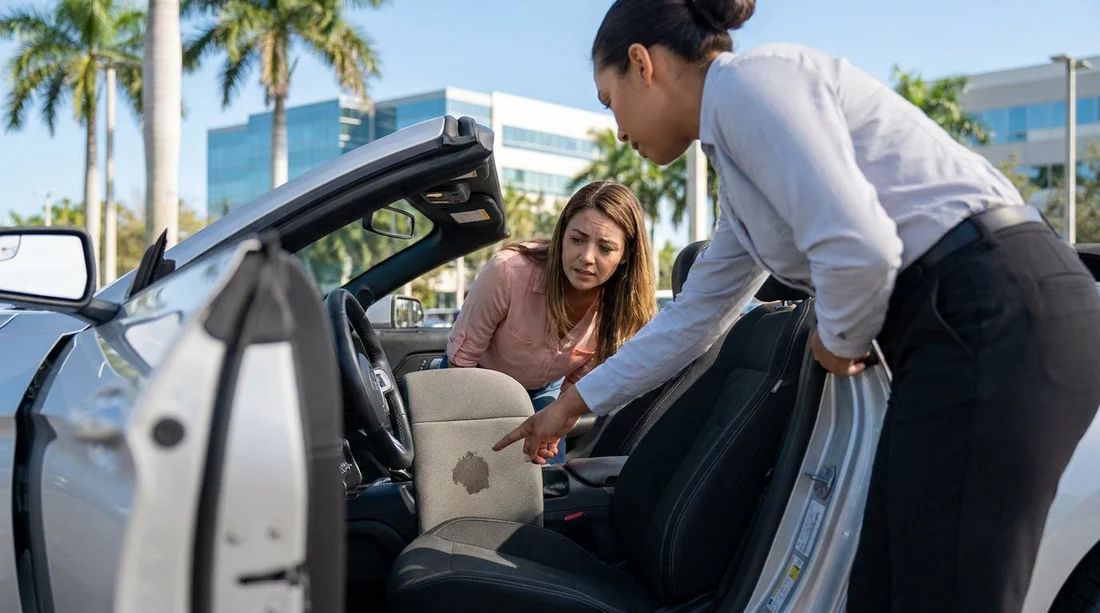
Most of the time, interior stains and burns are not covered by LDW. Rental companies commonly treat these as cleaning, refurbishment, or misuse charges rather than collision or theft losses.
Stains and spills: Coffee, wine, sunscreen, makeup, muddy footprints, food grease, and dye transfer from clothing can be considered avoidable soiling. Even when it looks minor, suppliers may charge if specialised cleaning is required or if the vehicle cannot be rented until cleaned.
Cigarette burns or heat damage: Burns in seats, headliners, carpets, or door trims are typically exclusions. They are often grouped with smoking violations or intentional damage.
Odours: Smoke smell, strong food odours, pet odours, or other persistent smells are frequently treated as cleaning or deodorising fees. LDW usually does not waive these charges.
Tears, scratches, and broken interior parts: Rips in upholstery, broken cup holders, missing floor mats, snapped trim pieces, or damaged infotainment screens may be treated as interior damage outside LDW, especially if the supplier considers it careless use.
There are exceptions. If interior damage is clearly linked to a covered event, for example, a collision that deploys airbags and damages interior panels, some agreements may treat it as part of the accident damage. The deciding factor is how the agreement defines covered loss and whether it excludes interior, cleaning, or misuse related damage.
Common LDW exclusions that affect interior damage
To understand your exposure, look for these frequent exclusion categories in Florida rental agreements:
Cleaning and detailing fees: Many suppliers separate damage from cleaning. Deep cleaning, shampooing, ozone treatment, and biohazard remediation can be charged even if you have LDW, because they are not always classified as collision damage.
Smoking and vaping: If the agreement prohibits smoking, any evidence can trigger a fixed fee, plus repairs for burns. LDW generally will not waive penalties tied to a rule breach.
Pets and allergens: Some suppliers permit pets with conditions, others do not. Hair, odours, scratches, or chewing damage can lead to charges that LDW may not cover.
Negligence, misuse, or intentional acts: LDW usually requires you to use the vehicle responsibly. Spills left to soak in, burns from hot items, or damage from transporting inappropriate materials can be classified as misuse.
Unauthorised drivers and prohibited use: If an unlisted driver caused the interior damage, or if the car was used in a prohibited way, the supplier may deny LDW protection entirely, not just for the interior issue.
What to confirm before signing your Florida rental agreement
Because LDW wording differs, it helps to confirm a short checklist at the counter or in the agreement text before you sign.
1) How the agreement defines damage. Look for language that explicitly includes or excludes upholstery, carpets, headliner, dashboard, infotainment screens, or interior trim. If interior items are excluded, assume stains and burns are your responsibility.
2) Whether cleaning is treated separately. If the agreement allows cleaning fees, ask what triggers them and whether they are fixed or assessed based on severity. For family trips, this matters, especially around sand, snacks, and suncream.
3) Smoking policy and evidence standards. Confirm whether vaping counts as smoking, and whether ash, smell, or burns can trigger a charge. If you are travelling with passengers, make sure everyone understands the rule.
4) Your responsibilities for reporting pre-existing issues. If you spot marks, tears, or odours at pickup, make sure they are recorded before you leave. Documentation reduces disputes later.
5) Whether a supplemental interior protection product exists. Some suppliers offer separate packages that address upholstery or minor interior incidents. If offered, read the fine print, because these products also have exclusions and limits.
If you are collecting in different parts of South Florida, the paperwork can vary across partner brands. For example, renters browsing Payless in Brickell may see a different style of terms than those considering Enterprise in Brickell. Treat each agreement as unique and confirm the items above every time.
Practical steps to avoid interior damage charges
Even when you are careful, Florida conditions can increase the risk of interior issues, beach sand, sudden rain, and long drives with drinks and snacks. These steps help reduce the chance of a charge and make any discussion easier if a problem occurs.
Do a cabin inspection, not just exterior. Photograph seats, carpets, door panels, boot area, and the roof lining. Take close-ups of any existing stains or tears. Do it before you drive away.
Keep proof the issue was pre-existing or unavoidable. If you find an odour or sticky residue, report it immediately so it can be noted. If something happens during your rental, document it promptly and follow the agreement’s reporting instructions.
Manage sand and moisture. Use mats properly, shake out towels before entering the car, and avoid leaving wet items on seats. Sand can grind into upholstery and create permanent marks.
Avoid DIY cleaning that can worsen damage. Harsh chemicals can bleach fabric or damage leather coatings. If a spill happens, blot and follow manufacturer safe cleaning guidance if available, then tell the supplier if required.
Return the car in a reasonable condition. Normal wear is expected, but visible stains, strong odours, or residue can trigger additional charges. A quick tidy-up can prevent borderline cases becoming disputes.
FAQ
Is a spill on the seat covered by LDW on Florida car hire? Usually not. Spills and stains are commonly treated as cleaning or misuse costs rather than collision or theft damage covered by LDW.
What about cigarette burns or smoke smell in the car? These are typically excluded from LDW. Many agreements apply a smoking fee and may also charge for repairs such as replacing upholstery.
If the interior is damaged in a crash, does LDW apply? Often yes if the interior damage is directly linked to a covered accident, but exclusions and reporting rules still apply. Check the agreement’s definitions and conditions.
Can I be charged for odours even if there is no visible damage? Yes. Suppliers may charge for deodorising if the vehicle needs treatment before it can be rented again, and LDW usually does not waive cleaning fees.
What should I check before signing in Florida? Confirm whether interior damage and cleaning are excluded, review the smoking and pet rules, and make sure pre-existing interior marks are recorded before you drive off.





























































































